 Sipu Jha
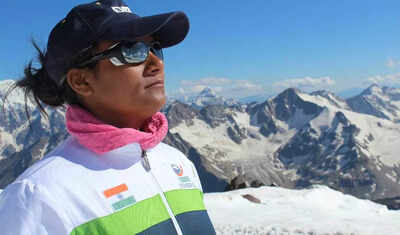
On a cold night in 2011, a young national-level volleyball player lay alone on railway tracks, her life split into a before and an after she could never have imagined. That young woman was Arunima Sinha, and the story that began with unimaginable pain would eventually end at the highest point on Earth. She remembers the moment with chilling clarity. Thieves in a general compartment tried to snatch the gold chain she was wearing. When she resisted, they pushed her out of a moving train. The impact was brutal. Before she could even comprehend what had happened, another train passed over her leg. “When I tried to lift myself up, I saw my legs were cut off by the train,” she later recalled. Scroll down to read more…All night, she cried for help on the tracks. No one came. In unbearable pain, unable to move or see clearly, she lay there as passing trains thundered by. Small rats roaming the tracks began biting at her injured body, a detail so haunting that it captures the sheer helplessness of that night better than any statistic ever could.By morning, she was finally taken to Bareilly District Hospital in Uttar Pradesh. What awaited her there was another battle. Doctors discussed the lack of blood and anaesthesia. She could not see much, but she could hear everything. Despite the agony, Arunima made a decision that revealed the steel within her.
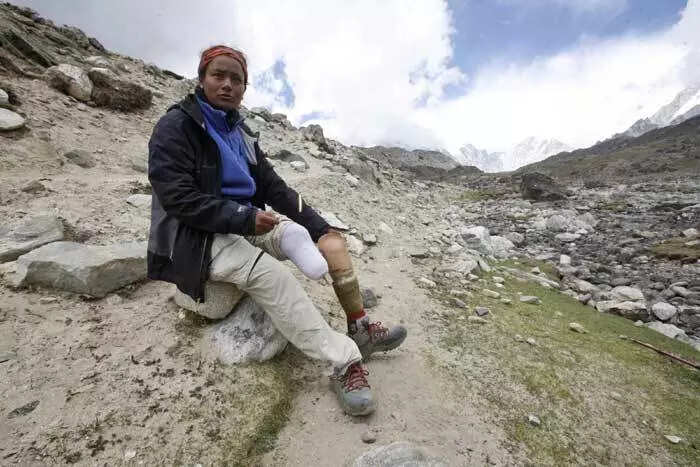
She told the doctors that if she could survive an entire night on railway tracks, she could survive the surgery too and asked them to amputate her leg to save her life. With limited resources, doctors and even a pharmacist donated blood themselves. Her leg was amputated without anaesthesia. But physical pain was only the beginning.Twenty-five days later, while still recovering, she read newspaper headlines claiming she had attempted suicide because of poverty or family rejection. The narrative hurt more deeply than her wounds.
Instead of breaking her, it ignited something powerful.
“This is their time,” she thought. “Soon my time will come. I will prove everyone wrong.”
Confined to a hospital bed with a missing leg and multiple spinal fractures, unsure whether she would ever walk again, Arunima decided she would do something extraordinary: she would climb Mount Everest.Many advised her to accept a “normal life”, find a desk job, and move on. But her brother became her strongest pillar, encouraging her to meet Bachendri Pal, the first Indian woman to summit Everest in 1984.When Arunima met Pal soon after being discharged, the legendary mountaineer listened to her story with tears in her eyes and said something that stayed with her forever: even dreaming of Everest in such a condition was itself a victory, in her heart, she had already climbed the mountain.After her family, Bachendri Pal became the first person to truly believe she could do it.
The real test, however, began on the mountains.
Simple distances became enormous challenges. A stretch that normally took climbers two minutes took Arunima nearly three hours. Her prosthetic leg slipped repeatedly, her injured body resisted every step, and doubts surrounded her. Yet within eight months of relentless training, the same climbers who once asked her to slow down began asking in amazement how she moved so fast.During the Everest expedition, danger followed constantly. Blue-green ice sheets, beautiful in photographs but deadly in reality, caused her prosthetic leg to slip. She saw frozen bodies of climbers who never returned. Even her Sherpa once advised turning back when oxygen levels dropped dangerously low near the Hillary Step, which was close to the top.
But Arunima refused
She knew the climb had cost enormous effort and sponsorship, nearly ₹60–70 lakh, and more importantly, years of emotional struggle. She believed the body follows the direction of the mind.“Disability is not physical,” she said later. “If the brain works, nothing can stop you. But if the mind gives up, even a healthy body becomes handicapped.”
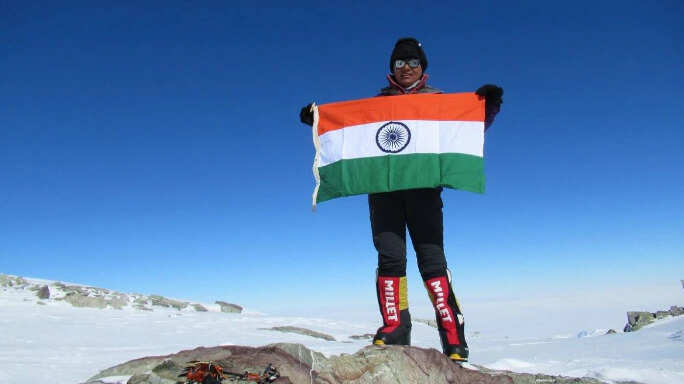
Against all odds, in 2013, Arunima Sinha stood on the summit of Mount Everest, becoming the first Indian female amputee to achieve the feat. Even there, with oxygen running out, she insisted on capturing photographs and videos, believing that if she did not survive the descent, her message should still reach India’s youth.Her story, later shared widely including in an INKtalks YouTube talk, became more than a tale of mountaineering. It became a testament to human resilience.From a hospital bed where survival itself was uncertain to the peak of the world, Arunima transformed tragedy into purpose. In 2015, she was awarded the Padma Shri, India’s fourth-highest civilian honour, recognition not just for climbing a mountain, but for redefining possibility.Her journey reminds us that courage is not the absence of pain; it is the decision to rise despite it. Because sometimes, the greatest summit a person conquers is not Everest, but the voice inside that refuses to surrender.

 English
  हिन्दी