 Sipu Jha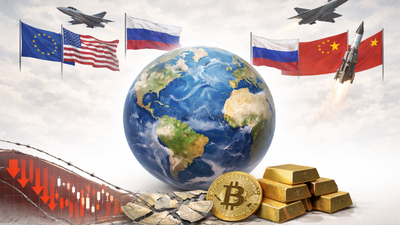
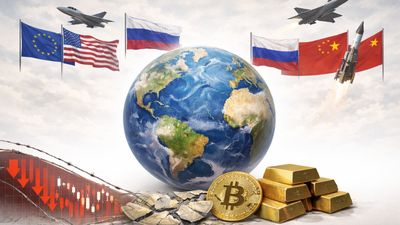
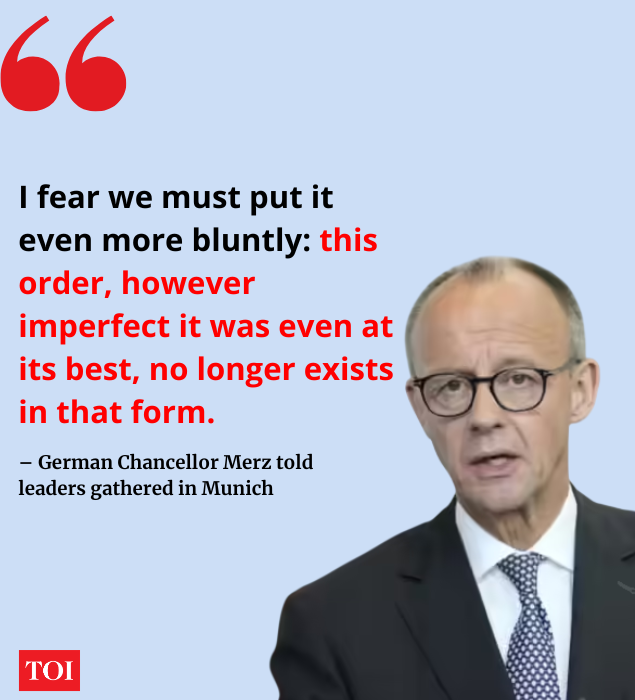
In February 2026, at the Munich Security Conference, world leaders dropped the usual diplomatic language. Germany’s chancellor said the global order “no longer exists”. France warned Europe must be ready for war. US secretary of state Marco Rubio declared that “the old world is gone”. At Davos, Canada’s prime minister spoke of a “rupture” in the liberal democratic system and echoed an ancient warning: the strong do what they can, the weak suffer what they must.These were not offhand remarks. They reflected a growing belief that the post-1945 system, built on US leadership, open markets and shared rules, is breaking down. Russia’s war in Ukraine grinds on. Trade disputes are hardening into economic blocs. Technology and finance are being used as weapons. Alliances look more transactional, less rooted in shared values.For decades, the world operated on the assumption that globalisation and American power would provide a stable framework. That assumption is now in doubt. The question is no longer whether the order is under strain, but whether we are already living in the aftermath of its collapse.So, is the world order dead?
Munich and the ‘great disorder’
The MSC 2026 was a shock to many: every speaker seemed to acknowledge a breakdown in the old system. The Munich Security Report 2026, titled “Under Destruction,” bluntly states that “more than 80 years after construction began, the US-led post-1945 international order is now under destruction”. In other words, the shared rules and norms that governed alliances after WWII are under sustained strain. Merz’s keynote warned that Europe’s peace taken for granted in decades past is now fragile. He famously said Europe’s freedom “is no longer a given” and needs active defence.
Leaders cited multiple causes: unilateralist US policies like sanctions and tariff threats, Chinese assertiveness in Asia, Russia’s war on Ukraine and an emerging multipolar world. In practical terms, many agreed that pragmatism and power are overtaking shared principles. The MSC heard that alliances will be less “values-based” and more transactional: French President Macron said, “Europe must learn to become a geopolitical power” and British PM Starmer urged building “hard power… to deter aggression, and yes, if necessary, be ready to fight”. The consequences are not only military or financial. They extend into the movement of people and the politics of borders. Hans-Hermann Hoppe argued that trade and migration can act as substitutes: when goods circulate freely, labour need not. When trade contracts, wage gaps persist and migration pressures grow. In an age of economic nationalism, the politics of borders may become more volatile, not less.Overall, Munich painted a picture of global trust eroding. Weapons of choice are shifting from diplomacy to coercion: trade barriers, technological export bans, targeted sanctions and capital controls all figure prominently in leaders’ speeches. In this context, the very concept of an international order is in doubt. The unanimous sense was that old guarantees like NATO’s Article 5, US dollar hegemony cannot be taken for granted.
The five fronts of Conflict
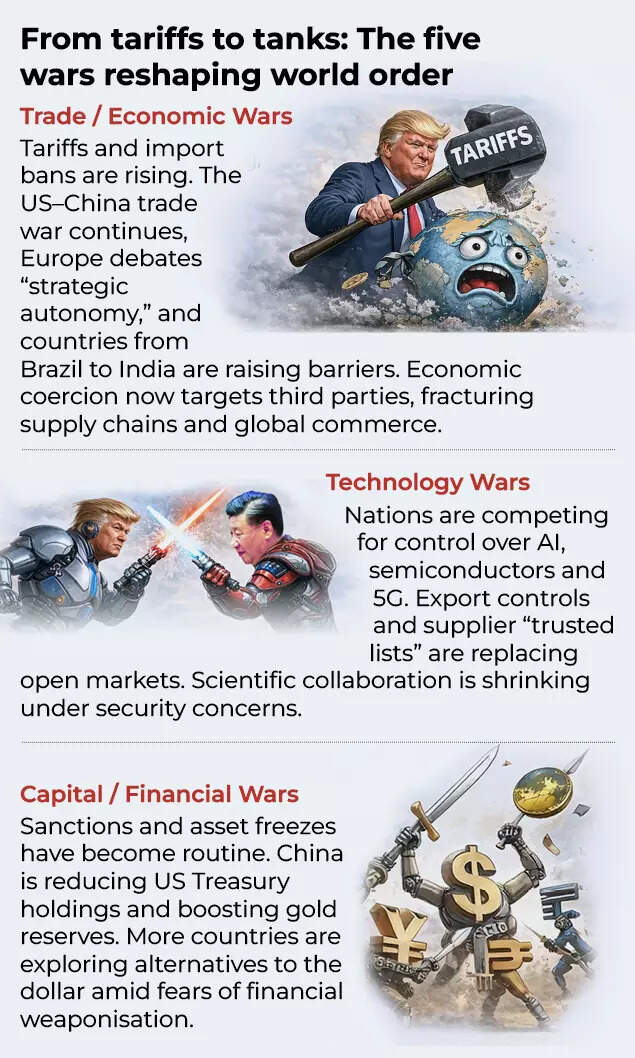
In this new era, conflict is no longer confined to the battlefield. As Ray Dalio, founder of Bridgewater Associates argues, states are already waging economic and technological wars, with power increasingly determining outcomes. Today’s clashes span five domains.Trade wars are back. Tariffs and import bans are rising, the US–China trade dispute endures, and Europe debates “strategic autonomy”. Countries from Brazil to India are raising barriers, while economic pressure is applied even to third parties. The result is fractured supply chains and deepening uncertainty.
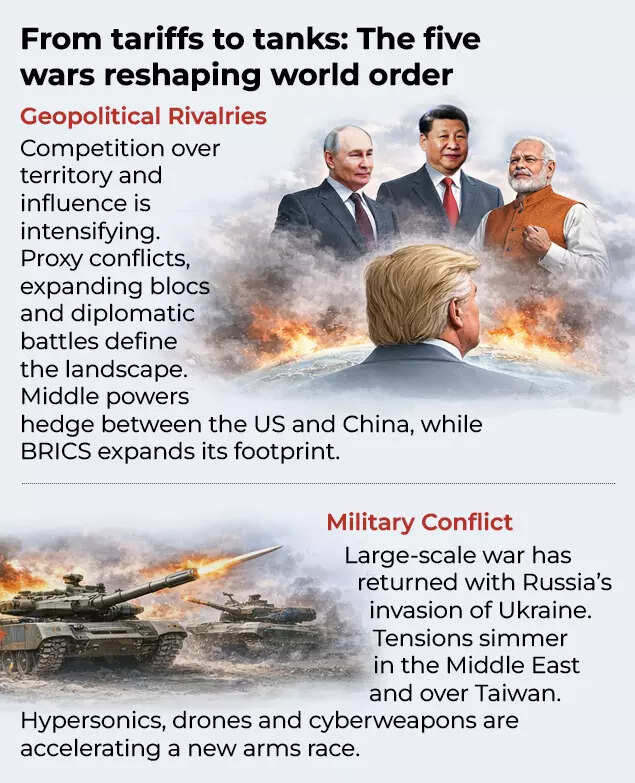
Technology is another front. Governments compete over AI, semiconductors and 5G, using export controls and industrial policy as strategic tools. Open scientific exchange is giving way to guarded innovation.This multidimensional conflict suggests that the old “rules-based order” is out of gas. The “rules” seldom apply to great powers – instead they say “do as I say, not as I do.” As the MSC report observes, when powerful states clash they “don’t get their lawyers to plead their cases to judges” but resort to power. In practice this is happening: norm after norm (WTO trade dispute, cyber norms, UN veto) is being bypassed when inconvenient. With no agreed framework to resolve disputes peacefully, might makes right again.
Economic fallout: Markets and money
If world order is crumbling, what does it mean for economies? The outlook is alarming for several reasons. First, confidence in cross-border finance and credit is under siege. Government bonds (the foundation of the old monetary order) look vulnerable. Dalio and others warn that in past “Stage 6” eras, sovereign debt has often been wiped out or devalued by massive money-printing. Investors fleeing uncertainty are snapping up hard assets: gold just hit new highs on multiple markets, crypto is volatile, and real estate in safe countries is hot. Traditional fixed-income no longer seems safe when currencies might be debased to fund war spending.Second, the global supply of trust is shrinking. Agreements reached under the old order – trade deals, investment treaties, patent laws – may break or be renegotiated. Companies and investors face geopolitical risk premiums. For example, sanctions mean an investor can’t rely on legal enforcement across borders as before. The Guardian notes that losing the US as a stabilising “public good” (dollar, Treasury markets, NATO umbrella) carries real costs. Nations may hoard capital (onshore controls, currency restrictions) for war spending, leading to fragmented markets and capital shortages in crises.Broadly, the risk is chronic uncertainty. Businesses can’t plan long-term when the rules might change overnight.
Military re-armament and alliances
The breakdown of peace has a military dimension. Across Europe and Asia, armies are growing fast. Japan’s government, ending decades of pacifism, approved a record ¥9.04 trillion budget (˜$58 billion) for FY2026 – its largest ever. This funds new long-range missiles and unmanned systems (“SHIELD”) for its islands. Tokyo explicitly cites pressure from nuclear-armed neighbours (China, North Korea, Russia) as justification. Similarly, European countries are rapidly increasing defence outlays. France and Germany announced multi-hundred-billion-euro rearmament plans; NATO estimates allies’ combined defence spending just hit 3% of GDP. New air and naval bases, missile defenses, and drone programmes are being built.
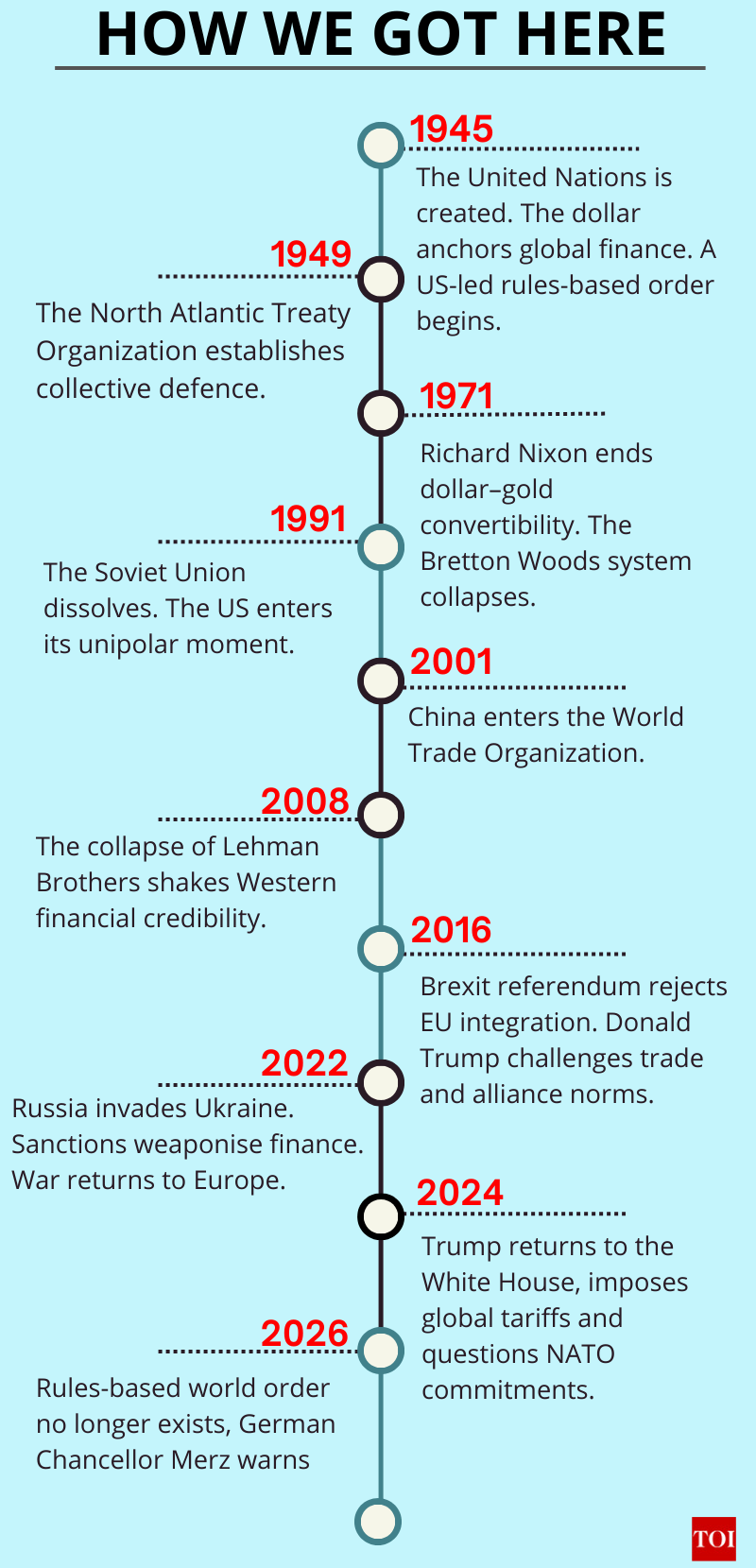
Russia and China meanwhile accelerate their own programmes. Russia has fielded hypersonic missiles, and China is mass-producing long-range rockets and advancing cyber/offensive AI. All these are tied to shifting strategic postures: Europe wants to close a “strategic autonomy” gap, Japan wants to deter China over Taiwan, and even non-military EU countries like Austria and Ireland are debating their neutrality in practical terms. Militaries are also integrating technology: drones, space capabilities, and AI-driven systems are central to 21st-century arsenals.Alliances are in flux too. Some old pacts hold firm (NATO is still the biggest military bloc), but others are shaky. The UK now deepens ties with the US and EU despite Brexit (a “charm offensive” of defence cooperation). On the other hand, the Gulf states are hedging between the US and China, and even Latin American militaries are diversifying arms sources. The Guardian notes that some countries “want to sidestep the US” by seeking new pacts, but face the dilemma that “losing America means losing a lot” of security guarantees.
Cyclical parallels: Echoes of the past
Dalio has popularised what he calls the “Big Cycle” theory: the idea that global orders rise and fall roughly every 100–150 years, driven by the interplay of money, domestic cohesion and external rivalry. Historians debate how precise such cycles really are, but the pattern he sketches: debt accumulation, internal strain and external confrontation, feels uncomfortably familiar.The 1930s offer a parallel. Faced with Depression-era hardship, countries turned inward: the US raised Smoot-Hawley tariffs, the British sought “empire free trade”, and Asia saw militarist coups. Populist and autocratic leaders like Hitler, Mussolini, Tojo rose by promising national revival. History warns that when the global pie shrinks, competition for resources often turns belligerent. In Dalio’s words, “Hitler and the Japanese military didn’t just happen. They were the result of a broken economic system”. Today, leaders remark on this parallel explicitly: they see echoes of 1938 in the risk of war, and economists worry the debt hangover of 2008–2020 has never been fully resolved.Of course, historical analogies are never perfect. The Cold War (1945–90) had different dynamics than today’s fluid multi-polarity. The great danger, analysts argue, is the “prisoner’s dilemma” of war. When rival powers each fear being dominated, they arm rapidly and escalate each other’s fears (tit-for-tat sanctions, proxy conflicts, troop deployments).
A new order on the horizon?
If the old order is dying, what comes next? There are tentative signs of emerging blocs and concepts, but they are uneven. Many commentators point to BRICS+: Brazil, Russia, India, China, South Africa and new members, as a potential pole of a future order. The grouping now encompasses nearly half the world’s population and a substantial share of global commodities, making it a tempting counterweight to Western institutions. Chinese officials have described it as the nucleus of a new global architecture.Yet BRICS is less a coherent bloc than a coalition of convenience. India and China remain strategic rivals. Brazil’s foreign policy shifts with domestic politics. South Africa faces economic stagnation and internal strain. The grouping lacks a unified military structure, a reserve currency or an integrated market. For now, it is more a platform for signalling dissatisfaction with Western dominance than a fully formed alternative order.But building a truly new liberal, rules-based order looks hard. The Guardian notes experts doubt any alternative architecture can easily handle two superpowers at odds. Instead, “alliances will be less solid, more transactional” and foreign policy more about ad-hoc deals. In practice, smaller states are already hedging: some Latin American countries are deepening ties with China to balance the US; Middle Eastern states sign separate security deals with Russia, Turkey or the US. Talk of “third paths” aside, the emerging picture is patchwork. Even as some lament losing US-led order, others warn of new camps: an Iran-led axis, a NATO-like Asian group, and a Sino-centric Eurasian network are all plausible, with soft and hard competition between them.
What’s next
So, is the world order dead? Not with a bang, but with a steady erosion of the assumptions that once held it together. The US-led system that shaped the post-1945 era has not formally collapsed, yet its authority has thinned, its guarantees questioned and its moral clarity blurred. What we are witnessing is less an obituary than a transition; messy, anxious and potentially dangerous.Power is dispersing, alliances are hardening and economics is no longer insulated from geopolitics. A multipolar world is emerging, but without agreed rules or trusted referees. History suggests such interludes are rarely calm. The real question is not whether the old order is gone, but whether today’s leaders can build something more stable before rivalry tips into rupture.



 English
  हिन्दी