 Sipu Jha
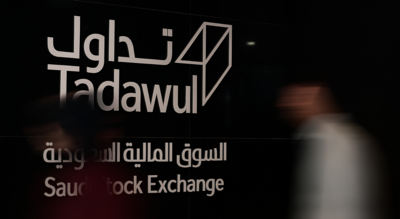
Middle East tensions have entered their fifth day and the UAE is slowly moving back towards normalcy. After a two-day pause, stock markets are set to reopen, and offices in Dubai and Abu Dhabi are preparing for staff to return in person. The UAE Capital Market Authority earlier confirmed that trading and settlement on the Abu Dhabi Securities Exchange and the Dubai Financial Market will resume on Wednesday. Despite the gradual reopening, market participants are still cautious, with the threat of further Iranian strikes continuing to loom over the region. Analysts warned that while immediate disruptions may be limited, ongoing geopolitical tensions could weigh on investor sentiment in the near term.“The reopening of markets and offices is a critical step in stabilising confidence,” a senior finance official told ET, adding, “uncertainty remains a major factor for both local and international investors.”In last trading session on Sunday, Saudi Arabia’s TASI (Tadawul) had plunged about 4.8%, touching a 35-month low before recovering some ground. The Qatar Stock Exchange index also fell by more than 4% when trading resumed on Monday morning.Dubai International Financial Centre (DIFC), home to 8,844 active firms including 102 hedge funds, will resume in-person operations from Wednesday. Retail and food outlets within the centre are expected to function fully. “Commercial and corporate entities and other offices should continue to follow their internal protocols and business continuity plans,” the DIFC Authority said on Tuesday evening.Earlier disruptions caused by damage to an Amazon Web Services data centre in the UAE and another facility in Bahrain affected certain banking and delivery services on Monday, though services were restored by Tuesday.Much like traders, travellers are also beginning to resume normal schedules. Speaking at a press conference on Tuesday, the government announced that national airlines will add 80 extra flights daily in the next phase, providing capacity for 27,000 passengers. Minister of economy and tourism Abdulla bin Touq Al Marri highlighted that since March 1, a total of 60 flights have already departed, carrying 17,498 passengers.Authorities have also established a safe air corridor in coordination with regional countries, capable of handling up to 48 flights per hour, the minister said.Recently, the kingdom’s President Mohamed bin Zayed Al Nahyan along with Dubai Crown Prince and Deputy Prime Minister Hamdan bin Mohammed bin Rashid Al Maktoum were seen dining at a restaurant in Dubai Mall on Monday evening, a move that helped project confidence to residents and investors.After Iran announced a ban on exports of all food and agricultural products, Al Marri assured that the UAE has adequate reserves. He stated that stockpiles of essential goods and key commodities are sufficient for four to six months.The UAE imports about 80% of its food supplies, with Iran being an important supplier. Authorities are closely monitoring markets to prevent unjustified price increases, and residents have been urged not to panic-buy or hoard supplies.




 English
  हिन्दी