 Sipu Jha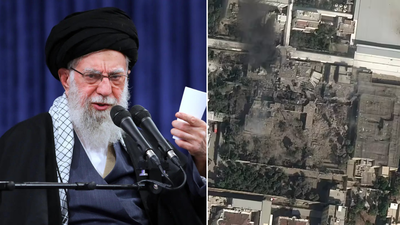
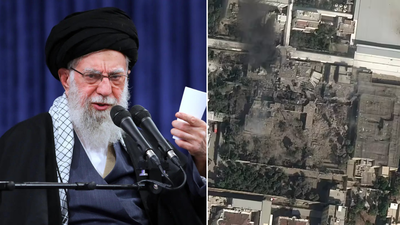
Was the plan to kill Ayatollah Ali Khamenei scheduled as early as November 2025 by Israel? Prime Minister Benjamin Netanyahu had scheduled a mission in a “very small forum” to assassinate Iran’s Supreme Leader back in November, Israeli defence minister Katz said on Thursday.Khamenei was eventually killed on the last day of February after Israel and the United States launched a high-intensity military campaign against Iran.Katz added that the timeline for the strike was accelerated due to massive anti-regime protests in the Islamic Republic, which created conditions that were favourable for the United States and Israel to carry out the operation in Iran.
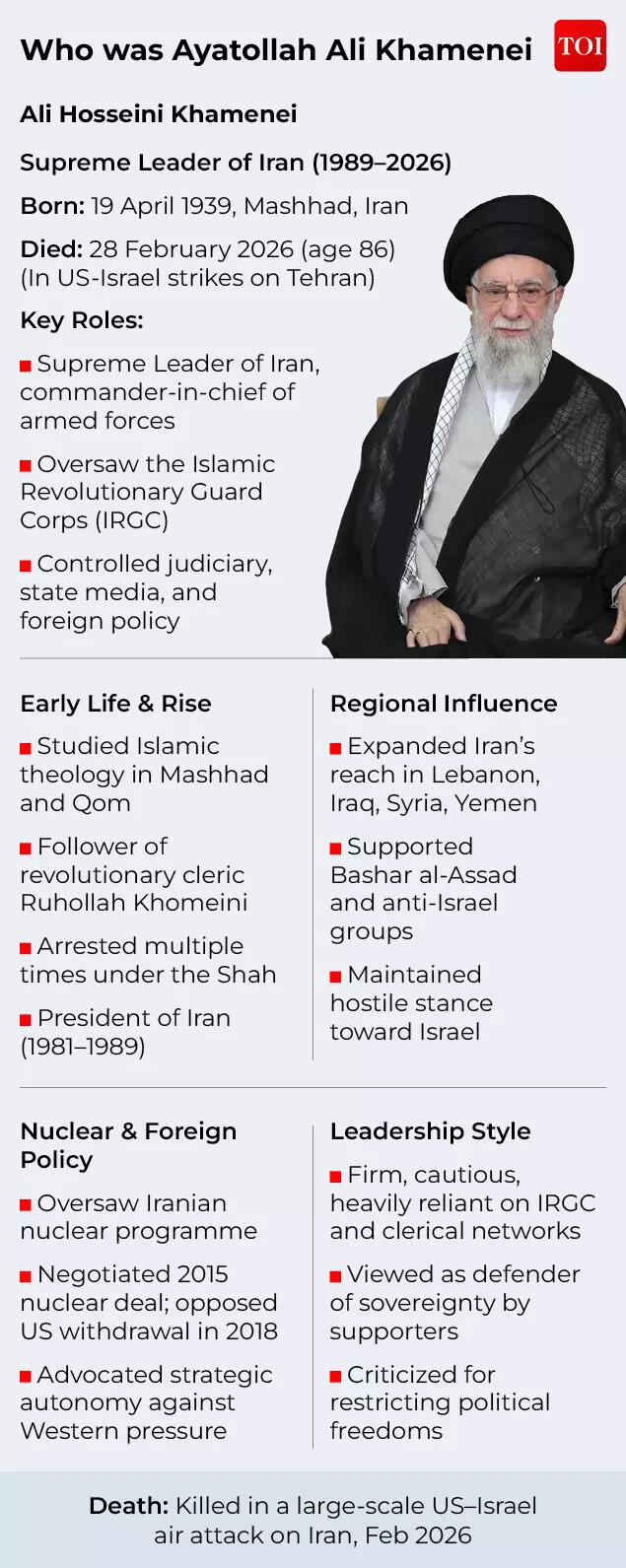
Katz made the statements during a round of interviews with Hebrew-language media outlets. Speaking to Channel 12, Katz said that in November 2025, a select group of officials held talks with Netanyahu “in a very small forum” on the possibility of assassinating Khamenei, who was killed in an Israeli strike on Saturday, the first day of the current US-Israeli campaign against the Iranian regime.
Israel planned Khamenei strike earlier, timeline later accelerated: Katz
Israel Katz said that Israel had initially planned to launch an operation targeting Ali Khamenei in mid-2026, possibly in June.According to Katz, Israel did not immediately share the plan with the United States. Jerusalem was operating “under the assumption that we might have to carry it [the assassination] out on our own.”US-Israel vs Iran: Live updatesHowever, the situation changed after anti-government protests erupted across Iran at the end of December. Katz said that during this period a “kind of dialogue” developed between Israeli Prime Minister Benjamin Netanyahu and US President Donald Trump.
Protests created urgency and security concerns
The protests plunged the Islamic Republic into chaos. Thousands of demonstrators were reportedly killed by regime forces, with activist groups estimating the toll to be in the tens of thousands.Katz said both Israel and the United States were surprised by the scale of the unrest. He explained that the situation raised fears in Israel that the Iranian leadership might launch a pre-emptive strike before Israel could act.“It surprised everyone. The unrest didn’t just create an opportunity, there was also serious concern at the time that, because of the pressure on the regime from the protests, the regime might launch a preemptive missile strike on Israel and on American forces in the region,” he said.
Washington and Jerusalem began joint planning
Amid these developments, discussions about removing the Iranian leadership also began between Washington and Jerusalem.At that stage, Katz said both countries agreed “on cooperation in defining the objectives” of an operation against Iran. They also started discussions about “creating the conditions for the Iranian people to begin acting to overthrow the regime; we began advancing those objectives.”According to Katz, coordination between the two allies soon expanded.“There was joint planning, and afterward a joint operational planning process,” he said.He rejected suggestions that either country pressured the other into launching the attack, saying both governments acted independently based on their assessment of the threat posed by Iran.Praising Netanyahu, Katz said he believed “the only person in the world, the only leader who could have created such cooperation with President Trump, is Benjamin Netanyahu.”
Questions raised about renewed conflict with Iran
During an interview with Israel’s Channel 12, journalist Dana Weiss questioned Katz about why Israel was once again targeting Iran’s nuclear and missile programs despite previous claims that they had been significantly weakened.“We met here after Operation Rising Lion,” Weiss said. “You probably remember what you said there: ‘I can say for sure that Iran will not have a nuclear weapon as a result of what we did.’”Weiss noted that Katz had previously said it would take “years” for Iran to rebuild its nuclear and ballistic missile capabilities, yet Israel was again striking those same programs while still facing Iranian missile attacks.Responding to the criticism, Katz defended the earlier operation.“We eliminated the Iranian nuclear program as it was and had been for many years,” he said, adding that Israel was now acting to prevent Iran from rebuilding those capabilities.
Regime change seen as possibility, not primary objective
Asked whether Israel might face another war with Iran within months, Katz avoided giving a clear timeline. Instead, he said the current military campaign was far broader than previous operations.The ongoing assault on Iran, he said, was using “three times more force” than the earlier conflict.“I hope this will end with the Iranian people overthrowing the regime,” he said.In a separate interview with Kan public broadcaster, journalist Suleiman Maswadeh asked Katz whether the war would continue until Iran’s leadership was completely replaced.Katz said that outcome ultimately depended on the Iranian population.“The goal is to destroy Iran’s ability to return to its nuclear program, to destroy its ability to return to producing masses of balistic missiles, to destroy its ability to help all of its proxies in the region and to renew its operations to destroy Israel,” Katz said.“And the issue of the regime’s collapse and replacement, that is something that we expect, and and want to make possible for the people of Iran to carry out.”
US and Israel align on military objectives
Katz’s comments appeared to reflect the broader objectives outlined by Washington. The United States has said the goals of the military campaign include destroying Iran’s ballistic missile capability and naval power, preventing it from acquiring nuclear weapons, and ending its support for regional proxy groups.

At the beginning of the joint US-Israel attacks, Donald Trump also addressed the Iranian public directly.He urged them to “take over your government” once the military operations are over, adding: “It will be yours to take. This will be probably your only chance for generations.”






 English
  हिन्दी