 Sipu Jha
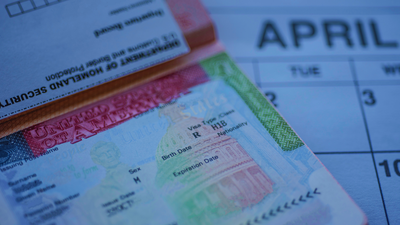
A new bill aimed at reversing controversial restrictions on the H-1B visa program has been introduced in the US Congress by Bonnie Watson Coleman. The new legislation, named the Welcoming International Success Act, aims to rescind a presidential proclamation issued in September 2025 that tightened the standards for employers sponsoring H-1B workers. The earlier rule set tough wage standards and a $100,000 fee for employers sponsoring H-1B visa holders, prompting concern among tech companies, universities, and other industries that rely on foreign skilled labor.
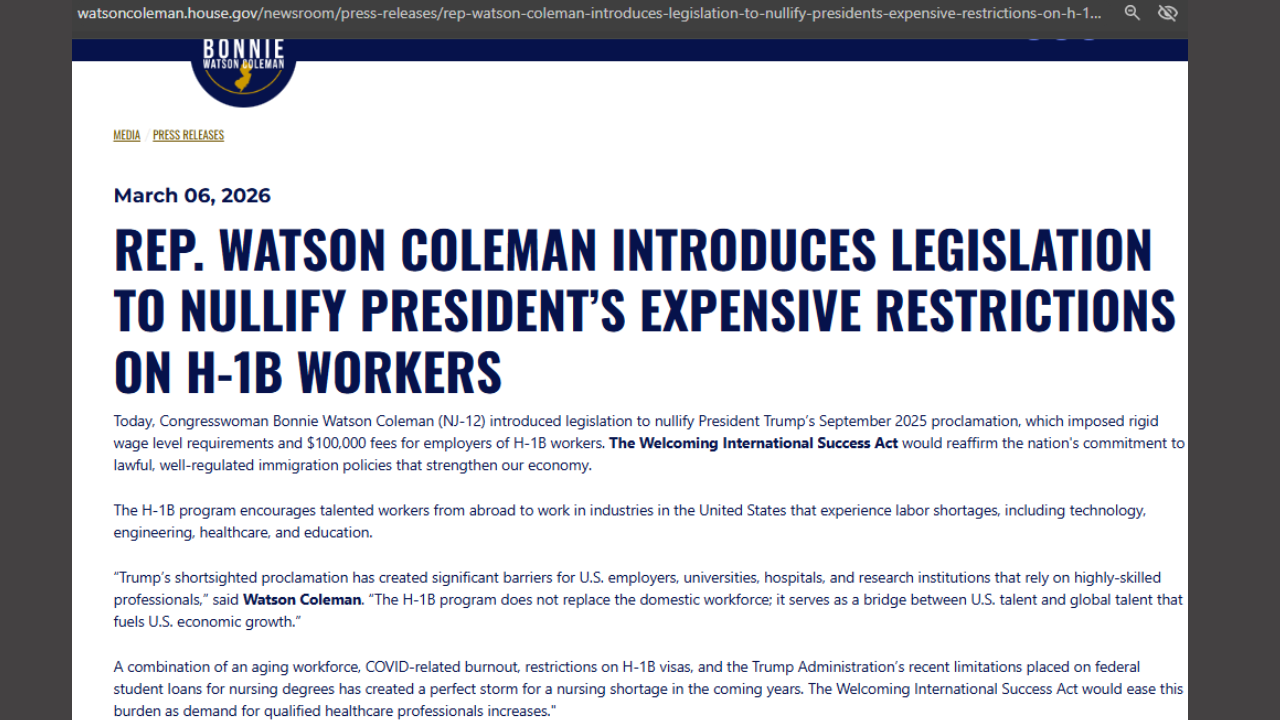
Press release
Bill aims to reverse H-1B restrictions
According to the lawmaker’s office, the Welcoming International Success Act seeks to reverse these restrictions and return the H-1B visa system to the way it was before.
The supporters of the bill claim that the proclamation issued in September 2025 has presented many barriers for businesses and institutions that wish to employ highly skilled international professionals. The bill is intended to ensure that employers can continue recruiting talent from abroad in fields where skilled workers are in short supply.
Support for skilled immigration
In a statement announcing the legislation, Watson Coleman said the restrictions undermined the country’s ability to attract global talent. She argued that policies affecting the H-1B visa programme should support innovation and economic growth rather than discourage companies from hiring skilled professionals. She added, “Trump’s shortsighted proclamation has created significant barriers for U.S. employers, universities, hospitals, and research institutions that rely on highly-skilled professionals. The H-1B program does not replace the domestic workforce; it serves as a bridge between US talent and global talent that fuels US economic growth.” The H-1B visa programme allows US employers to hire foreign workers in specialised fields such as technology, engineering, medicine, finance, and education. It served as one of the main routes for all those highly qualified foreign workers who entered the US for many years.
Canva
Impact on employers and universities
Business groups and academic institutions have often expressed concerns that sudden policy changes can disrupt hiring plans and research projects that depend on international talent. Universities, software firms, and healthcare providers are among the sectors that frequently rely on H-1B immigrants to do specialized jobs. Advocates of the Welcoming International Success Act say reversing the proclamation would help maintain the United States’ competitiveness in attracting skilled professionals from around the world.
Legislative process ahead
Like all bills, it must progress through a series of stages in Congress before it can become law. It must be passed by the House of Representatives, the Senate, and then signed into law by the President. For the time being, it marks the beginning of a potentially larger discussion on the future of the H-1B visa program and the value of foreign talent to the American economy.






 English
  हिन्दी