 Sipu Jha
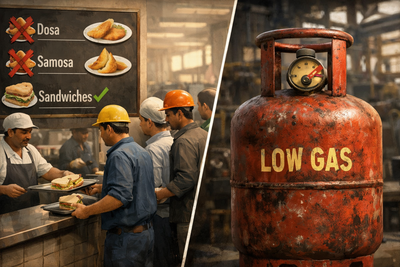
Craving that dosa cooked to a perfect crisp? Off the menu. Those freshly fried canteen samosas? Gone as well. Ongoing tensions in the Middle East have begun to ripple into everyday industrial activity in India, as shortages of commercial LPG start to disrupt factory operations. Manufacturers said that tightening supply is creating hurdles not only for production processes but also for routine worker facilities such as factory canteens. “Every day has become a new challenge now,” Satish NS, president of Haier India, a maker of refrigerators and televisions, told ET. “Component suppliers are facing challenges with low LPG supplies, which will impact final production. Brazing operations in factories are getting affected. And even running factory canteens has become difficult, which is why we are now electrifying all equipment.”
India Inc redesigns menu
The strain is being felt in staff kitchens, where menus are being pared back as dishes that require significant gas consumption are removed. Meals that require little or no cooking, including packaged foods and sandwiches, are increasingly being served to workers, while in a few plants even the supply of tea has been reduced. Items such as dosa, samosa and non-vegetarian dishes are gradually disappearing from factory canteens. In many plants, they are being replaced with simpler options that require minimal cooking. Executives described the situation as “hand-to-mouth,” saying that some facilities now have LPG stocks that may last only until the weekend.The impact is visible across several large manufacturers. Parle Products, the country’s biggest packaged food company, has scaled down the variety of food served at its 10 company-run factories and 125 third-party plants. The canteen menu, which earlier included multiple items, has now been restricted to only a few dishes. Foods such as chapati, dosa and fried snacks are being replaced by simpler preparations like sandwiches. The company employs close to 4,500 people across these plants. “Workers understand the problem at hand,” said Mayank Shah, vice president at Parle Products. “Even production is being impacted in plants that run on fuels such as LPG, propane, and butane, with some shifts or lines not operating. We are trying to balance overall production with the plants that are least impacted.”
It’s not just food industry!
Other companies have also begun adjusting their operations. At Mahindra & Mahindra, canteens have removed live counters and fried foods to reduce gas consumption. Tata Motors similarly warned participants attending a supplier event at its Pune plant that the food menu would be restricted. Manufacturing facilities in the country generally employ between 3,000 and 5,000 workers, including contract and indirect staff, while the management of canteens is usually outsourced to external vendors.Kamal Nandi, head of the appliances business at Godrej Enterprises, said the shortage has severely affected brazing work involved in sheet metal operations. “It has become a hand-to-mouth situation,” he said. “We are trying alternatives to LPG as we have supplies only until Saturday. This is when demand for cooling appliances such as air-conditioners and refrigerators is peaking.”
Chulhas make a comeback as India Inc turns to alternatives
To ensure workers continue to receive meals, the company has revived the use of firewood stoves in its canteens. To cope with the shortage, factories are introducing electric alternatives including induction cooktops, electric rice cookers and electric roti makers. In some locations, firewood chulhas have also returned. GK Sharma, India region chairperson at French auto parts maker OP Mobility, said the company has been exploring alternatives such as electricity and solar power. However, LPG shortages are still affecting certain operations. “We are navigating a tough phase,” he said, referring to the impact on paint shop processes.However, not all factories have faced disruptions as many had already switched to alternatives. At Daimler India Commercial Vehicles, which manufactures trucks and buses under the Bharat Benz brand, canteen operations have continued normally. The facility’s kitchen runs entirely on electricity after the plant switched to 100% solar power, shielding it from the current LPG shortage.
Here’s what the government is doing to cushion the impact:
The government has moved to prioritise LPG supply for households as the energy crunch deepens amid the ongoing Middle East conflict. Earlier on Thursday, Centre announced a 20% cap on the average monthly supply of commercial LPG by oil marketing companies, which will coordinate the distribution with state governments. Refineries have also been asked to maximise LPG production. Some have already increased output by diverting propane and butane streams towards LPG production. Manufacturing companies will receive up to 80% of the average supply they had received during the previous six months.



 English
  हिन्दी