 Sipu Jha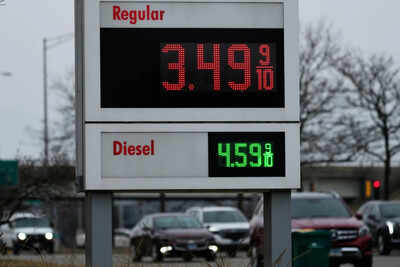
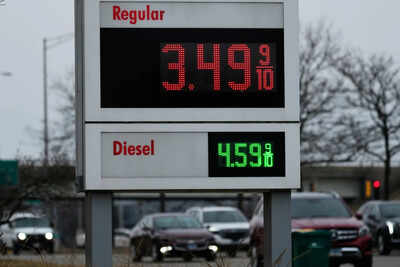
The Middle East crisis is no longer just a geopolitical standoff, rather it has now escalated into a full-scale war zone, with the potential to send shockwaves through multiple economies. Analysts have warned that the US and Israel’s attack on Iran could carry direct consequences for consumers and the broader economy. At the heart of the concern lies the Strait of Hormuz, a critical global oil route that has now been disrupted as the war intensifies.The global oil market is closely tracking developments around the Strait of Hormuz, a narrow waterway that carries roughly one-fifth of the world’s oil supply. As the crisis escalates, its impact is also expected to reach American consumers.It began at the Strait of HormuzOn Thursday, oil climbed above $100 a barrel even after 32 countries announced they would release a record 400 million barrels of oil into the market. Earlier in the week, prices had stayed below that level after US President Donald Trump suggested that the war would end soon, a prediction that now appears overly optimistic. Iran continues to control the strait. In his first public message since assuming leadership, Iran’s new supreme leader Mojtaba Khamenei said Thursday that the Strait of Hormuz would remain closed as a “tool of pressure.” US Energy Secretary Chris Wright said on CNBC that it could take weeks before the US Navy is able to start escorting oil tankers through the strait. While international tankers remain stranded in the Persian Gulf, Iran has continued moving its own oil through the passage. Its ships are currently the only ones transiting the route, allowing Tehran to maintain oil revenue while other countries face disruption. Even if the fighting were to stop immediately, reopening the waterway would not be instant. Homayoun Falakshahi, lead crude research analyst at Kpler, said it could take between one and three months to restore operations. Hundreds of ships would need to be cleared, and oil producers would also require time to repair damaged facilities, increase production and restart shipments. Analysts say the length of the war will play a key role in determining how far energy prices climb. Jay Hatfield, CEO and founder of Infrastructure Capital Advisors, warned that oil could reach $150 a barrel if the Strait of Hormuz remains closed. As oil prices rise, fuel costs are also expected to climb. Petrol prices are already moving towards $4 a gallon, increasing the cost of filling up vehicles. Diesel prices are also projected to approach $5 a gallon, according to CNN. Higher diesel costs would affect the transportation sector. Trucking companies that move consumer goods could introduce fuel surcharges to offset rising expenses, and some companies, including FedEx, have already begun doing so. Businesses are unlikely to absorb the added costs themselves. Many companies are already coping with tariffs introduced under the Trump administration, leaving little willingness to cut into profits further. According to JPMorgan, consumers are expected to absorb around 80% of tariff-related costs this year. As transportation becomes more expensive, certain products could see price increases sooner than others. Perishable goods such as dairy products, fruits, vegetables and fish are expected to rise first. Airfares may also increase. Over time, if fuel remains expensive, many goods transported by trucks, aircraft or ships could become costlier. Economic outlook facing pressure The potential economic impact is also drawing attention. While the US economy remains relatively strong, there are signs of vulnerability. Since May last year, the economy has lost 19,000 jobs. Large spikes in oil prices have historically been followed by weaker economic activity. Previous examples include the 1973 oil crisis, the oil shock during the 1990 Gulf War and the 2008 global financial crisis. A prolonged rise in energy costs could lead businesses to reduce hiring or implement layoffs. It could also cause stock markets to decline and reduce consumer spending, which accounts for roughly two-thirds of US economic output. The current situation contrasts with the surge in oil prices following Russia’s invasion of Ukraine in 2022, when the US job market was expanding strongly. Businesses today are already facing uncertainty linked to tariffs and the growing role of artificial intelligence, CNN reported. Reflecting these risks, economists at Goldman Sachs have revised their outlook. They have increased their forecasts for both inflation and unemployment and raised the probability of a recession this year to 25%, up from 20% previously.







 English
  हिन्दी