 Sipu Jha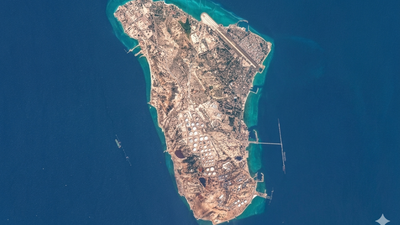
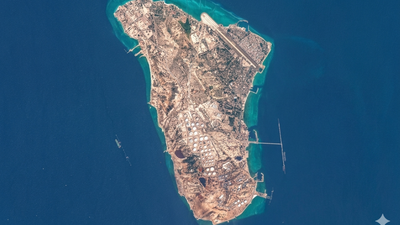
Amid the ongoing conflict in the Middle East, the United States has upped the ante against Iran by carrying out heavy airstrikes on Kharg Island — Iran’s economic lifeline and a strategic defense point in the Persian Gulf.During the recent attacks, the US forces conducted airstrikes on military installations on Kharg Island, including missile storage areas and other defence sites. According to media reports, the strikes focused on military facilities, while the oil export infrastructure itself was largely left intact.In an interview with NBC News, US President Donald Trump said previous US strikes had “totally demolished” most of the island’s oil infrastructure. He added that the US “may hit it a few more times just for fun”.Why it matters“He who controls Kharg Island controls the destiny of this war,” US Senator Lindsey Graham posted on X soon after the airstrikes.Kharg Island is widely seen as the backbone of Iran’s crude export system. Located about 25 kilometers off Iran’s northwestern Gulf coast, the island acts as the country’s main oil gateway, where crude is stored and loaded onto tankers bound for global markets.
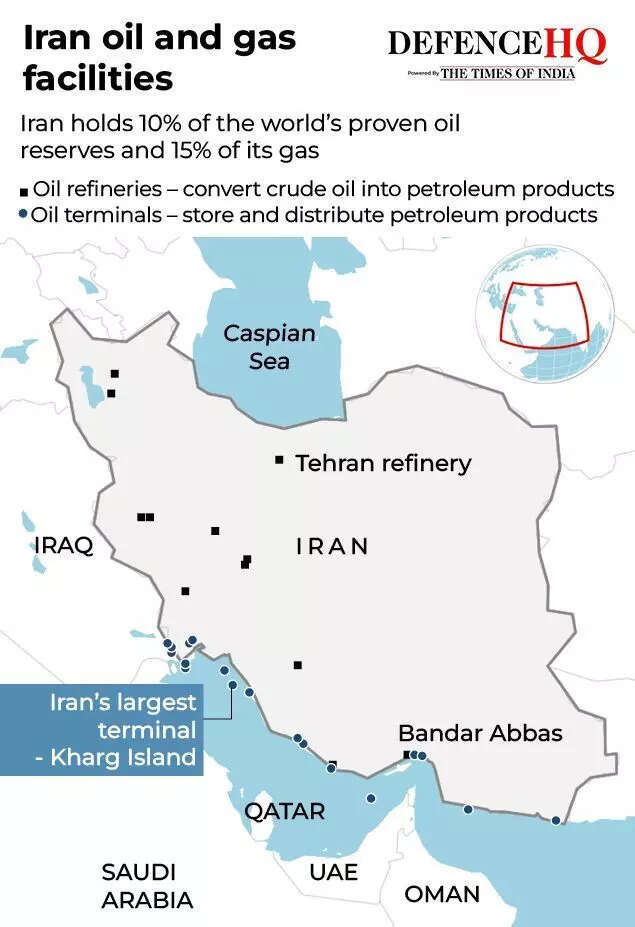
Though small in size, about 6 kilometers long and 3 kilometers wide, the coral outcrop handles nearly 90 per cent of Iran’s crude oil exports. Its deep-water jetties allow large tankers to load oil directly, something much of Iran’s shallow coastline cannot support.The island’s loading terminals were originally designed to handle up to seven million barrels of oil per day and can service eight or nine supertankers at the same time. More than 50 storage tanks spread across the island can hold over 34 million barrels of crude.Most of the oil shipped from Kharg does not come from the island itself. Instead, pipelines bring crude from oil fields in southern Iran to the terminals before it is loaded onto ships.Other export sites are far smaller in comparison. Lavan Island can process about 200,000 barrels per day and has storage capacity of roughly 5.5 million barrels. Sirri Island provides around 4.5 million barrels of storage. Meanwhile, the energy hub at Assaluyeh mainly handles gas condensate rather than crude oil.Kharg’s location also adds to its importance. The island sits close to the Strait of Hormuz, one of the world’s busiest oil routes. Any disruption there could quickly affect Iran’s oil revenues and send ripples through global energy markets.Petras Katinas, an energy researcher at the Royal United Services Institute told news agency PTI that Kharg Island was critical to funding Iran’s government and military.If Iran were to lose control of Kharg, it would be difficult for the country to function, even though the island isn’t a military or nuclear target, he said.“It doesn’t matter which regime is in power — new or old,” Katinas said. A takeover would give the US leverage over negotiations with Iran because the island is “the main node” of its economy.Strait of Hormuz factorKharg’s strategic importance is closely linked to the Strait of Hormuz, which lies southeast of the island.This narrow maritime passage connects the Persian Gulf to the Gulf of Oman and the wider Indian Ocean. Roughly 20% of the world’s oil supply passes through this chokepoint every day.Tankers carrying crude from Saudi Arabia, Iraq, Kuwait, Qatar and the United Arab Emirates all transit the strait before heading to global markets.Although Iran itself accounts for only about 3–4% of global oil supply, its geographic position along the strait gives it the ability to threaten a much larger share of global energy flows.A military hubAdditionally, Kharg is also one of Iran’s most significant military locations. Access to the island is tightly restricted and guarded by the Islamic Revolutionary Guard Corps (IRGC).The IRGC Navy maintains a presence there, including the 112th Zolfaghar Surface Combat Brigade, a unit that operates fast-attack boats designed for asymmetric naval warfare in the Persian Gulf.These vessels are typically equipped with anti-ship missiles, rockets and naval mines, allowing them to threaten commercial shipping and larger naval vessels operating nearby.Military infrastructure around the island includes coastal missile launchers, radar systems, surveillance networks and drone facilities used to monitor activity across the northern Persian Gulf.Iran’s regular navy, known as the Islamic Republic of Iran Navy, also operates in the broader Bushehr–Kharg region. It uses helicopters and boats for maritime patrols and potential mine-laying operations.Together, the IRGC Navy and the conventional navy maintain a presence that could pose risks to shipping lanes during periods of conflict.Why US did not target oil infrastructureUS forces struck defensive positions, bases and helicopter facilities in the Island. However it left the oil installations untouched.After the strikes, Trump said that he chose “not to wipe out” the oil infrastructure in the Kharg Island for “reasons of decency.” “Our weapons are the most powerful and sophisticated that the World has ever known, but, for reasons of decency, I have chosen NOT to wipe out the Oil Infrastructure on the Island,” Trump said in a social media post on Truth.“However, should Iran, or anyone else, do anything to interfere with the Free and Safe Passage of Ships through the Strait of Hormuz, I will immediately reconsider this decision,” he added.However, observers believe that Trump’s decision not to strike oil infrastructure could signal a broader US strategy.Here are the list of possible reasons
- Avoiding an energy shock: Targeting oil infrastructure on Kharg Island could have pushed global oil prices even higher, worsening inflation risks worldwide, including in the United States. Analysts say striking the island’s oil facilities would not only have hurt Iran but also affected American and European-linked oil companies operating in global markets.
- Bargaining chip: Some analysts believe Washington may want to keep Iran’s oil assets intact as a potential bargaining chip. Preserving the infrastructure could provide leverage in future negotiations or become strategically valuable if Iran’s political situation changes.
- Public support risk: Attacking Iran’s energy resources could also backfire politically. Such strikes might rally domestic support for Tehran instead of weakening it.
- Risk of counterattacks: Directly targeting Iran’s energy sector could invite retaliation. Iranian officials have warned that attacks on their oil infrastructure could trigger strikes against US or allied energy facilities across the Middle East. Iranian Foreign Minister Abbas Araghchi said on Saturday that if Iran’s energy facilities were hit, Tehran could retaliate by targeting US corporate facilities or companies with American shareholdings in the region.
Could US forces seize the island?Some reports suggest United States may be considering more aggressive options, including a possible amphibious assault on Kharg Island.According to security expert, capturing the island could severely disrupt Iran’s oil exports and give Washington leverage in future negotiations.However, the risks would be significant. Kharg lies close to the Iranian mainland, which would leave any landing force exposed to missiles, drones and naval attacks.While talking to news outlet CGTN, Military analyst Hossein Kanani Moghaddam pointed out Iran’s long maritime border along the Persian Gulf and said that Iranian forces could strike US units attempting operations near the Strait of Hormuz.“We have a 2,000-kilometer maritime border with the Persian Gulf. If all US forces were to enter the Strait of Hormuz, we could easily strike and neutralize them from our own territory along this maritime border,” Moghaddam said.Meanwhile, US officials have already deployed the amphibious assault ship USS Tripoli (LHA-7) along with the 31st Marine Expeditionary Unit to the Middle East.The force typically includes around 2,200 Marines and aircraft such as Bell Boeing V-22 Osprey, helicopters and Lockheed Martin F-35 Lightning II. With support units, the deployment can expand to roughly 5,000 personnel.A Pentagon official told Fox News that the deployment broadens military options and that the unit is prepared for ground operations if ordered.Kharg Island has shown remarkable resilience over the years. During the Iran-Iraq War in the 1980s, Iraqi forces repeatedly bombed the island and destroyed several storage tanks. Despite this damage, Iran continued to export more than 1.5 million barrels of oil per day.More than six decades after exports began in 1960, Kharg remains Iran’s primary energy gateway and a key strategic point in the security architecture of the Persian Gulf.As long as a significant share of the world’s oil continues to pass through the Strait of Hormuz, this small island will remain one of the most consequential pieces of infrastructure in the region.







 English
  हिन्दी