 Sipu Jha

Waking up should feel light. The body should reset. The mind should feel clearer than the night before. But for many people, mornings begin with a dull ache or a throbbing pain. It feels confusing. After all, sleep is supposed to heal, not hurt.Morning headaches are often brushed aside. They are blamed on “bad sleep” or “stress.” But when this keeps happening, it is rarely random. It is the body trying to say something, quietly but persistently.
Why does the head hurt right after waking?
The brain is sensitive to small changes. Blood flow, oxygen levels, and hydration all matter. During sleep, these systems shift. If something goes off balance, pain can follow.A drop in oxygen during sleep can trigger headaches. So can changes in blood vessels. Even mild dehydration overnight can tighten tissues around the brain. The result is discomfort that shows up the moment the eyes open.Research from the NIH has highlighted how sleep quality directly affects neurological health. Poor sleep is not just about feeling tired. It changes how the brain processes pain.
The silent triggers most people miss
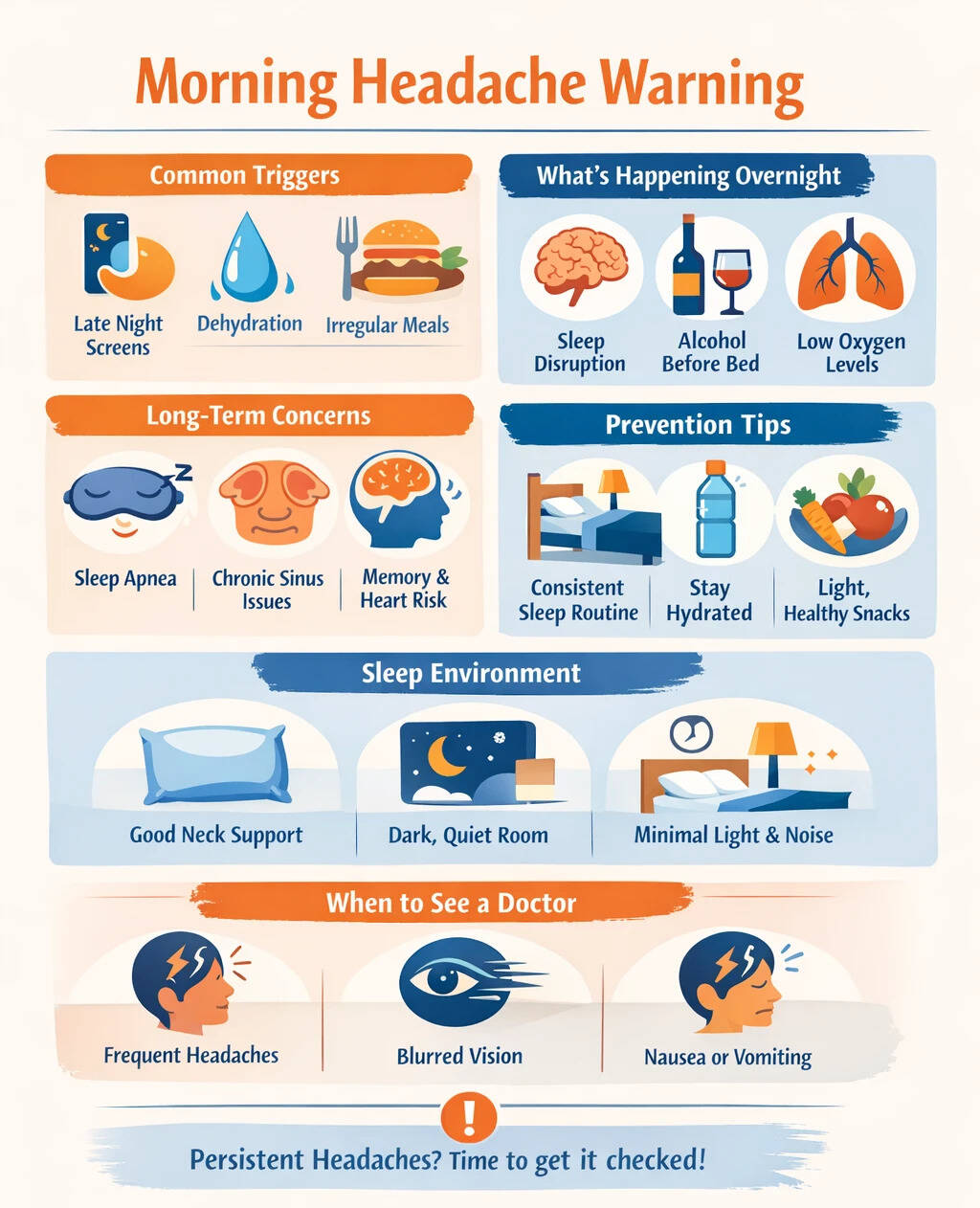
Many triggers are easy to overlook because they feel normal. Late-night scrolling. Skipping water. Eating heavy dinners.Dr Sujit Kumar explains it clearly, “If a person is constantly waking up with a headache, it is important to evaluate it medically because such conditions may indicate an underlying sleep or neurological concern that might require attention. Waking up with a headache is often ignored by people as a one-off issue, but in certain cases, it indicates lifestyle patterns that the human body is struggling to cope with. Very common but silent triggers include poor sleep quality, dehydration, late-night screen exposure, teeth grinding, and even irregular meal timings. In some patients, untreated sinus congestion or sleep apnea can also contribute to morning headaches.”These triggers do not feel serious on their own. But together, they build pressure on the body night after night.
What happens inside the body overnight
The body does not shut down during sleep. It recalibrates. Hormones reset. Muscles relax. The brain clears waste.Dr Kumar adds, “The important thing to understand about these headaches is that they are not random; they are actually signals. For example, going to bed dehydrated or going to bed with alcohol in the system creates vascular changes, sometimes triggering a migraine upon waking up. In addition, a disrupted sleep cycle affects neurotransmitters, making a person sensitive to pain.”This means even small habits can disturb a delicate system. A late dinner. A missed glass of water. A broken sleep cycle. Each one adds up.

Small lifestyle changes can prevent having headaches just after waking up. But persistent pain needs medical attention.
What it may mean in the long run
Occasional headaches may not be alarming. But frequent morning headaches need attention. They can point to deeper issues.Sleep apnea is one such condition. It reduces oxygen during sleep. Chronic sinus problems can also cause pressure that worsens overnight. Teeth grinding can strain jaw muscles for hours without awareness.Data from the Science Direct shows that chronic sleep-related disorders often present through morning symptoms first. Headache is one of the earliest signs.Ignoring this pattern can delay diagnosis. Over time, it can affect memory, mood, and even heart health.
Simple habits that can prevent it
Prevention does not need drastic changes. It needs consistency.Dr Kumar suggests, “From a preventative standpoint, it is important to maintain good sleep hygiene. This is because the brain requires a slow transition from wakefulness into sleep. This includes dimming lights, avoiding exciting programs, and going to bed at the same time each night. In terms of hydration, it’s also important to drink water early in the day rather than later in the evening as a form of compensation.”He further adds, “Nutritionally, it is important to avoid heavy, salty, or processed foods in the hours leading up to bedtime. This is because it prevents the imbalance of fluids in the body that leads to headaches. Stress management techniques such as deep breathing or guided relaxation can also reduce overnight muscle tension, particularly in individuals prone to jaw clenching.”A calm night often creates a pain-free morning.
Listening early can prevent long-term problems.
The role of your sleep environment
The room matters more than expected. Light, noise, and posture all influence sleep quality.“Another important factor is the sleep environment, where proper neck support, a dark room, and minimal noise are essential for a good night’s sleep. However, if headaches persist or become severe upon waking, it might indicate more serious conditions, including rare but critical causes like subarachnoid haemorrhage. In such cases, timely consultation with a neurologist is essential for proper diagnosis and management.”A good pillow can reduce strain. A dark room can improve deep sleep. Even small adjustments can reduce morning discomfort.
Poll
What do you think is the main cause of morning headaches?
When to stop ignoring the signal
A simple question helps: is the headache becoming a pattern? If yes, it needs attention. Frequent headaches. Severe pain. Nausea. Blurred vision. These are not routine signs. They need medical evaluation.Medical experts consultedThis article includes expert inputs shared with TOI Health by:Dr Sujit Kumar, Director & Senior Consultant – Neurology, KIMS Hospitals, Electronic City, Bengaluru.Inputs were used to explain why waking up with a headache can be linked to hidden triggers and why adopting simple daily habits can help prevent it effectively.








 English
  हिन्दी