 Sipu Jha
Driving the news
The White House says talks with Iran are alive, even as Tehran publicly denies direct negotiations and keeps up military pressure across the region. White House press secretary Karoline Leavitt said, “The United States has been engaged over the last three days in productive conversations,” while adding: “You’re beginning to see the regime look for an exit ramp.” Trump, speaking to congressional Republicans, insisted of Tehran: “They want to make a deal so badly, but they’re afraid to say it”.But the public messaging from Iran is sharply different. Iran’s parliament speaker Ghalibaf wrote on X: “Based on some intelligence reports, Iran’s enemies are preparing to occupy one of the Iranian islands with support from one of the regional states,” and warned: “Our forces are monitoring all enemy movements, and if they take any step, all the vital infrastructure of that regional state will be targeted with relentless, unceasing attacks.”That contrast – private signaling, public denial, maximum brinkmanship – is exactly why Ghalibaf has drawn so much scrutiny. Trump described the Iranian interlocutor only as a “top person” who is “most respected,” while declining to identify him because “I don’t want him to be killed.” Axios and multiple other outlets have pointed to Ghalibaf as the most likely front man, though he has denied negotiations are taking place.
Why it matters
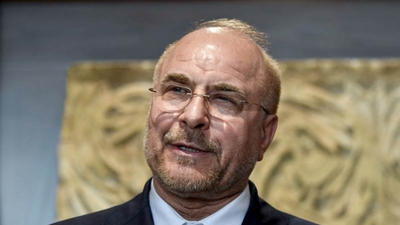
As President Donald Trump presses for a rapid end to the nearly month-old war with Iran, the Iranian figure emerging as a possible channel for diplomacy is not a reformist, a technocrat or a peacemaker in the Western mold. He is Mohammad Bagher Ghalibaf – a hardline survivor of Iran’s system whose brand of politics, ambition, image-making and alleged corruption has led analysts to see him as, in effect, Iran’s version of Trump.
The big picture
Ghalibaf’s rise has run through the Islamic Revolutionary Guard Corps, the police, Tehran city hall and parliament. Foreign Policy noted that his career was “fueled by populist imagery, real estate corruption, and ruthlessness.” As mayor of Tehran, he promoted himself as a hands-on modernizer, expanding transport links and public works while cultivating an executive image that was managerial, muscular and television-ready. The Wall Street Journal described him as “Iran’s wannabe strongman,” quoting analyst Sina Azodi calling him “A hard-liner with a pragmatic streak.”That combination may be exactly what appeals to Trump. The Guardian reported that Ghalibaf’s image is “that of a strongman – possibly the one characteristic in any human that most appeals to Trump.” In Washington’s search for someone inside Iran’s battered power structure who can both speak for the regime and survive it, Ghalibaf looks increasingly useful.Foreign Policy argued that the comparison between Trump and Ghalibaf is more than rhetorical flourish. Both men built political brands around strongman imagery, public populism and highly transactional power. Both relied on infrastructure and development as political theater. Both faced extensive allegations tied to property and patronage networks. And both proved unusually adept at surviving scandals that might have ended more conventional careers.
Zoom in
Ghalibaf is not a diplomat by instinct. He is a regime operator shaped by war, coercion and internal power struggles. He has spent three decades straddling civilian and military life, serving as commander of the Revolutionary Guards’ aerospace forces, Tehran police chief, Tehran mayor and now parliament speaker. He has run for president repeatedly and lost repeatedly. Yet the current war, and the killing of key Iranian officials, have handed him a role electoral politics never did: de facto centrality.That matters because Ghalibaf’s record suggests any negotiation he touches would be hard-nosed, tactical and reversible. Foreign Policy argued that “any Iranian who sits across that table will not be a reformer waiting to be unlocked by US diplomacy.” The point is not that Ghalibaf is secretly moderate. It is that he is deeply embedded in the very system the US is trying to coerce.His history also includes open pride in repression. Foreign Policy cited his 2013 remarks about the 1999 student protests: “Photographs of me are available showing me on the back of a motorbike, beating them [protesters] with wooden sticks,” and, “I was among those carrying out beatings on the street level, and I am proud of that.” That record makes him an improbable peace broker in moral terms, but a plausible one in power terms.
Between the lines
Ghalibaf’s appeal to the White House, if he is in fact the channel, is not despite his hardline credentials but partly because of them. A softer figure in Tehran might not be able to deliver anything. Ghalibaf, by contrast, has ties into the Revolutionary Guards, political institutions and wartime command networks. The Wall Street Journal reported that analysts see him as one of the few surviving figures with enough regime legitimacy to carry a deal.Still, there is a trap here for Washington. The Guardian cautioned that trying to elevate Ghalibaf as Iran’s point man may reflect either a misunderstanding of Iran’s multilayered power structure or an effort to reshape it. Iran insists formal authority still lies elsewhere, and Ghalibaf’s own denials show he understands the political danger of appearing too close to the US.He has been especially blunt in public. The Wall Street Journal reported that he posted: “Our people demand the complete and humiliating punishment of the aggressors,” and: “No negotiations with America have taken place. Fake news is intended to manipulate financial and oil markets and to escape the quagmire in which America and Israel are trapped.” In other words, even if he is dealing, he has every incentive to look like he is not.
What they’re saying
The White House is still mixing diplomacy with open threats. Bloomberg reported Leavitt saying: “If Iran fails to accept the reality of the current moment,” then “Trump will ensure they are hit harder than they have ever been hit before. President Trump does not bluff and he is prepared to unleash hell.”Iran, meanwhile, is not signaling surrender. As per the WSJ, Tehran is demanding guarantees that US and Israeli attacks will not resume, reparations for war damage and recognition of its authority over the Strait of Hormuz. Iran is also considering formal transit fees in the strait, after already seeking ad hoc payments from some vessels. That underscores a central reality: even while sounding out diplomacy, Tehran is still using escalation as leverage.
What’s next
The immediate test is whether the private contacts the White House says are under way can become something more formal before Trump’s self-imposed deadline. Bloomberg reported that a 15-point US peace proposal was delivered to Iran via Pakistan, and CNN said Vice President JD Vance may travel there this weekend, though the White House has not confirmed any meeting.The obstacles are huge. Trump wants Iran’s nuclear infrastructure dismantled and its missile arsenal curtailed. Iran has shown no sign it is ready to accept terms that look like capitulation. Oil prices are surging, the Strait of Hormuz remains a pressure point, and regional states are bracing for spillover.That leaves the war revolving around an increasingly strange possibility: that the man best placed to explore a deal for Iran is someone whose political instincts look uncannily familiar to Trump’s own. As Foreign Policy put it, “What makes the prospective encounter between Trump and Ghalibaf genuinely strange is how much they share.” In a conflict driven by force, ego and survival, that resemblance may end up mattering more than either side wants to admit.(With inputs from agencies)




 English
  हिन्दी