 Sipu Jha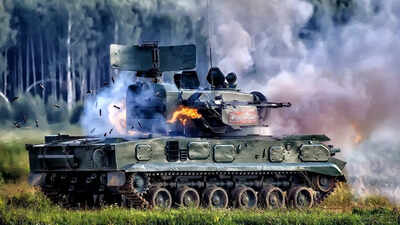
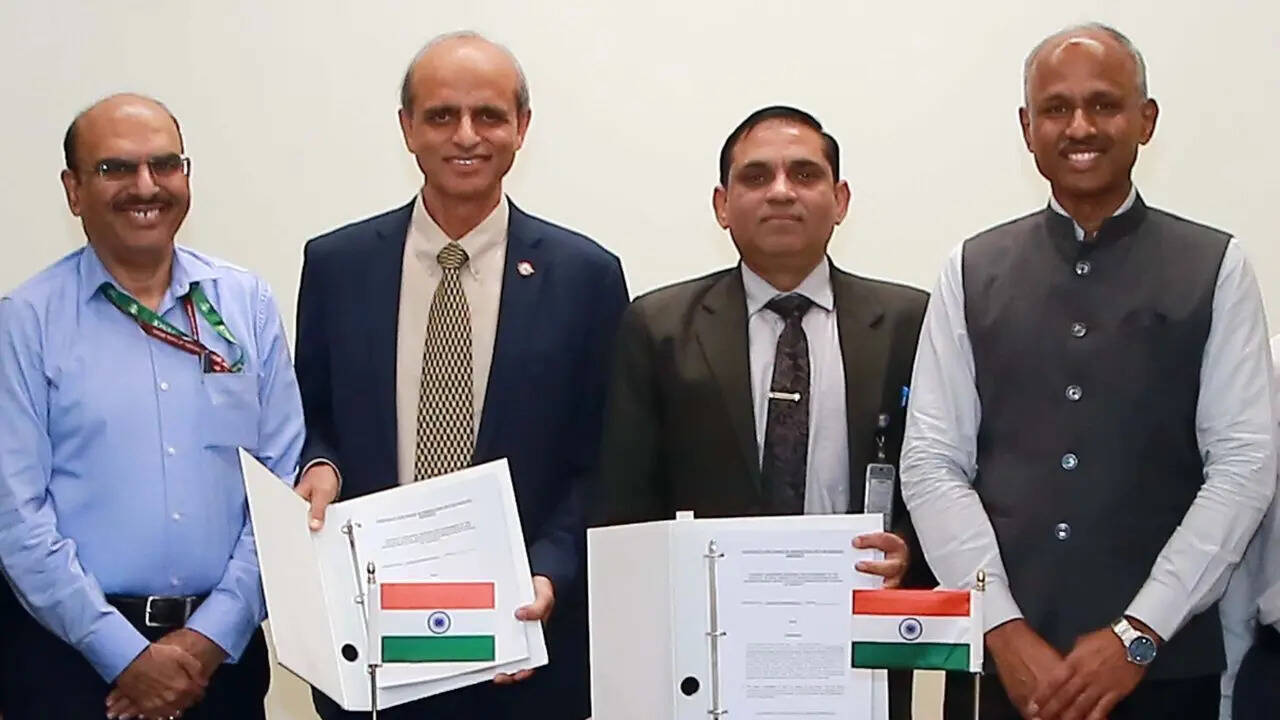
NEW DELHI: The ministry of defence on Friday signed contracts worth Rs 858 crore for the procurement of the Tunguska Air Defence Missile System and maintenance support for the Indian Navy’s P8I aircraft fleet, aimed at boosting the country’s air and maritime defence capabilities.The agreements was inked at Kartavya Bhawan-2 in New Delhi in the presence of defence secretary Rajesh Kumar Singh and senior officials, according to a statement issued by the Press Information Bureau. The move is part of a broader effort to modernise India’s defence infrastructure while simultaneously boosting indigenous capabilities under the government’s Aatmanirbhar Bharat push.
.
Of the total outlay, Rs 445 crore has been earmarked for the procurement of the Tunguska Air Defence Missile System for the Indian Army, while Rs 413 crore has been allocated for depot-level inspection and maintenance of the Indian Navy’s P8I long-range maritime reconnaissance aircraft.
Strengthening air defence and Indo-Russian ties
The contract for the Tunguska system has been signed with Russia’s state arms exporter JSC Rosoboronexport, reinforcing the long-standing defence partnership between New Delhi and Moscow.According to the official statement, the system is expected to enhance India’s multi-layered air defence capabilities against aerial threats including aircraft, drones, and cruise missiles. The acquisition comes at a time when evolving battlefield dynamics, particularly the rise of drone warfare and precision-guided munitions, have increased the need for responsive, mobile air defence systems.The deal also reflects continuity in Indo-Russian defence cooperation, even as India diversifies its procurement sources. Russia has historically been a key supplier of air defence systems to India, and platforms like Tunguska continue to play a role in bridging gaps in short-range air defence.
Boost to maritime readiness through P8I maintenance
Alongside the missile procurement, the Ministry has also signed a Rs 413 crore contract with Boeing India Defense Pvt Ltd for depot-level maintenance of the Indian Navy’s P8I aircraft.Notably, the maintenance work will be carried out with 100 percent indigenous content, aligning with the government’s emphasis on domestic manufacturing and self-reliance. The P8I aircraft, which serve as the backbone of India’s maritime surveillance and anti-submarine warfare capabilities, require regular and sophisticated maintenance to ensure operational readiness.By bringing such maintenance capabilities within the country, the government aims to reduce dependence on foreign support while building a domestic ecosystem for high-end defence servicing.
What is the Tunguska air defence missile system
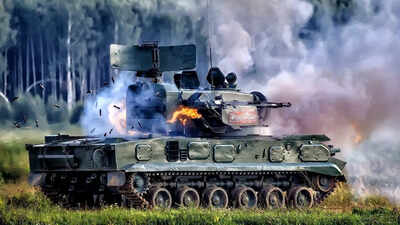
The 2K22 Tunguska is a Soviet-origin, tracked, self-propelled air defence system designed to provide protection to ground forces against low-flying aerial threats. Known by its NATO designation SA-19 “Grison”, the system combines both missile and gun-based defence in a single platform.Unlike conventional air defence systems that rely solely on missiles, the Tunguska integrates surface-to-air missiles with twin 30 mm autocannons. This hybrid design allows it to engage targets across different ranges and altitudes, making it particularly effective against fast-moving and low-altitude threats such as helicopters, drones, and cruise missiles.The system was developed to overcome limitations observed in earlier platforms, particularly the ZSU-23-4, which had a shorter range and lacked early warning capabilities. Development began in 1970 under the KBP Instrument Design Bureau in Tula, led by chief designer A. G. Shipunov.
Designed for modern battlefield threats
One of the defining features of the Tunguska system is its ability to operate in all weather conditions, both day and night, providing continuous protection to infantry and armoured units.The missile component, primarily from the 9M311 family, is capable of engaging targets at ranges of up to 8 to 10 kilometres and altitudes of up to 3,500 metres. These missiles are guided using a radio command system and are designed to achieve high accuracy, with a lethal warhead that disperses metal fragments in a ring pattern upon detonation.Complementing the missiles are dual 30 mm autocannons, which can fire at extremely high rates, ranging between 3,900 and 5,000 rounds per minute. These guns are particularly effective at close range, providing a rapid-response defence against sudden threats such as low-flying helicopters or incoming munitions.The combination of guns and missiles ensures that the system can handle both long-range engagements and immediate, short-range threats, significantly improving survivability on the battlefield.
Radar and tracking capabilities
The Tunguska is equipped with an advanced radar and fire control system that enables it to detect, track, and engage multiple targets simultaneously.Its target acquisition radar offers a 360-degree field of view and can detect aerial threats at distances of up to 18 kilometres. The tracking radar, integrated with a digital fire control computer, ensures precise targeting and engagement.The system is also designed to function in electronically contested environments, with resistance to various forms of interference. In addition to radar-based targeting, it includes optical tracking systems that allow operators to engage targets even if radar signals are jammed.This layered targeting capability makes the Tunguska particularly resilient in modern warfare scenarios, where electronic warfare plays a critical role.
Mobility and battlefield integration
Mounted on a tracked chassis, the Tunguska is highly mobile and capable of keeping pace with armoured formations. It can operate across varied terrains and climatic conditions, with the ability to function in temperatures ranging from extreme cold to intense heat.The system is designed to operate as part of a larger air defence network. A typical battery consists of multiple combat vehicles supported by command posts and maintenance units, allowing coordinated engagement of multiple targets.Each unit can receive targeting data from external sources such as early warning radars or airborne systems, enabling it to function within a broader integrated air defence architecture.
Evolution and upgrades
Since its induction into service in the early 1980s, the Tunguska system has undergone several upgrades to improve its performance and adaptability.The original 2K22 version was followed by improved variants such as the 2K22M and 2K22M1, which introduced better fire control systems, enhanced missiles, and improved reliability. The latest variants are capable of engaging smaller and more agile targets, including modern cruise missiles and drones.These upgrades have ensured that the system remains relevant in contemporary combat environments, where threats are increasingly diverse and technologically advanced.
Operational use and global footprint
The Tunguska system has been used by several countries, including India, and has seen operational deployment in various conflicts. It has been employed by Russian forces and has also featured in recent conflicts involving both Russian and Ukrainian forces.Its continued use across different theatres underscores its effectiveness as a short-range air defence solution.For India, the acquisition of the Tunguska system is part of a broader strategy to strengthen its layered air defence network. As aerial threats evolve, particularly with the proliferation of drones and precision weapons, the need for systems capable of rapid response at short ranges has become increasingly critical.The procurement also complements other air defence assets in India’s inventory, contributing to a comprehensive shield against a wide spectrum of aerial threats.At the same time, the emphasis on indigenous maintenance for platforms like the P8I reflects a parallel effort to build self-reliance in defence capabilities. By combining targeted imports with domestic capacity-building, India is seeking to balance operational readiness with long-term strategic autonomy.
A dual-track approach to defence modernisation
The Rs 858 crore contracts highlight a dual-track approach in India’s defence policy: strengthening operational capabilities through strategic acquisitions while investing in domestic infrastructure and expertise.As regional and global security dynamics continue to evolve, such measures are likely to play a crucial role in ensuring that India remains prepared to address both conventional and emerging threats.The inclusion of advanced systems like Tunguska, alongside a push for indigenous maintenance and production, signals a calibrated effort to modernise the armed forces without compromising on self-reliance.







 English
  हिन्दी