 Sipu Jha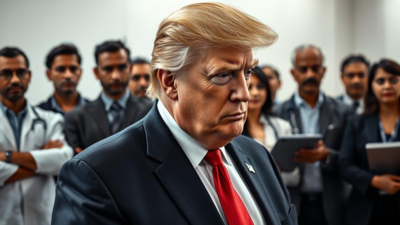
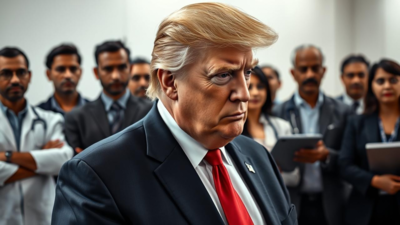
US President Donald Trump, with a business approach, raised H-1B application fees to an eye-watering $100,000 to protect Americans’ jobs — but did it backfire? According to a report from Reuters, industry insiders warn that Trump’s move may boomerang as many US companies are pushing to shift high-value work to India, where global capability centres (GCCs) are already booming.
India’s GCCs: From back office to brain trust
According to the Reuters report, India is a host to over 1,700 GCCs, more than half the global total. India is famous for its booming tech industry, but now it is also a centre for designing luxury car dashboards, power drug discovery, and driving financial innovation. Economists suggest that Trump’s visa crackdown could turbocharge this trend. “GCCs are uniquely positioned for this moment,” Rohan Lobo, Deloitte India’s GCC industry leader, told Reuters. “Plans are already underway” as US firms rethink workforce needs, particularly those tied to sensitive federal contracts, he added.
Visa curbs, higher costs, shifting strategies
The economics now favour India after Trump’s hike in H-1B visa costs — from $2,000–$5,000 to $100,000. Also, the renewed Senate moves to tighten visa rules have also sent shockwaves through US employers. “If these curbs hold, we’ll see a flood of high-end work in AI, cybersecurity, and product development move into India’s GCCs,” said Lalit Ahuja, founder of ANSR, which has helped firms like FedEx, Target, Lowe’s and Bristol-Myers Squibb build out their Indian hubs. “There is a sense of urgency.”
The risk of ‘extreme offshoring’
According to Reuters, some experts predict “extreme offshoring” as firms accelerate what the COVID-19 pandemic already proved possible — running complex tech functions remotely. Among the top H-1B sponsors are major tech companies such as Amazon, Microsoft, Apple, and Google, as well as financial giants like JPMorgan Chase and retailers like Walmart. They all have sprawling Indian operations, though few are willing to comment due to the political sensitivity.
India’s ‘gold rush’ moment
As the projections remain bullish, India is expected to host more than 2,200 GCCs by 2030, with a market size nearing $100 billion. Trump’s visa curbs, far from shielding US jobs, could end up fuelling India’s rise as the world’s nerve centre for corporate innovation.“This whole gold rush,” Ahuja said, “will only get accelerated.”






 हिन्दी
  English