 Sipu Jha
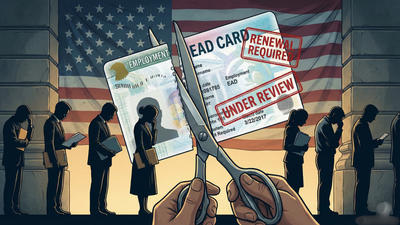
The Trump administration has moved to sharply curtail the validity of work permits issued to refugees, asylees and several categories of immigrants—including those awaiting green cards—marking another major tightening of the country’s immigration system.The new policy, announced recently by the US Citizenship and Immigration Services (USCIS), reduces Employment Authorization Document (EAD) validity from the current five years to just 18 months for multiple categories of applicants.USCIS said the step is aimed at enabling more frequent vetting following recent security concerns, arguing that shorter validity periods will allow officials to screen applicants more often. This will enable USCIS to deter fraud and detect aliens (foreign nationals) with potentially harmful intent so they can be processed for removal from the US“Reducing the maximum validity period for employment authorization will ensure that those seeking to work in the US do not threaten public safety or promote harmful anti-American ideologies. After the attack on National Guard service members in our nation’s capital by an alien who was admitted into this country by the previous administration, it’s even more clear that USCIS must conduct frequent vetting of aliens.” said Joseph Edlow, director, USCIS. In addition, late on Friday, USCIS made another announcement relating to the establishment of a specialized unit, headquartered in Atlanta, to strengthen the ability of officials to screen out terrorists, criminal aliens, and other foreign nationals who pose potential threats to public safety or who have committed fraud or other crimes. Immigration attorneys say the move to reduce the validity period of EADs could trigger widespread disruption, especially for thousands of Indians in the employment-based green card backlog who rely on these work permits to continue working while their adjustment-of-status applications (from non-immigrant visas like H-1Bs to green card) remain pending.In the context of the Indian diaspora based in the US, Kripa Upadhyay, immigration attorney with Buchalter, a law firm said, “The primary impact of this will be on the following groups of Indian applicants who are transiting to a green card: Investors seeking adjustment of status based on a pending I-526/EB-5 application (this relates to the investment linked green card program); parents or spouses of US Citizens seeking adjustment of status in the US and employees in the US who are seeking adjustment based on approved I-140 and available visas.”For H-1Bs seeking an adjustment of status, she said the change will “leave people in a terrible situation,” with many now needing to file renewals several months in advance to avoid job interruptions. “One cannot work without valid work authorization, so the risk of falling out of lawful employment becomes very real,” she said.The problem is compounded as applications for EAD renewals can typically be filed only 180 days before the expiry of the existing work authorisation permit, whereas processing of the renewal application can take much longer. The move will also impact American employers, as delays in processing of renewals of EADs, especially of key employees, could disrupt projects. Compliance costs will also increase for sponsoring employers.









 हिन्दी
  English