 Sipu Jha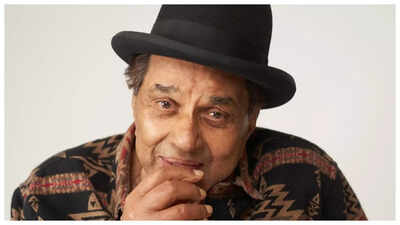
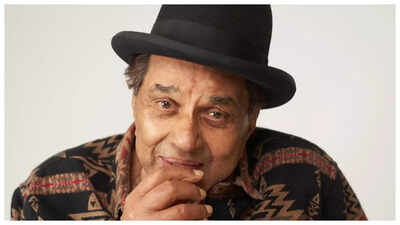
They called him the He-Man. Most of his major solo hits – ‘Phool Aur Patthar’ (to a lesser extent), ‘Ankhen’, ‘Mera Gaon Mera Desh’, ‘Jugnu’, ‘Pratigya’ – were breathless action yarns. These movies made Dharmendra a star of the masses. Audiences would stand in queues for hours to watch him snarl and scream, “Ek ek ko chun chun kar maroonga.” Dialogues like these became a template repeated over countless movies in a career that spanned nearly six and a half decades.It is, therefore, quite interesting that Bollywood’s action hero also played a range of genteel and refined characters, especially in the first two decades of his career. And one is not referring only to botany professor Parimal Tripathi in Hrishikesh Mukherjee’s ‘Chupke Chupke’ (1975), or, for that matter, the Sanskrit teacher who teaches Kalidas’ Abhigyan Shakuntalam in Basu Chatterjee’s ‘Dillagi’ (1978) — a rare film in which Dharmendra gets beaten up by the bad guys. Director Basu da once told this reporter that distributors were nervous at the film’s release because in the posters, Dharmendra held a rose, not a gun.
There are many other films where Dharmendra didn’t play a cop or an outlaw. Instead, he played a poet, a writer, a trade unionist or a journalist. A majority of these films were directed by Bengali filmmakers.In 1966, Dharmendra played a struggling poet in Hrishikesh Mukherjee’s Anupama. At the time, the image of a celluloid poet was largely defined by Guru Dutt’s Vijay in ‘Pyaasa’ — hungry, unshaven and pessimistic. Dharmendra too described himself as one of “khoon, pasina aur aansoo” (blood, sweat and tears). But he looked the exact opposite. At one point, the script in ‘Anupama’ even provided an explanation for his well-nourished body. If you compare the picturization of “Jaane woh kaise log thhe jinko” (Pyaasa) with “Ya dil ki suno duniya walon” (‘Anupama’), there are distinct stylistic similarities. Both are filmed in an indoor mehfil. Guru Dutt is dressed in dhoti-kurta with a shawl, while Dharmendra wears kurta-pyjama with a shawl. Both songs are rendered by Hemant Kumar, and both create a similar mood.In Shahid Lateef’s ‘Baharen Phir Bhi Aayengi’ (1966), the Punjab da puttar played a conscientious journalist. This was originally a Guru Dutt project. After the maker of Pyaasa and Kaagaz Ke Phool passed away, many thought Dev Anand would step in — but it was Dharmendra who did. The film is largely forgotten now, though songs such as “Aap Ke Haseen Rukh Par” (singer: Mohd Rafi; music: O.P. Nayyar; lyrics: Anjaan) are appreciated to this day.Dharmendra’s tryst with literary characters continued in the Seventies. In Pramod Chakraborty’s ‘Naya Zamana’ (1971), he was a morally upright writer who believes that books can change the world. The poet in Devendra Goel’s ‘Ek Mahal Ho Sapnon Ka’ (1975) is unable to sell his work. When he finally does, it is at the cost of his identity — much like Vijay in ‘Pyaasa’.The audience was first introduced to a celluloid version of the bhadralok Dharmendra in Bimal Roy’s ‘Bandini’ (1964). His portrayal of the kind-hearted doctor earned Dharmendra notice as an actor of promise. Another Bengali director, Phani Majumdar, cast him as a trade union leader in ‘Akashdeep’ (1965). And he was a college professor in Asit Sen’s romantic drama, ‘Sharafat’ (1970).Interestingly, Bengali directors also cast him in mainstream masala films. For example, ‘Jugnu’ (1973) was directed by Pramod Chakraborty and ‘Pratigya’ (1975) by Dulal Guha.Few know that Dharmendra also wrote poetry. During an interview with TOI, he once recited a few lines from his poem “Main Kaun Hoon”: “Pyar, mohabbat, duayein aapki sejte hain jazbaat mere / Isi liye aaj bhi jawan hoon main / Khata agar ho jaye, baksh dena yaaron /Galtiyon ka putla aakhir ek insaan hoon main.” (“Your love, affection and prayers nurture my emotions / That’s why I’m still young / Please forgive me if I’ve ever erred / After all, I am only human.”)Dharmendra also played the male lead in ‘Dulhan Ek Raat Ki’ (1970), a romantic tragedy based on Victorian writer Thomas Hardy’s evocative novel, ‘Tess of the D’Urbervilles’.



 हिन्दी
  English