 Sipu Jha
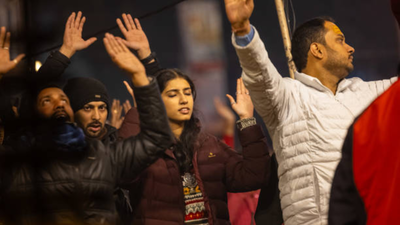
Spirituality has been a quiet constant across generations, only shifting in form, expression, and language, yet always offering a sense of calm and inner grounding.The quest has been to always lean on the principle: Seek spiritual riches within. “What you are is much greater than anyone or anything else you have ever yearned for,” is something oft-quoted belief of Paramahansa Yogananda, a monk and yogi.
Change being the only constant, spirituality has evolved over the years, taking its own shape and continues to calm a million minds. Aartis and bhajans are deeply familiar to those who have grown up in India. What has changed over time is not the essence of devotion, but the way it is experienced and expressed. The intent of bhakti to connect with the divine and the larger universe is still timeless, cutting across age, place, and belief systems. Yet when many believed it would not find the flavour with the next generation, it left them surprised.In the NumroVani, How India Thinks 2025 Study, 68% people who are above 50, 88% Gen Z and 72% Late Millennials respondents showed intent to be part of this.Bhajan Jamming or clubbing is one such evolving expression of devotion that is drawing people across age groups. It has found a place in informal, music-led gatherings where faith meets community. Today, social media is flooded with these videos, people sharing them with different people across different generations, different continents. Whether Bhajan Jamming is a passing trend or a practice with lasting impact is a question many may ask, especially in an era where trends shift rapidly.You may want to brush it aside with cynicism, but one thing is evident: its ability to create moments of collective calm and connection in an ever-changing world. Manoj Muntashir, a voice from the industry who brings faith and music together, echoes the perspective.“Devotion is being embraced by Gen Z in a more casual, honest, and relatable manner, and music must reflect that evolving mindset, he says. “I take pride in acknowledging the need for new-age sounds and expressions,” he adds. It is an approach that has paid off for his composers and T-Series in the recent past.“Mere Ghar Ram Aaye Hain, Ram Aayenge, Meri Maa Ke Barabar Koi Nahin, Mere Baba, Narayan Mil Jayega, Jai Shri Ram, and Ram Siya Ram stand as living proof that when we respect and understand contemporary devotion, the day isn’t far when the youth will truly dance to devotional music,” Muntashir notes.
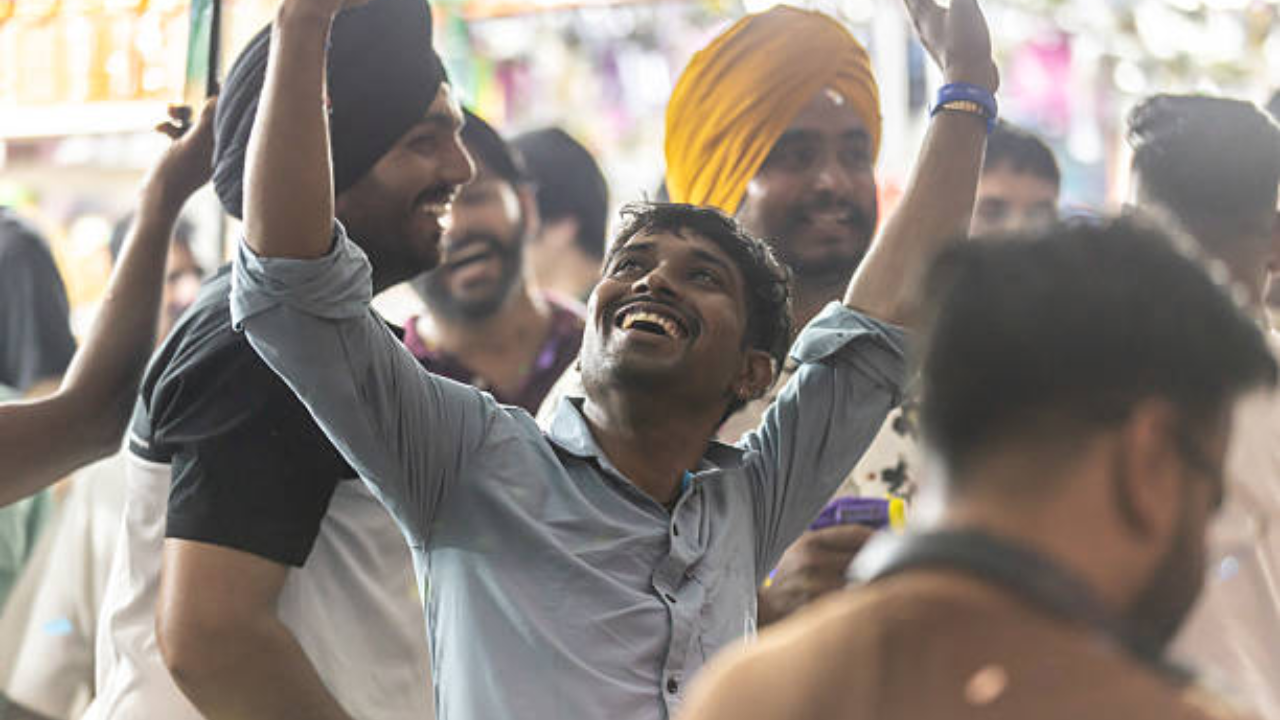
Nirvaan Birla, who is the founder and managing director of Birla Open Minds Education Ltd, believes it is not about performance but about presence. “Bhajan Jamming is more a reflection of the times we are living in than just a trend. Today’s generation is searching for depth, connection and meaning in a language that feels authentic to them. When devotional music meets modern styles, it stops being about the performance and becomes more about the entire immersive experience.”He refuses to brand this as a mere fad born out of the compulsion to be different. “I view this as something that is a cultural revolution and will most definitely have a long-term and instantaneous uplifting impact. Music has always evolved with society, and Bhajan jamming brings that collective energy back, making devotion or bhakti participatory, alive and accessible to each one.”Singer Abhijeet Ghoshal too joins the school of thought, “Bhajan Jamming, according to me, is not a fad. It has a long-term impact. If you look at it simply, Ramakrishna Paramahamsa had said jitne mat, utne path. There are many paths, but the destination is one.”Instead, he questions the raised eyebrows, “Today’s youth does not have the patience for traditional formats of devotion. Sitting quietly for long hours, listening to classical music or chanting in one place is difficult for them in today’s high-distraction world. If a young person likes dancing, jamming, rap music and clubbing, and instead of listening to meaningless or abusive lyrics, he is dancing and chanting the Hanuman Chalisa, then what is wrong with that? At the end of the day, he is still taking God’s name.”
Abhijeet, like many, agrees that Bhajan Jamming relates to the youth. “It works because it speaks the language of today’s generation. It keeps them engaged, gives them a sense of devotion, and for one full hour, it also becomes their digital detox. Instead of intoxication through alcohol or substances, this is intoxication through bhakti. That is why I genuinely believe Bhajan Jamming is here to stay and will only grow deeper with time,” he adds.Artists tend to adopt a more creative approach, but Bhajan Jamming has even found its support from practitioners of astrology and life coaching.Every generation has evolved the perception and acceptance of spirituality in daily life. The contemporary world of current times is shifting its gears from passive spirituality to active spirituality, wherein spirituality becomes embedded in lifestyle itself.“Bhajan Jamming, aka Bhajan Clubbing, is one such modern times evolution of spirituality. Even when we look at Vedas and Puranas, music has always been central to devotion in Indic tradition,” says Sidhharrth S Kumaar, Chief Astrologer & Life Coach, NumroVani.“The Sāma Veda is built on melody, and the Vedas view sound (Nāda) as the primal creative force. The Puranas emphasize nāma–saṅkīrtana as the most effective spiritual path in Kali Yuga, and collective nama sankirtana is one nudge ahead. Bhajan Jamming is a natural evolution of devotion in the era of emotional fatigue and spiritual hunger. It echoes a deeper need to experience spirituality rather than merely observe it,” he elaborates.Neeraj Dhankher, Founder, Astro Zindagi, with 29 years of experience as a Spiritual Life Coach, finds this a welcome breeze and doesn’t understand what the furore is about. “In my years of practice, I have often heard parents complain that their children are not religious or are averse to traditional rituals. There is a common fear that their children are losing touch with their cultural roots. However, when I counsel these kids, I find a lot of curiosity among them about their spiritual identity. It’s just that they may not want to chant verses in perfect rhythm or sit through long-drawn-out rituals or pujas that their families insist on,” he shares.He continues, “They are as spiritual as any of us, just that they need easier ways to connect with their cosmic identity. For many young people, jamming is not just a spiritual recharge, but a chance to feel a presence greater than themselves, without needing to explain or rationalise it.” He even likens it to a “spiritual fast food” that fits perfectly into their worldview and busy lives.“It might look like a passing wave now, but anything that makes someone feel connected, seen, or spiritually alive rarely fades without leaving something behind. It should be seen as a means to an end. Bhajan Jamming may evolve or shift form, but its essence will stay. When something feels real, people tend to carry it forward,” Dhankher notes.“Personally, I feel it’s a good thing. It is creating a good environment among the youth. Instead of going to the pub for songs that increase passion in a person, which ultimately leads to some kind of negativity, if not directly, in some subtle way,” he continues.In fact, Dhankher is more focused on the action than the intent. “So this is a very positive sign, and we should encourage them because anyway they are chanting the name of the Lord, they are glorifying them and our Vedic mantras. Vedic chanting of the holy name is so powerful that even if it is chanted in a different atmosphere, even if it is chanted with wrong intention, even then it gives a positive result,” he claims.He finds an ally for his views in Bali Murari Das, Director of ISKCON Youth Forum, Dwarka, Delhi. He recounts an incident with Shrila Prabhupada, during the time of Shrila Prabhupada, the founder Acharya of International Society for Krishna Consciousness, while he was preaching in the Western countries. “There was one movie released which had the song Dhammarudam, Mithijayagam, Bolo Subhasam, Hare Krishna, Hare Ram. Many people came to Shrila Prabhupada and questioned: what is happening? People are distorting this bhajan, this chanting. Should we protest against them?”In response, he recalls, Shrila Prabhupada had then said: “Don’t worry, anyway they are chanting the name of the Lord, reason can be anything, cause can be anything, but at the end they are chanting the name of the Lord. It means they are getting the suikirti, they are getting benefit by chanting the name of the Lord.”For him, as long as there is no serious distortion or serious deviation, there should be no challenges. “It is very good, somehow or other today’s youth is being connected to our roots, the way can be different, the cause can be different, the method can be different,” he adds.He reiterates, “That is how our Vedic Mantras are, how our Vedic Vajans and Vedic scriptures are. Whenever they are chanted, even if not in a very sophisticated or professional way, they can create a great impact on society. And that we can see nowadays also, that even in a country like China or Russia. Although they are unable to pronounce the name of the Lord properly, they are doing so with a devotional heart. They are somehow reading the Bhagavad Gita, Bhagavatam, trying to follow, even if not properly. Still, there is a change in the lives of thousands and thousands of people around the world. So, I think we are going in a good direction.”You may agree with it or not, but the flurry of social media is definitely motivated to make you experience the trend once. Whether it falls prey to the pressures of fluttering social media trends or creates a lasting spiritual expression is something we cannot judge while being enveloped by it.






 हिन्दी
  English