 Sipu Jha
Life in the wild is never constant; animals adapt quickly if they are to survive. Climate change, the reduction of habitats, and human interference are factors that are increasingly affecting natural populations. While certain species adapt well in the wild and can survive easily, others struggle even to survive among the different natural conditions they encounter. Scientists today aim to uncover the reasons behind the adaptation of certain animals compared to others.At the Norwegian University of Science and Technology (NTNU), researchers are working on combining the areas of biology and mathematics to understand these events. Statistician and PhD research fellow Kenneth Aase leads a team of researchers on a project named GPWILD, concentrating on understanding the adaptive evolutionary potential and the ability of a species to genetically adapt when environments change.
Island sparrows track evolution over decades
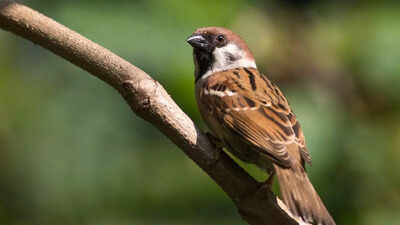
House sparrows on islands along Norway’s Helgeland coast provide a unique opportunity for scientific study. Island populations are isolated, which limits movement and allows for clear comparisons of genetic differences. Researchers can track almost every individual bird from birth to death, producing an unparalleled long-term dataset.“Because our island populations are small and delimited, they are exceptionally well-suited for research. Biologists can record and follow almost all individual sparrows from birth until they die,” said Aase. For over 30 years, NTNU’s Department of Biology and the Gjærevoll Centre have collected detailed data on house sparrows, including survival rates, reproduction, body size, and genetics. These long-term datasets allow scientists to study evolution as it unfolds over generations, rather than relying on short-term observations.“They can investigate what affects survival and how many young are produced. This type of data is both unusual and invaluable,” Aase noted.
Genomic prediction links sparrow DNA to survival traits
Aase focuses on genomic prediction (GP), a method connecting genetic markers to measurable traits such as body mass, wing length, or leg size. Instead of waiting for traits to appear naturally, researchers can estimate them directly from DNA.“This method can tell us whether a sparrow’s genes will result in higher or lower body weight,” Aase explained. “Body weight influences survival, and while GP is widely used in agriculture and medicine, its use in wild populations is still rare.” The researchers tested GP’s ability to predict traits in one population using data from another island population. This approach could reduce fieldwork while allowing scientists to study multiple populations more efficiently.Results showed predictions were most accurate within the same population. Accuracy dropped when crossing populations due to differences in genetic structure, allele frequencies, and environmental conditions. Even minor genetic differences can weaken predictive power.
Challenges of studying wild sparrow populations and genetic survival
Studying wild populations presents unique challenges. Environmental conditions fluctuate constantly, datasets often have gaps, and controlled experiments are impossible. “For statisticians, the biggest challenge is that field datasets are often incomplete,” said Aase.The Helgeland sparrow system is exceptional because data collection is unusually thorough. Aase also uses computer simulations and NTNU’s supercomputer, IDUN, to test models under varying conditions, ensuring robust results despite natural variability. Wild populations worldwide face pressure from climate change and habitat loss. Understanding genetic and ecological responses is crucial for conservation. GP can help estimate survival potential, guiding decisions on population reinforcement, reintroduction, or protection.GPWILD plans to expand to other species, including Svalbard reindeer, Scottish deer, arctic foxes, and additional birds. “Research that starts with small house sparrows now provides tools to help protect species in a rapidly changing world,” Aase said.







 हिन्दी
  English