 Sipu Jha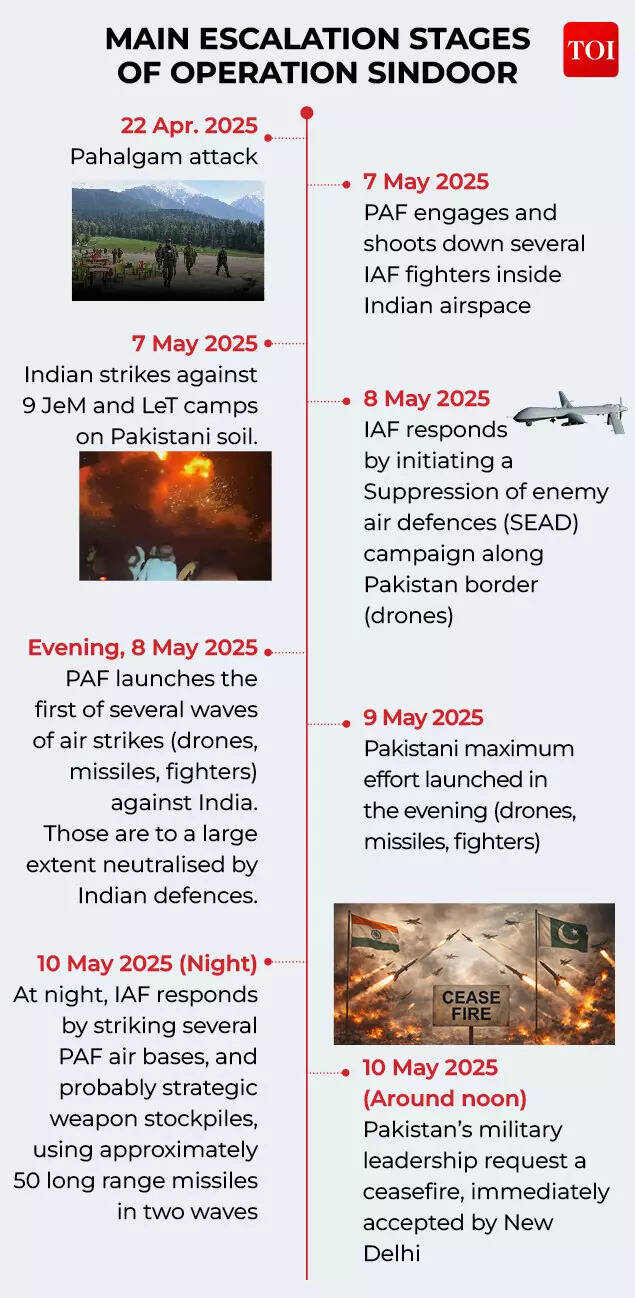

AI-generated image
NEW DELHI: The Indian Air Force had achieved tactical superiority over a “significant portion” of Pakistan’s airspace by May 10, 2025, enabling it to “continue targeting enemy infrastructure at will”, a report by Switzerland’s Centre for Military History and Perspective Studies revealed.The report said that thus by achieving superiority, “India coerced Islamabad into requesting a ceasefire”.
“The Indian Air Force managed to significantly degrade the enemy’s air defence system, then concluded the conflict by carrying out a series of spectacular strikes against Pakistan’s principal Air Force stations. Thus, by achieving clear air superiority, India coerced Islamabad into requesting a ceasefire,” the report said.
What report says
The report suggested that by the morning of May 10, 2025, the IAF established air superiority over large parts of Pakistani airspace, giving it a decisive operational edge during Operation Sindoor.This advantage allowed Indian forces to sustain long-range precision strikes against enemy infrastructure, contingent on the availability of advanced munitions such as BrahMos and SCALP-EG.The report underlined that control of the air was central to shaping the conflict’s trajectory, enabling India to dictate the tempo and depth of its military operations.
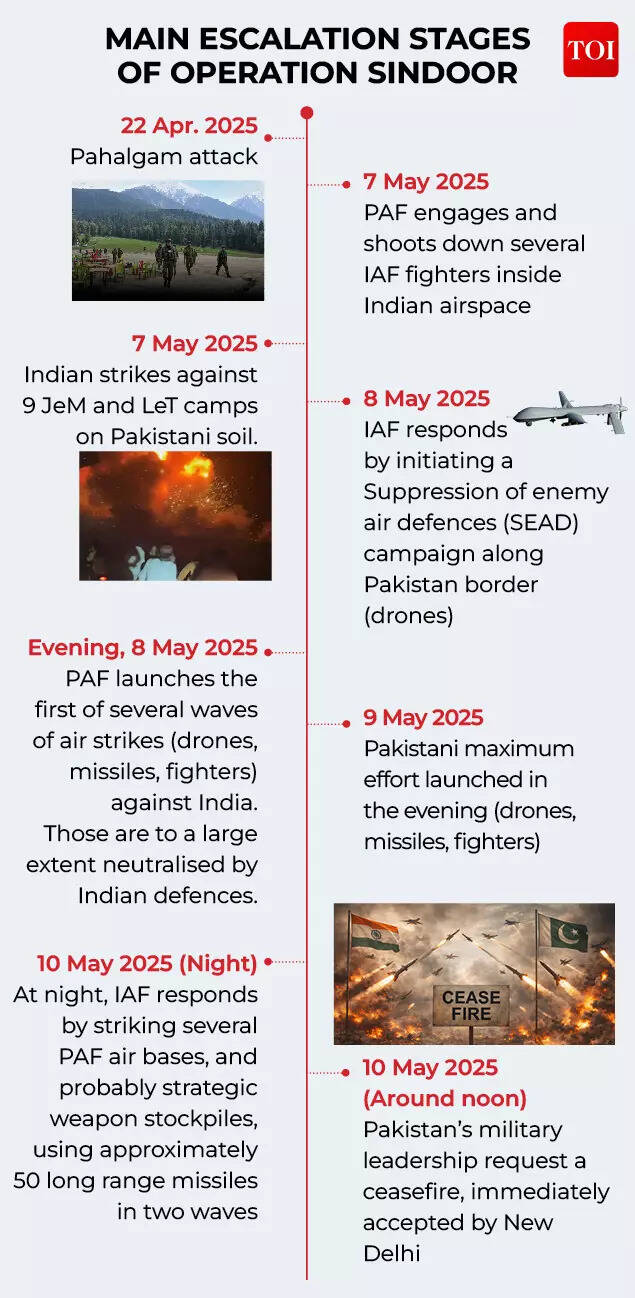
In the wake of the Pahalgam terror attack, India launched Operation Sindoor on May 7, 2025. Under the operation, it targeted nine terrorist camps including JeM and LeT’s in Pakistan and Pakistan-occupied Kashmir. Over 100 terrorists were killed in the operation. The ceasefire was announced on May 10 at the request of Pakistan.
How May 10 turned out to be a mayday call for Pak military
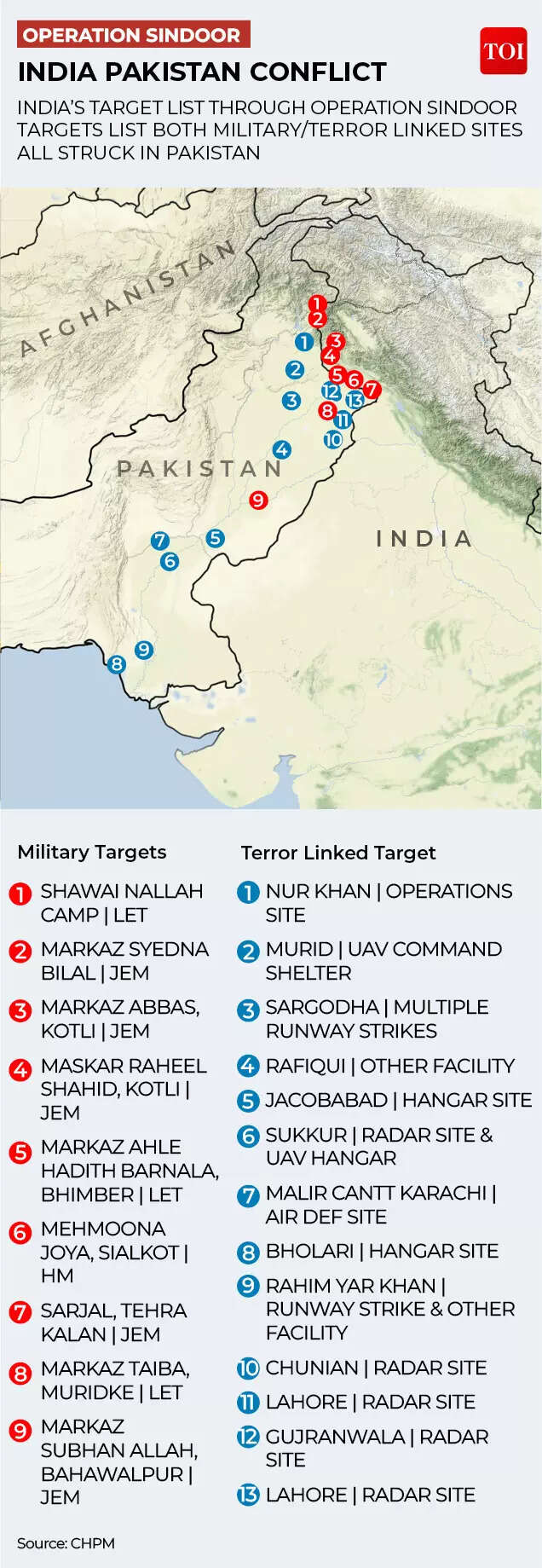
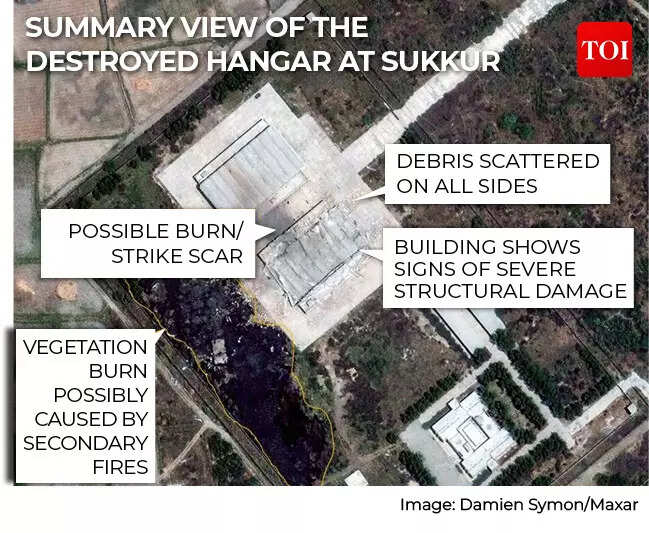
IAF moved swiftly in the early hours of May 10 after detecting preparations for a Pakistani attack planned for the previous evening, the report said.Once Pakistani operations concluded between 2 am and 5 am, the IAF launched a rapid counterstrike from within Indian airspace, firing BrahMos, SCALP-EG and Rampage missiles from Su-30MKIs, Jaguars and Rafales. The strikes hit seven targets up to 200 km inside Pakistan, including air bases, a surface-to-air missile battery and drone-related infrastructure.In the first wave, strikes focused largely on drones, sensors and command nodes. Nur Khan Air Base near Islamabad was hit, destroying a Pakistan Air Force command-and-control centre, while Murid Air Base, a hub for MALE drones, saw hangars and a control facility struck. Rahim Yar Khan Air Base sustained runway damage, Rafiqi Air Base was also targeted, and in the south, Sukkur Air Base suffered damage to a drone hangar and radar installation.
After detecting preparations for a Pakistani counterstrike, the IAF launched a second wave around 10am, expanding targets to manned aircraft and major operational bases.Sargodha Air Base was rendered inoperative, while strikes at Jacobabad damaged an F-16 maintenance hangar and critical support systems, and Bholari Air Base saw a hangar housing an Erieye aircraft hit.The IAF assessed that multiple aircraft, drones, radars and command centres were destroyed on the ground, prompting Pakistan to seek a ceasefire by noon on May 10, which India accepted, saying its objectives had been achieved.







 हिन्दी
  English