 Sipu Jha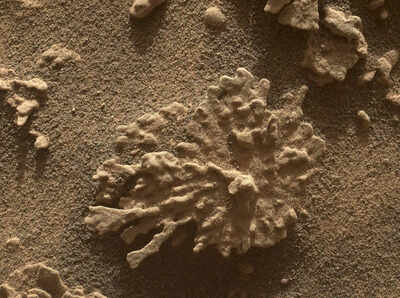
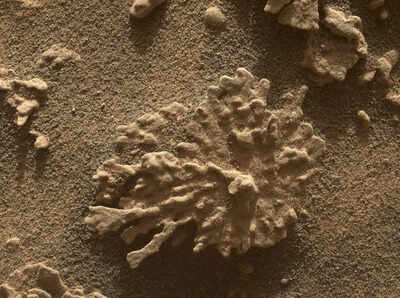
NASA’s Curiosity rover has returned a close-up image of a small rock on Mars that has caught attention for its coral-like appearance. The formation was photographed during routine surface work and measures only a few centimetres across, yet it adds to a growing catalogue of unusual geological features seen by the rover. Scientists say the shape is not evidence of life, but it does point to physical processes that once involved liquid water. The image fits into Curiosity’s long-running task of reading Mars through its rocks, textures and layers. Rather than standing alone, the find sits quietly among years of similar observations that together help build a picture of how the planet changed over time. Nothing about it is dramatic on its own, but it adds weight.
NASA’s Curiosity rover finds coral-shaped rock on Mars
The rock was captured using Curiosity’s Mars Hand Lens Imager, mounted on the end of its robotic arm. The camera was positioned just a few centimetres away, allowing surface details to come through clearly. The structure appears knotted and branching, which is why it has been compared to coral. In reality, researchers say the look comes from erosion rather than growth. Wind has removed softer material around harder mineral deposits, leaving the raised shape behind. Similar features have been seen before, but this one is more visually striking than most.
How water once shaped Martian rocks
Scientists believe the rock formed billions of years ago, when Mars still had liquid water at or near its surface. Water moving through cracks in rock carried dissolved minerals with it. When the water later disappeared, those minerals hardened in place. Over long periods, wind erosion stripped away the surrounding rock. What remains is the mineral-filled structure, exposed and reshaped by time. On Earth, the same process can be seen in deserts and coastal regions, producing odd and sometimes delicate forms.
Curiosity’s long record of strange formations
Since landing in 2012, Curiosity has documented many rocks that look unfamiliar at first glance. Some resemble flowers, others spheres or layered stacks. Each time, scientists trace the shapes back to known geological processes. The coral-like rock fits that pattern. It does not change what researchers think Mars was like, but it supports existing ideas about water, minerals and erosion. Over time, these small confirmations matter more than single dramatic finds.
Why small details still matter to scientists
Curiosity’s mission is not built around surprises but accumulation. The rover works slowly, measuring chemistry, textures and structure. A rock like this helps confirm how minerals behaved under Martian conditions. It also helps researchers test models of erosion and climate. Even when the explanation is familiar, seeing it play out on another planet gives scientists confidence that their understanding travels beyond Earth.
Mars exploration continues at a steady pace
The coral-shaped rock will not change the direction of Mars research, and it is unlikely to be revisited. Curiosity will move on, as it always does, scanning new ground and collecting more quiet details. Over time, those details form a broader record of a planet that once moved water across its surface, then slowly lost it. The story does not arrive all at once. It builds, piece by piece, in images like this one.







 हिन्दी
  English