 Sipu Jha
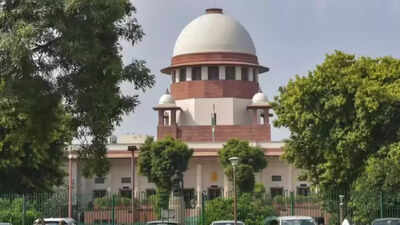
New Delhi: Supreme Court on Thursday put on hold the controversial UGC (Promotion of Equity in Higher Education Institutions) Regulations, 2026, taking serious exception to several of its provisions and saying that these could fuel societal division and have a dangerous impact on the goal of a casteless society.A bench of Chief Justice Surya Kant and Justice Joymalya Bagchi heard three petitions and said that while implementation of the 2026 regulations would be on hold till further orders, the 2012 regulations would continue to be in force to address grievances relating to caste-based discrimination against students on campuses of educational institutions.“We are sorry to say, the Regulations, prima facie, the language is completely vague, the provisions are capable of being misused, and the language needs to be re-modulated and redesigned,” the bench said and asked for the setting up of an experts panel to examine the regulations.Terming the new regulations as regressive, the CJI said, “In the country, after 75 years, whatever we have gained to move towards the goal of casteless society, are we enacting a regressive policy? No doubt, there has to be some effective mechanism to deal with caste-based discrimination.”The justices said that while they were all for regulations for creation of “a free, inclusive and an equitable atmosphere in Universities…. there are four or five serious concerns about the Regulations. If those are not addressed, the Regulations will otherwise have sweeping consequences that will divide society and lead to many dangerous impacts on the country.”The CJI flagged another provision in the regulations as problematic, pointing out that it proposed separate hostels based on the caste of students. “For God’s sake, please do not do that. In hostels, students from every community live together. There are inter-caste marriages also. We should move towards a casteless society by assimilating students of all regions and (students of) all castes must have equal rights and live harmoniously in universities. We cannot go backwards. There must not be any segregation.”The hearing took place amid agitation by sections of upper caste students against the regulations for allegedly being discriminatory and exclusionary and for being oblivious to the changed socio-economic milieu where newly empowered OBCs have also been accused of discriminating against others, including those from upper castes. Significantly, the OBCs are not under the purview of the 2012 regulations which snap back in action after the SC’s order on Thursday.Leading the arguments for petitioners, advocate Vishnu Shankar Jain said the Regulations presume that only a certain category of students belonging to certain castes face discrimination in universities. They keep general category candidates outside their purview, leaving such students without remedies for discrimination faced by them.Asking Centre and UGC to respond to the petitions by March 19, the bench said, “We want to examine the constitutional validity and legality of 2026 Regulations. We would like the Union govt, with the concurrence and approval of the court, to constitute a panel of experts comprising eminent academicians and scholars who understand our social conditions to study the regulations and its possible impacts.”The regulations deal only with caste-based discrimination and presume that India is divided on basis of caste and do not deal with issues like ragging, North-South divide, cultural diversity, which too lead to discrimination, the petitioners said. The CJI Kant-led bench said, “Ragging is the worst thing that happens on campuses. Children coming from south India to north India and vice-versa, and from north-east to other states of the country, carry their cultural values with them.”







 हिन्दी
  English