 Sipu Jha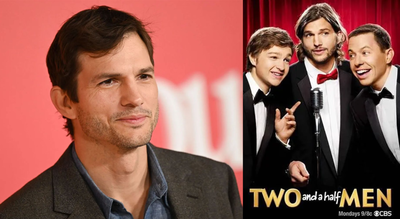
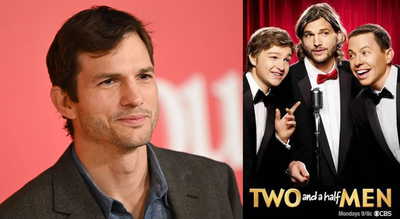
By the time Ashton Kutcher became a household name on That ’70s Show, he was already used to work that had nothing to do with cameras. Raised in Iowa by factory-worker parents, Kutcher spent his childhood and teens doing construction with his father, roofing, mowing lawns and taking factory shifts. The lesson was not entrepreneurship so much as endurance: turn up, work hard, don’t waste time.At the University of Iowa, he enrolled in biochemical engineering, a detail often glossed over as trivia but one that matters. He dropped out only after winning a modelling competition that took him first to New York, then Los Angeles. The degree never happened, but the interest in systems, science and problem-solving stayed. When Kutcher broke through as Michael Kelso in 1998, he was being typecast as a lovable fool on screen while quietly learning how things actually worked off it.
Production first, then proximity to Silicon Valley
Kutcher’s first serious step away from acting came in 2000, when he co-founded Katalyst Media. The company’s breakout success, Punk’d, which he created and hosted for MTV in 2003, did more than cement his celebrity. It gave him operational experience: budgets, crews, distribution, ownership. Crucially, it also put him in the orbit of technology. Katalyst hired Sarah Ross, later poached from TechCrunch, who began introducing Kutcher to early Silicon Valley figures including Ron Conway and Michael Arrington. Kutcher has said that period was defined less by pitching than listening. “I spent 90% of my time just listening,” he later recalled. It was not glamour that drew him in, but pattern recognition: founders trying to remove friction from everyday life.
A-Grade Investments and the logic of early bets
In 2010, Kutcher formalised that curiosity, teaming up with Madonna’s longtime manager Guy Oseary and billionaire Ron Burkle to launch A-Grade Investments. The fund began with $30 million and a simple rule: back products that solved obvious problems and could scale. The portfolio read, in hindsight, like a syllabus for the next decade of consumer tech. A-Grade invested early in Skype, Spotify (around $3 million), Airbnb (about $2.5 million), Uber (roughly $500,000), Foursquare and Genius. Over six years, the fund reportedly turned $30 million into about $250 million, a return that placed Kutcher on the publication’s 2016 Midas List, which tracks top technology investors. Speaking to Forbes after appearing on its 2016 Midas List, Kutcher framed the strategy less as profit-chasing than consequence: “If we don’t make a dollar, but we change the world in a meaningful way because we solve real problems and we support great people and do our best to help, the returns are going to be the exhaust of that.”
Sound Ventures , AI and a billion under management
In 2015, Kutcher and Oseary expanded the model, co-founding Sound Ventures, later joined by Effie Epstein. Backed initially by a $100 million investment from Liberty Media, Sound was designed to operate across early-stage to late-stage technology, with a longer horizon and more capital discipline. By 2026, Sound Ventures manages more than $1 billion in assets. Its portfolio spans Affirm, Airbnb, Chegg, Duolingo, Nest, Pinterest, Robinhood, SeatGeek, Spotify and Uber. In 2023, the firm closed a dedicated AI fund of more than $240 million, backing companies including OpenAI, Anthropic, Stability AI and Hugging Face, a move that positioned Kutcher not as a celebrity dabbler but as a serious allocator of capital in one of the most competitive investment spaces. The numbers underpin Kutcher’s estimated personal net worth of around $200 million, built largely away from acting. Kutcher has never left acting entirely. In recent years he has taken fewer roles, but more selective ones. In 2026, he returned to television with The Beauty, an FX and Disney+ series created by Ryan Murphy, in which he plays a reclusive billionaire known only as “The Corporation”.In interviews promoting the show, Kutcher rejected comparisons between the character and Elon Musk, telling Vanity Fair that while the wealth levels were comparable, the role was not modelled on any specific individual. The acting work now sits alongside his business interests rather than above them.
Philanthropy as strategy, not afterthought
Kutcher’s business interests have long intersected with philanthropy. In 2009, he co-founded Thorn: Digital Defenders of Children, an organisation that builds technology to combat child sexual exploitation. According to a 2017 report, Thorn’s Spotlight software helped identify 5,791 trafficking victims and rescue 103 children, outcomes Kutcher has repeatedly pointed to as evidence that technology can be applied with moral clarity as well as scale.
He has said philanthropy often guides his investment instincts, nudging him towards companies that combine reach with social utility. It is a framing that helps explain why his portfolio skews towards platforms that embed themselves into daily life rather than chase novelty. Kutcher, who is married to Mila Kunis, has also been blunt about wealth itself. The couple have said they do not plan to leave vast inheritances to their children, preferring instead to fund education and opportunity.






 हिन्दी
  English