 Sipu Jha
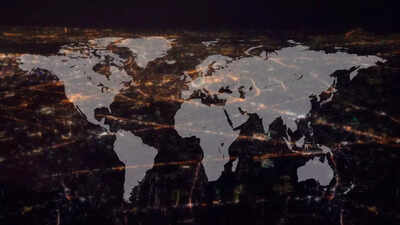
Is 2026 going to be gentle? The World Economic Forum’s Global Risks Report says the world is in what experts call an “age of competition”. Short-term, leaders worry about trade, misinformation, and social divides. Long-term, climate, tech, and environmental threats loom large. People are noticing it too including price hikes, job shifts, political tension and all adds up. And with the Forum’s Annual Meeting in Davos focusing on ‘A Spirit of Dialogue’, everyone knows dialogue is needed, even if it might be hard. Check below the top 10 risks predicted to be stormy times as per the report. The risks are bifurcated in two parts: Short-term, (2 years) and Long term (10 years).
Global risks 2026: Experts warn of a stormy year ahead
The World Economic Forum’s Global Risks Report 2026, based on a survey of over 1,300 global leaders and discussions with risk experts, says we are entering an “age of competition.” Cooperation and trust seem fragile. Confrontation appears to be taking the lead, and the old rules of global interaction might not apply.The report points out that the future is not set. According to the survey, 68% of surveyed leaders believe the world will grow more multipolar and fragmented. Only 6% expect multilateral institutions to recover fully.Small choices might matter more than we think. Uncertainty seems to be the main theme. About half of the respondents expect 2026 to be “turbulent” or “stormy” in the next two years. Look further ahead over ten years, and that rises to 57%. Nearly a fifth even anticipate risks that could be catastrophic on a global scale.
Short-term risks: The next two years
Geoeconomic confrontation is top of mind. It’s not just about tariffs anymore. Experts say it could escalate into port blockades, export restrictions, or cancelled contracts. Even ordinary life might feel the effects in jobs, prices, supply chains.- Mis- and disinformation follows closely. Social media, deepfakes, and fake news are shaking societies. People’s trust in governments and institutions reportedly drops when misinformation spreads. It might affect elections, public health, even markets.
- Societal polarisation remains high. Ranked third, it’s been in the top 10 for five years straight. Inequality, health pressures, economic stress, and misinformation all feed the divide. Experts warn it could worsen over the next two years if left unchecked.
- Economic risks are climbing fast. Inflation, downturns, and asset bubbles all surged in the rankings. Combined with geoeconomic friction, this mix could destabilise businesses and communities.
- State-based armed conflict has dropped slightly but is still a worry. While less immediate than trade or misinformation, the risk of clashes still looms.
Long-term risks: Next decade
- Environmental threats dominate here including extreme weather events, biodiversity loss, and ecosystem collapse top the list. Pollution and natural resource shortages are also high-ranking. While less urgent today, these risks might define life in 2030 and beyond.
- Adverse outcomes of
AI and frontier technologies jump dramatically in the rankings from 30th in the short-term to fifth long-term. Job displacement, social instability, and military risks from automated systems are real concerns. Experts say preparation, education, and governance will be key. - Societal polarisation stays relevant even over ten years, though it drops to ninth. Inequality, economic downturns, health issues, and disinformation remain interconnected factors.
- Economic risks continue to matter. Over time, poorly managed debt, unstable markets, and frontier tech volatility could worsen global instability.
- Interestingly, short-term worries like geoeconomic confrontation drop lower in the long-term view (19th place), but they remain part of the larger competitive, fragmented global landscape.





 हिन्दी
  English