 Sipu Jha
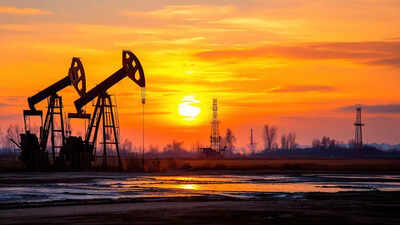
Venezuela has the world’s largest proven oil reserves, officially holding about 303 billion barrels, or roughly 17 per cent of global crude, mostly in the Orinoco Belt, where the oil is unusually dense and heavy. The size of the reserves is a reflection of the geological factors that have made it possible for a large amount of organic matter to be deposited and converted into hydrocarbons over a period of millions of years. But the large size of the reserve base has not resulted in sustained high production or wide economic stability. Production has dropped significantly from the peak levels, the physical facilities have become outdated, and a large part of the crude oil needs fairly complicated processing before it can be sold on the international market. Therefore, whilst Venezuela’s reserve numbers are still globally noteworthy according to the figures, the country’s actual production capacity and export earnings have been kept at a low level by technical, financial, and institutional limitations in recent years.
Venezuela has the world’s largest oil reserve: The geology explained
Venezuela has the world’s largest proven oil reserves because of how its geology developed over millions of years. Deep in the southern and eastern parts of the country lies the vast Orinoco Belt, a region of sedimentary rock that contains huge amounts of organic material that was buried and compressed into oil over a long period of time.According to the study “A river-dominated to tide-dominated delta transition: A depositional system case study in the Orinoco heavy oil belt, Eastern Venezuelan Basin”, over millions of years, movements between the Caribbean and South American tectonic plates caused parts of eastern Venezuela to sink. When land sinks slowly over long periods, it creates a deep basin. Think of it as a giant natural bowl. This “bowl” allowed thick layers of sediment to build up over time. Those sediments later became the rocks that hold oil.Rivers flowing from the rising Andes carried enormous amounts of sand, mud and buried organic material into this basin, helping create very thick, oil-rich layers that eventually became reservoirs. Repeated rises and falls in sea level in the region also helped preserve this buried organic matter, as shallow seas created low-oxygen conditions that prevented it from fully decaying, so more material was available to generate oil when buried deeper. In addition, faults and structural traps caused by tectonic forces helped keep the oil from escaping once it was generated, essentially sealing vast quantities of hydrocarbons in place. Most of what makes up Venezuela’s reserves is extra-heavy crude oil, very dense and sticky, which is harder to extract and refine but counts toward proven reserves, and these geological factors combined explain why such enormous amounts of oil are found there today.
Venezuela’s underground oil is not the same as oil wealth above ground
The size of that reserve figure is shaped in part by the fact that actual oil production has been very low for years, and much of the oil remains underground rather than flowing into refineries and export markets. Luisa Palacios, an adjunct senior research scholar at Columbia University’s Center on Global Energy Policy, said in a podcast from Resources for the Future that Venezuela once produced 3.7 million barrels per day in the late twentieth century, but production has dropped to around 1 million barrels per day, a fraction of what the country could theoretically supply and a tiny share of the world’s total output.The oil itself is extra-heavy crude, thick and difficult to process, and it needs specialised equipment, mixing with lighter hydrocarbons, and more complex refining before it can be sold or used. This makes it costly to extract and refine compared with lighter crude grades that are easier and cheaper to handle.Decades of underinvestment, poor management, and sanctions have left Venezuela’s oil infrastructure in a weakened state, with pipelines, wells, and refineries running below capacity and in need of major repairs and technology upgrades. International sanctions have also restricted access to global markets, financing and technology, all of which have suppressed output and discouraged new investment.Because so much of the oil sits in the ground and cannot be brought to market readily, the enormous reserve tally does not reflect strong production or exports today. The technical and economic challenges of producing and refining heavy crude mean that the reserve figures remain high even while actual oil wealth flowing into the economy is limited, reinforcing the gap between oil underground and oil wealth above ground.








 हिन्दी
  English