 Sipu Jha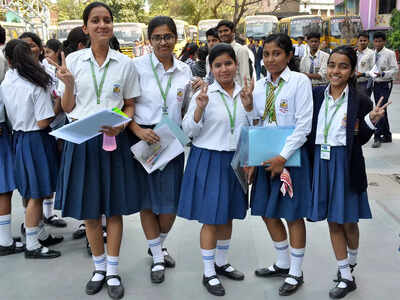
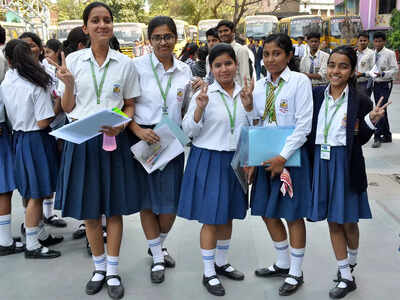
CBSE Physics paper analysis 2026: The Central Board of Secondary Education (CBSE) is conducting the Class 12 Physics examination as part of the 2026 board cycle, with 18,59,551 students registered for the senior secondary exams this year. The paper is being held in offline mode across thousands of examination venues, forming a key part of the 120 subjects offered under the Class 12 curriculum.Of the total registered candidates, 10,27,552 are male and 8,31,999 are female. With the examination currently underway across 7,574 centres, students and parents are awaiting the release of the question paper PDF and answer key to review responses once the paper concludes.First reactions trickle inInitial reactions from students are beginning to emerge as the exam draws to a close. Ishant, a student from Government Boys Senior Secondary School (GBSSS), School No. 2, Tukhmirpur, Delhi, who appeared for the exam at GBSSS Khajoori Khas, Delhi, described the paper as moderately difficult. “The paper was moderate, not too easy, not too hard,” he said, speaking outside his examination centre. His classmate Anmol, however, had a sharply different take. “The paper was very difficult,” he said.Expert take: easy to moderate, with scoring opportunitiesThilak M., PGT Physics at JAIN International Residential School (JIRS), Bengaluru, rated the paper easy to moderate and well within the prescribed syllabus. “The paper was balanced and gave students ample opportunity to score, while also testing conceptual understanding in selected areas,” he said.Section E, carrying five marks for long-answer questions, was particularly scoring, according to Thilak. Important derivations from Electrostatics, Ray Optics, and Electromagnetic Induction and Alternating Current (EMI & AC) were asked — topics that students who had practised standard derivations from previous years would have found comfortable and high-scoring.Section D’s case study questions, drawn from Galvanometer and Photoelectric Effect, tested conceptual understanding over memorisation. Thilak noted that well-prepared students would have found these manageable, as the questions required interpretation and application of theory rather than rote recall.Section C, carrying three marks per question, had a mix of theory and numericals. Questions on Gauss’s Law application for a plane sheet, Wheatstone network, dielectric insertion into a capacitor, p–n junction diode formation, and ray diagrams of optical instruments were straightforward and expected — students who had worked through previous year papers would have answered these with confidence. However, numericals from Electrostatic potential, Semiconductor diode circuits, and Total Internal Reflection (TIR) were multi-step and demanded stronger analytical and problem-solving ability.Section B, carrying two marks, drew from Nuclei, Dual Nature, and Wave Optics — all easy and expected, Thilak said — though the question on Moving Charges involving torque may have caught below-average students off guard. Section A’s MCQs were a mix of direct, memory-based questions and those requiring conceptual clarity, making it moderate overall.“The paper covered the entire syllabus and was strictly as per CBSE guidelines,” Thilak said. “Students with consistent preparation and previous year practice would have found the paper comfortable.”What the paper looks like: Structure and formatThe Physics paper follows the board’s prescribed structure for Class 12 examinations. It is set within the broader framework of 120 subjects being conducted in the 2026 examination cycle.Officials confirmed that the paper adheres to the notified design and marking scheme. “The examination is being conducted as per the established guidelines for Class 12 subjects,” a board official said, adding that all centres were instructed to follow standard procedures during distribution and collection of answer scripts.Expert take: easy to moderate, with scoring opportunitiesThilak M., PGT Physics at JAIN International Residential School (JIRS), Bengaluru, rated the paper easy to moderate and well within the prescribed syllabus. “The paper was balanced and gave students ample opportunity to score, while also testing conceptual understanding in selected areas,” he said.Section E, carrying five marks for long-answer questions, was particularly scoring, according to Thilak. Important derivations from Electrostatics, Ray Optics, and Electromagnetic Induction and Alternating Current (EMI & AC) were asked — topics that students who had practised standard derivations from previous years would have found comfortable and high-scoring.Section D’s case study questions, drawn from Galvanometer and Photoelectric Effect, tested conceptual understanding over memorisation. Thilak noted that well-prepared students would have found these manageable, as the questions required interpretation and application of theory rather than rote recall.Section C, carrying three marks per question, had a mix of theory and numericals. Questions on Gauss’s Law application for a plane sheet, Wheatstone network, dielectric insertion into a capacitor, p–n junction diode formation, and ray diagrams of optical instruments were straightforward and expected — students who had worked through previous year papers would have answered these with confidence. However, numericals from Electrostatic potential, Semiconductor diode circuits, and Total Internal Reflection (TIR) were multi-step and demanded stronger analytical and problem-solving ability.Section B, carrying two marks, drew from Nuclei, Dual Nature, and Wave Optics — all easy and expected, Thilak said — though the question on Moving Charges involving torque may have caught below-average students off guard. Section A’s MCQs were a mix of direct, memory-based questions and those requiring conceptual clarity, making it moderate overall.“The paper covered the entire syllabus and was strictly as per CBSE guidelines,” Thilak said. “Students with consistent preparation and previous year practice would have found the paper comfortable.”Class 12 Physics Paper Format (CBSE Pattern)Total Marks: 70Time Duration: 3 HoursSection-wise StructureSection A – Multiple Choice Questions (MCQs)1 mark eachUsually 16–20 questionsCovers entire syllabusIncludes case-based questions• Section B – Short Answer Questions (2 marks each)Very short, concept-basedDefinitions, derivations steps, numerical substitutions• Section C – Short Answer Questions (3 marks each)Numerical problemsDiagram-based explanationsConceptual reasoning• Section D – Case Study Based Questions (4–5 marks)Paragraph providedMCQs or short structured answersApplication of concepts• Section E – Long Answer Questions (5 marks each)Detailed derivationsNumerical with full stepsGraphs and diagrams requiredOver 18 lakh students sitting Class 12 exams this yearA total of 18,59,551 candidates have registered for the Class 12 board examinations this year. The gender-wise data shows 10,27,552 male candidates and 8,31,999 female candidates appearing for the exams.The examinations are being conducted at 7,574 centres across the country. Physics is among the major subjects in the senior secondary science stream and is one of 120 subjects scheduled in the current Class 12 examination cycle.What students should do once the exam endsAfter the examination concludes, students will be able to access the question paper PDF and verified answer keys once they are released. These documents will help candidates cross-check their responses and calculate tentative scores.Further updates regarding the question paper, answer key and detailed paper analysis will be published once available.This is a developing story. Keep visiting this page for the question paper PDF, reactions, expert analysis, and a detailed review of the paper.







 हिन्दी
  English