 Sipu Jha
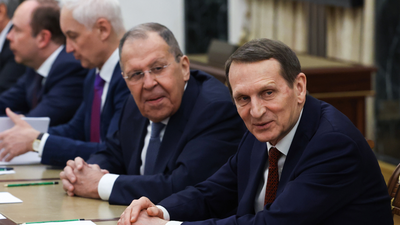
Russia’s foreign intelligence service, the SVR, has assumed control of the influence operations once managed by the Wagner Group in Africa following the death of its founder Yevgeny Prigozhin, according to a new investigation by an international media consortium.Wagner, long regarded as Moscow’s most prominent mercenary force and widely criticised by human rights groups for its brutality, maintained an extensive footprint across Africa, AFP reported. Its fighters operated alongside national armies in countries such as Libya and Mali, while its parallel influence network carried out disinformation campaigns and political destabilisation efforts.After Prigozhin was killed in a 2023 plane crash, weeks after leading a short-lived mutiny against Moscow, Russia’s defence ministry moved to restructure the group’s security operations on the continent under a new umbrella entity known as the Africa Corps. However, the investigation found that while the defence ministry absorbed military functions, the SVR took charge of Wagner’s political and information warfare apparatus.The probe — conducted by outlets including Forbidden Stories, All Eyes On Wagner, Dossier Center, openDemocracy and iStories — concluded that the SVR now directs efforts aimed at advancing Moscow’s political and economic interests, spreading disinformation, and sidelining competitors across Africa and beyond.“The SVR has now taken over the most effective tool of the Wagner Group,” the investigation stated.According to the findings, nearly 100 consultants work for Wagner’s influence division, known internally as Africa Politology or “The Company.” Between 2024 and 2025, teams were reportedly deployed to a wide range of countries including Angola, Argentina, Bolivia, Burkina Faso, Chad, Ghana, Libya, Mali, Niger and Sudan, with additional activity documented in Madagascar, Zimbabwe, Egypt, Cameroon, Benin and Namibia.The investigation was triggered after more than 1,400 pages of internal documents were anonymously sent to the editor-in-chief of the pan-African outlet The Continent. The files — spanning strategic plans, staff biographies, operational updates, financial records and summaries of disinformation campaigns conducted between January and November 2024 — were verified as authentic.“The documents show that these operations combine political influence, disinformation and close ties to security services, going far beyond the usual practices in the sector,” the consortium said.The SVR’s role reportedly includes supplying intelligence on sensitive topics, recruiting sources, facilitating access and positioning key influence agents in strategic roles. In Mali, for instance, the agency was tasked with gathering intelligence on the military and political strategies of France and the United States in the Sahel. It also provided diplomatic backing for the formation of a new military-political bloc linking Mali, Burkina Faso, Niger and Guinea.Following successive coups in Mali, Burkina Faso and Niger between 2021 and 2023, the juntas distanced themselves from former colonial power France and strengthened ties with Moscow. The three countries withdrew from the regional bloc ECOWAS and in 2023 formed the Alliance of Sahel States (AES), a move investigators described as a significant strategic gain for Russia.“Russia’s strategy manifested with the creation of the Alliance of Sahel States,” the report said, calling it a “significant political win.”The journalists also uncovered a network of companies allegedly used to channel funds from the SVR to Africa Politology. They estimate the budget for influence operations between January and October 2024 at approximately $7.3 million — around $750,000 per month.Despite these efforts, investigators argue that tangible economic returns for Moscow remain limited. While Russia has signed numerous memorandums of understanding across the continent, many have yet to translate into concrete commercial ventures.“Russia is playing the long game but the results are not always quick to materialise,” the consortium noted, adding that Moscow’s strategy appears particularly focused on politically unstable and vulnerable states in the Sahel region.




 हिन्दी
  English