 Sipu Jha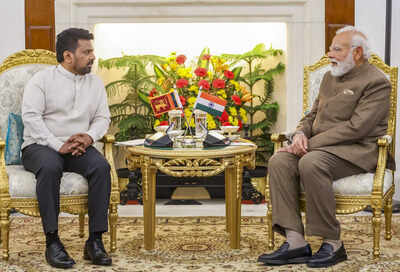
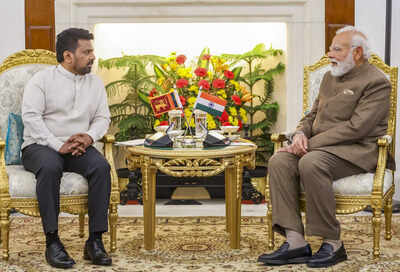
In an exclusive interview to TOI’s Sachin Parashar, Sri Lankan President Anura Kumara Dissanayake speaks about the significance of the AI Summit, backs India’s legitimate security interests in Indian Ocean and says Lanka would like to resume ETCA talks in a progressive and transparent manner. Excerpts: You are visiting India at PM Modi’s invitation for the summit. You’ve spoken in the past about gap between States in AI and how some nations are unable to use AI for development because of inadequate infrastructure. In that context, what are your expectations from this summit and the outcome document?We congratulate India for bringing this important AI Impact Summit to the Global South. This summit is significant not only for technology, but for partnership. For Lanka, this summit must be about democratising access to AI infrastructure and turning global principles into practical partnerships for the Global South. Sri Lanka sees this as an opportunity for India and Lanka, and wider Global South to shape AI governance together in partnership. For developing countries like mine, access to infra, research networks and human capital development is critical. Sri Lanka is already putting in place the foundations for AI-driven development – including a national digital public infrastructure framework, an AI governance architecture, sectoral AI committees, and an AI Champions programme to build institutional capability. But for countries like ours, access to global compute ecosystems, research networks and advanced talent development remains critical. Initiatives such as the Global AI Impact Commons and the Trusted AI Commons are important because they can help democratise AI resources and ensure that innovation is not limited to a few advanced economies. The summit’s real impact will lie in turning principles into practical partnerships, and Sri Lanka stands ready to work with India in doing so. What do you make of India’s focus on inclusive and human-centric AI and the fact that the summit is being hosted for the first time in the Global South? What’s your position on AI regulation?India’s human-centric approach to AI aligns closely with Sri Lanka’s own reform and development priorities. Sri Lanka supports a balanced and risk-based regulatory framework that protects citizens while encouraging innovation. Sri Lanka has already enacted robust data protection legislation, strengthened its cybersecurity framework, and is establishing a structured AI governance architecture to guide responsible adoption. Rather than fragmented standards, regional collaboration between Sri Lanka and India can promote interoperability, ethical safeguards and shared learning. AI governance should enable growth, strengthen institutions and expand opportunities. That is best achieved through partnership. We see India as a natural collaborator in building trusted and inclusive AI ecosystems. Looking back, given the historical scepticism that your party had about India and Indian govt’s recent support for Lanka’s economic recovery, as also assistance after Cyclone Ditwah, how has your vision for India-Lanka ties evolved over past 18 months?The first country that I visited after being elected as President was India; and the first foreign leader that I received in Lanka as President was PM Modi. In recognition of India’s support to Sri Lanka under PM Modi’s leadership, including during the economic crisis, we accorded him the highest honour that Sri Lanka bestows upon foreign leaders – the Sri Lanka Mithra Vibhushana. The link between our countries and our peoples is deep, historic, and civilisational. When I visited India as President in Dec 2024, we adopted the India – Sri Lanka Joint Statement titled ‘Fostering Partnerships for a Shared Future’. Relations between our two nations cover every area of contemporary relevance for our people. India’s support during Lanka’s economic stabilisation was significant. So was India’s support during Cyclone Ditwah. Our relationship today is about structural integration and long-term growth. India is Sri Lanka’s largest trading partner. India is a significant investor, and is the largest source of tourism. Just a few days ago, we welcomed a large number of Indians who came to Lanka to watch the T20 WC match between India and Pakistan. We are exploring expanding cooperation in energy connectivity and renewables; digital systems and public infra; maritime security and Indian Ocean stability and security; ports, logistics and supply chains; skills and human capital development and a range of other areas. We are open to considering all possible cooperation. A stronger Lankan economy complements India’s growth trajectory. When Sri Lanka and India work together, it will strengthen regional stability and economic resilience across the IOR. Your govt seems to be doing a tough balancing act, as it looks to secure Chinese investments while not jeopardising India’s security. As Sri Lanka looks to finalise the SOP for foreign research vessels this year, will it take into account India’s concern that vessels with dual-use military capabilities are not allowed to dock in Sri Lanka?Sri Lanka maintains an independent foreign policy. At the same time, geography dictates responsibility. We recognise India’s legitimate security interests in the Indian Ocean region. Our security is intertwined. We have signed an Agreement on Defence Cooperation between the two countries. Sri Lanka will not allow its territory to be used in ways that undermine other countries’ security. Stability in the Indian Ocean Region is a shared responsibility, and Sri Lanka will always work closely with India to uphold it. Negotiations for the Economic and Technological Cooperation Agreement remain stalled. You have stressed economic freedom but given the growing economic ties, do you think it might be time now to conclude the agreement?Sri Lanka believes the time is right to re-energise economic engagement with India. Global trade dynamics are shifting. India is expanding its trade architecture. Sri Lanka will explore ways to integrate into this growth environment in a mutually beneficial manner. We would like to recommence discussions on ETCA in a transparent manner. We are expanding free trade zone capacity and welcome Indian investment. Beyond trade agreements, Sri Lanka and India port partnerships offer tremendous opportunities. Sri Lanka’s ports already serve as major transshipment hubs for Indian cargo. By deepening cooperation, we can position Sri Lanka as a logistics and value-add partner to Indian manufacturing, develop JVs in maritime services, strengthen industrial connectivity and integrate more closely into regional supply chains. Economic integration should create jobs in Sri Lanka and build resilience for both economies. The direction in which we seek to proceed is clear: deeper cooperation with India, structured integration and shared growth for mutual benefit.



 हिन्दी
  English