 Sipu Jha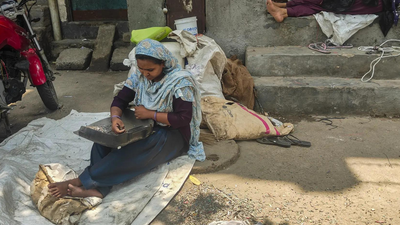
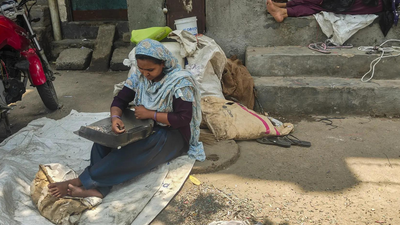
NEW DELHI: Segregation is stunting ambition and limiting mobility among Muslims and Dalits, highlights a Feb 2026 paper — ‘Residential segregation and unequal access to local public services in India’ — released by National Bureau of Economic Research (NBER), a US-based non-profit dedicated to advance economic understanding through policy-relevant research.This new report, conducted by researchers Sam Asher (Imperial College London), Kritarth Jha (Development Data Lab, US), Paul Novosad (Dartmouth College), Anjali Adukia (University of Chicago), Brandon Tan (Harvard/International Monetary Fund), suggests that the address a child grows up in may determine how far they can rise.Drawing on census-linked data across nearly 15 Lakh urban and rural neighbourhoods (Economic Census 2013, SECC 2011-12), the study assembles comprehensive neighbourhood-level datasets in India and finds that both Dalits and Muslims experience significant residential segregation, and this segregation shapes their access to basic public services—schools, clinics, piped water, sewerage systems and electricity.But perhaps its most troubling conclusion lies in stalled education and ambition.The paper documents a strong negative correlation between segregation and upward mobility: regions with higher segregation tend to show lower upward mobility—statistically linking growing up in a segregated, under-serviced neighborhood to fewer opportunities later in life.The paper finds high levels of residential clustering: 26% of Muslims live in neighbourhoods that are more than 80% Muslim, while 16% of SCs live in neighbourhoods that are more than 80% SC.The study shows that segregated neighbourhoods often have poorer access to public services. “Access to public services is systematically worse in neighborhoods where marginalized groups live. This holds for both Muslims and SCs, and for almost every local service that we can measure, including primary and secondary schools, medical clinics, piped water, electricity, and covered sewerage,” says the report.However, the mobility analysis highlights a particularly strong link between Muslim neighbourhood segregation and stalled educational advancement. The report notes: “Segregated SC neighborhoods are less clustered than segregated Muslim neighborhoods… The magnitude of the disparities is large. Compared with a 0% Muslim neighborhood, a 100% Muslim neighborhood in the same city is 10% less likely to have piped water and only half as likely to have a secondary school.”Two decades after the landmark 2006 Sachar Committee report laid bare the socio-economic marginalisation of Muslims in India, the study quantifies segregation and links it systematically to service delivery, labour market opportunities and mobility outcomes. Since the Sachar Committee had documented Muslims’ deficits in education, employment and access to credit, much of the policy discourse has centred on targeted scholarships and inclusion in welfare schemes. The NBER report offers an additional lens to look at how space shapes destiny in India.It suggests spatial clustering of marginalised communities continues to reproduce inequality—with lower educational mobility constraining access to higher-paying jobs, which in turn shapes where families can afford to live, reinforcing residential clustering and compounding over generations. Segregation thus becomes a self-reinforcing structural loop.Its implications are urgent.India has one of the youngest populations in the world. The demographic dividend is frequently invoked as a promise of economic growth. But if large segments of Muslim and SC youth are growing up in neighbourhoods that systematically dampen upward mobility, that dividend risks becoming unevenly distributed.







 हिन्दी
  English