 Sipu Jha
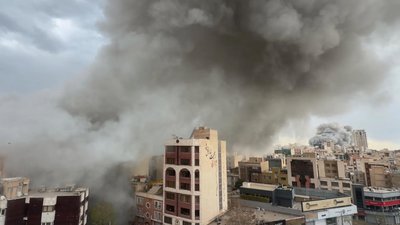
The war involving the United States, Israel and Iran has rapidly escalated into one of the most dangerous Middle East conflicts in years, spreading across multiple countries in less than a week. What began as a coordinated US-Israeli strike inside Iran quickly triggered retaliation from Tehran and drew in regional actors, turning the confrontation into a broader regional crisis.Washington and Tel Aviv say their joint campaign — codenamed Operation Epic Fury — is designed to cripple Iran’s military infrastructure, particularly missile launchers, air-defence systems and naval assets. Israeli officials claim their forces now enjoy near-complete air superiority over Iran after thousands of strikes across the country.The conflict was sparked by a surprise attack that killed Iran’s Supreme Leader Ali Khamenei and several senior officials, triggering retaliation from the Islamic Revolutionary Guard Corps and allied groups across the region. Within days, missiles and drones were being fired not only at Israel but also at American bases and Gulf states.According to estimates from the Center for Strategic and International Studies, the first 100 hours of Operation Epic Fury cost roughly $3.7 billion — around $891 million per day — with most of that spending outside existing US defence budgets. As the war enters its second week, attacks continue across Iran, Israel, Lebanon and the Gulf, while global markets and shipping routes have been disrupted.
Day 1: US-Israel strikes kill Iran’s Supreme Leader
The war began with a massive joint strike by the United States and Israel against targets across Iran. Air and missile attacks hit military bases, missile launch sites and strategic facilities in cities including Tehran, Isfahan and Kermanshah.One of the most dramatic developments was the killing of Iran’s Supreme Leader, Ali Khamenei, in what analysts described as a “decapitation strike” designed to cripple Iran’s leadership structure. Several senior military commanders were also reported killed in the initial attack.Iran quickly responded by launching missiles and drones toward Israel and American military facilities in the region. Air-raid sirens sounded across Israeli cities as defence systems were activated to intercept incoming projectiles.
Day 2: Iran launches major retaliation
On the second day of the conflict, Iran dramatically escalated its response with large waves of ballistic missiles and drones targeting Israeli territory. Several missiles struck infrastructure sites, though many were intercepted by Israel’s air-defence systems.At the same time, the United States expanded its air campaign against Iranian military targets. Dozens of additional strikes targeted missile launchers, air-defence systems and facilities associated with the Islamic Revolutionary Guard Corps.Iran also began directing attacks toward American bases and allied states across the Middle East, signalling that the conflict would not remain confined to Iranian and Israeli territory.
Day 3: Hezbollah opens a northern front
The third day saw the war spread beyond Iran and Israel when the Lebanese militant group Hezbollah entered the conflict. Rockets were launched from southern Lebanon toward northern Israel, opening a new front in the war.Israel responded with heavy airstrikes on Hezbollah positions in Beirut’s southern suburbs and other areas of Lebanon. Israeli officials said the strikes targeted weapons depots, command centres and infrastructure linked to the group.The involvement of Hezbollah raised fears that the conflict could evolve into a wider regional confrontation, particularly given the group’s long-standing ties with Iran.
Day 4: Regional tensions surge across the Gulf
By the fourth day, missile and drone attacks began affecting several Gulf countries that host American military bases.Iranian projectiles were intercepted over countries including Kuwait, Bahrain, Qatar and the United Arab Emirates. Some missiles and drones caused damage when debris fell after interceptions.At the same time, tensions escalated in the Strait of Hormuz, a crucial maritime corridor for global energy supplies. Attacks on vessels and threats against shipping routes disrupted maritime traffic and raised fears of a global energy crisis.Oil markets reacted sharply as traders worried that the conflict could significantly affect global supply.
Day 5: Gulf states increasingly drawn into the conflict
On the fifth day, the war widened further as Iranian missiles and drones targeted multiple Gulf states.Air-defence systems in the United Arab Emirates intercepted dozens of projectiles over the country. Debris from interceptions caused damage in parts of Dubai, including near the international airport and coastal areas.In Bahrain, a missile struck a state-run oil refinery, triggering a fire that authorities later said was contained. Kuwait temporarily suspended operations at the US embassy after missiles and drones were detected heading toward the country.Saudi Arabia also reported intercepting drones and a cruise missile targeting military and energy infrastructure, including areas near the Ras Tanura refinery.
Day 6: Massive US-Israel strike campaign intensifies
By the sixth day, the United States and Israel dramatically intensified their military operations inside Iran.According to US military officials, hundreds of targets were struck over a 72-hour period, including ballistic missile launchers, military compounds and naval facilities. Israeli officials claimed to have destroyed roughly 80 percent of Iran’s air-defence systems.Iranian authorities said the death toll from the strikes had risen to more than 1,300 people across the country. Several cities reported heavy damage to buildings and infrastructure, including government facilities, hospitals and residential areas.Meanwhile, Iranian forces continued launching missiles toward Israeli territory, although US officials claimed the frequency of these attacks had decreased compared with the early days of the war.
Day 7: War spreads across multiple fronts
By the seventh day, the conflict had spread across much of the Middle East.Israel continued heavy bombardment of Hezbollah targets in Lebanon and issued evacuation warnings for parts of Beirut’s southern suburbs and the Bekaa Valley. Clashes were also reported along the Lebanon-Syria border.In Iraq, drones and rockets targeted installations hosting American forces near Baghdad and in the Kurdish region around Erbil.At the same time, missile and drone attacks continued across Gulf states. Explosions were heard in Dubai and Bahrain’s capital, Manama, as air-defence systems intercepted incoming projectiles.The war has also disrupted global trade routes. Traffic through the Strait of Hormuz — through which roughly one-fifth of the world’s oil supply normally passes — has slowed dramatically, with only a handful of commercial vessels navigating the waterway.As the conflict enters its second week, there is little sign of de-escalation. US President Donald Trump has demanded Iran’s “unconditional surrender” while ruling out immediate negotiations, signalling that the war could continue to expand across the region.
Global economic and diplomatic impact
The war has triggered sharp reactions in global financial markets and energy prices. Oil prices surged amid fears that disruptions in the Strait of Hormuz could limit global supply.The benchmark West Texas Intermediate crude price jumped more than 12 percent during the week, one of the largest increases in years.The crisis has also forced thousands of foreign nationals to leave the Middle East. The US State Department says roughly 20,000 Americans have already departed the region, while several countries have organised evacuation flights.Airspace closures across much of the Middle East have complicated evacuation efforts. Several commercial airlines have suspended flights, while some ships and tankers have avoided the Gulf entirely.European governments are also responding cautiously. The United Kingdom and France have deployed naval and air-defence assets to the eastern Mediterranean, while other countries have focused primarily on diplomatic pressure.gnals the war could continue to escalate.




 हिन्दी
  English