 Sipu Jha
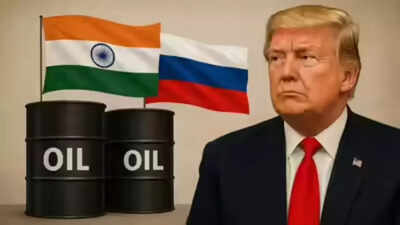
US President Donald Trump said the United States could take steps to ease pressure on global oil markets as tensions escalate in West Asia, including temporarily allowing India to continue purchasing Russian crude.Speaking to reporters aboard Air Force One on Saturday, Trump responded to questions about Washington’s decision to permit certain Russian oil sales to India following the announcement by US Treasury Secretary Scott Bessent.“If there were some, I would do it just to take a little of the pressure off,” Trump said when asked about possible additional measures, including using the US Strategic Petroleum Reserve (SPR).He added that global oil supply remained strong despite the crisis. “I think that the oil pressure—there’s a lot of oil. We’ve got a lot of oil. Our country has a tremendous amount and there’s a lot of oil out there. That’ll get healed very quickly,” Trump said.
US grants temporary waiver to India
Bessent said the United States has given India permission to accept Russian oil shipments temporarily in order to stabilise global supply during the ongoing crisis in the Gulf.“The Indians have been very good actors. We had asked them to stop buying sanctioned Russian oil this fall. They did. They were going to substitute it with US oil,” Bessent said in an interview with Fox Business.“But to ease the temporary gap of oil around the world, we have given them permission to accept Russian oil. We may un-sanction other Russian oil,” he added.The United States earlier granted a 30-day waiver allowing India to purchase Russian oil after shipping routes through the Strait of Hormuz were severely disrupted due to the ongoing conflict in the Gulf.
Energy markets under pressure amid Middle East tensions
The Strait of Hormuz is a crucial global energy route through which a large portion of oil shipments from the Middle East pass. India imports nearly 40 per cent of its crude oil from the region, with a significant share transported through this corridor.The waiver is intended to ensure energy supplies remain stable while shipping routes in the region face disruptions due to rising geopolitical tensions.US energy secretary Chris Wright earlier described the waiver as a short-term measure aimed at preventing global oil prices from rising sharply amid the crisis.
India says energy supplies remain comfortable
Government sources in India said the country is currently reviewing its energy situation twice daily and remains in a “very comfortable position” regarding energy security, reported news agency ANI.According to the sources, India’s stock of crude oil and petroleum products is adequate to meet domestic demand and is being replenished regularly. They also stressed that there is no shortage of LPG, LNG or crude oil globally.India has diversified its crude import basket in recent years to reduce dependence on any single region.Since 2022, imports from Russia have increased significantly. While Russian crude accounted for just 0.2 per cent of India’s imports in 2022, the share has risen sharply. In February this year, India imported about 20 per cent of its total crude oil from Russia, amounting to around 1.04 million barrels per day, government sources told ANI.
Government reassures consumers on energy supply
Union petroleum and natural gas minister Hardeep Singh Puri has also sought to reassure consumers that the country’s fuel supply remains stable despite global uncertainty.“Our priority is to ensure availability of affordable and sustainable fuel for our citizens, and we are doing it comfortably. There is no shortage of energy in India and there is no cause of worry for our energy consumers,” Puri said in a post on X.Officials said the government is closely monitoring the situation and plans to increase imports from alternative regions if disruptions through the Strait of Hormuz continue.The crisis comes amid escalating tensions in Middle East following a joint US-Israel military strike on Iran on February 28 that killed the country’s Supreme Leader Ali Khamenei and other senior figures.Iran later retaliated by launching waves of drone and missile attacks across several Arab countries in the region, intensifying fears of wider instability and potential disruption to global energy supplies.






 हिन्दी
  English