 Sipu Jha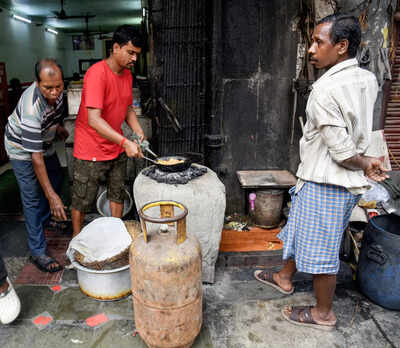
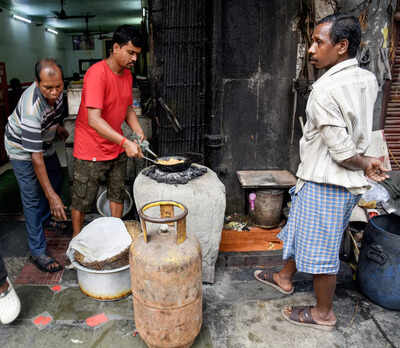
NEW DELHI: Aiming to calm frayed nerves and ease pressure on cooking gas cylinders, govt on Thursday announced the supply of limited quantities for eateries and decided to temporarily reintroduce kerosene and coal as cooking options, as energy supplies from West Asia continued to remain disrupted because of the military conflict.Amid increasing pressure from the hotel and restaurant industry, the three-member committee of oil marketing companies allowed commercial establishments to get 20% of their average monthly consumption, and separately increased the number of days between booking two LPG cylinders from 25 to 45 days in rural areas as people rushed to secure cylinders.Petroleum ministry officials said that the govt has allocated 48,000 kilolitres (kl) of additional kerosene to states, in addition to the regular quota of one lakh kl, for use as cooking fuel. It has also asked the pollution control boards of respective states and Union Territories to allow the use of biomass, RDF pellets (produced from municipal, industrial and commercial waste) and coal as alternate fuel in the hospitality and restaurant segment for one month.The decisions were taken following complaints of shortage of cooking gas from across the country, even though govt maintained that supplies are sufficient. While govt is tapping alternative sources to meet energy demand amid the disruption in supply from West Asia, officials said that there was no shortage of domestic cooking gas and 50 lakh cylinders were being distributed every day.“It’s a difficult situation. But govt is making all efforts to ensure that the supply to domestic consumers is maintained. On the distribution side, no dry retail outlet has been reported but there is a manifold increase in bookings because of the panic. We urge citizens to avoid panic booking and all efforts have to be made to conserve fuel wherever possible,” said Sujata Sharma, joint secretary, ministry of petroleum and natural gas. She said it will be the responsibility of states and UTs to identify the beneficiaries for the distribution of kerosene oil.Govt has also set up a three-member group of ministers headed by HM Amit Shah to review the developments and for necessary action. The other ministers are S Jaishankar and Hardeep Singh Puri. The govt is also keeping track of consumer complaints relating to cooking gas cylinders through the National Consumer Helpline for quick redressal.In the Lok Sabha, petroleum minister Hardeep Singh Puri said the Strait of Hormuz – through which India gets more than half of its 5.8 million barrels of crude oil, 55% LPG and 30% LNG – was disrupted for the 13th day.“For the first time in recorded history, the Strait of Hormuz has been effectively closed to commercial shipping. Despite India having no role in causing the conflict, like many countries, India has to navigate through its consequences,” Puri said, adding that India’s crude supply position was secure, and volumes secured through other routes exceeded what Hormuz would have delivered.“The availability of petrol, diesel, aviation turbine fuel, kerosene and fuel oil is fully assured. Retail outlets across the country are stocked, and supply chains for these products are functioning normally,” the minister said.The minister said that procurement of oil and gas had been diversified and cargoes were being secured from the US, Norway, Canada, Algeria and Russia, in addition to available Gulf sources.On the availability of cooking gas, he said the standard time from booking to delivery for domestic LPG cylinders remained 2.5 days, unchanged from pre-crisis norms. “Field reports indicate hoarding and panic booking at the distributor and retail level, driven by consumer anxiety rather than any actual supply shortage,” Puri informed Parliament.“The House should be clear on this: the rush-booking pressure in some localities reflects a demand distortion, not a production or supply failure,” he said.Puri said commercial LPG so far was sold in a completely deregulated, over-the-counter market without any govt subsidy, and there was no booking requirement or digital authentication.“In a supply-constrained environment where public anxiety is elevated, this deregulated structure creates a direct and uncontrolled pathway for hoarding, diversion and resale at inflated prices… The govt has taken the responsible course: to regulate this channel with clear priorities and a transparent allocation mechanism,” he said.




 हिन्दी
  English