 Sipu Jha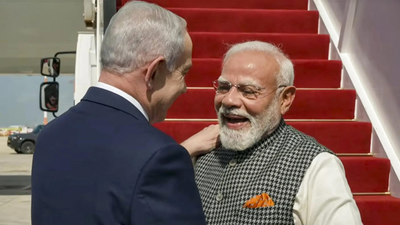
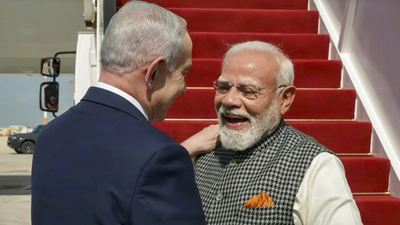
NEW DELHI: Israeli envoy to India, Reuven Azar, on Monday addressed the ongoing Middle East conflict, explaining the timing of Israel’s recent military operation on Iran and its relation to Prime Minister Narendra Modi’s visit to Israel in February.He acknowledged that tensions around Israel were already high before PM Modi’s arrival, but Tel Aviv waited until the Prime Minister’s departure to seize the “operational opportunity” to act against Iran.“It was evident that the situation is very volatile in our region even before Prime Minister Modi came (on February 25–26, 2026). When it comes to the decision to strike, the operational opportunity came only after PM Modi left. The cabinet decision to approve the operation happened only 2 days after,” he told ANI news agency, addressing speculations about the timing of the US-Israel strikes on Iran.
On India’s position regarding the US-Israel conflict with Iran, Azar said, “We will continue our engagements with India. We have a lot of common interests. Of course, India will pursue diplomatic efforts that serve the Indian interests.”He also commented on Iran’s retaliatory strikes, noting that Israel had anticipated such moves. “We are not surprised, we knew that the Iranians have these capabilities. In fact, following our effort back in June, we have degraded the capabilities of Iranians and the damage that they are inflicting on Israel now is much less than what they did back in June. They decided to escalate by attacking 12 countries in the region. I think this is completely irresponsible…The pressure is on them and will continue to be on them because they are the aggressors.”Responding to disinformation around Israeli Prime Minister Benjamin Netanyahu, Azar said, “Prime Minister Netanyahu is alive. I saw him personally when I was in Israel more than once. This video at the cafe is not AI-fabricated. There is a lot of disinformation.”Regarding Israel’s strategic goals in the conflict, Azar said, “There is no shifting of the goal post. We have stated, at the outset, that we have three goals – to neutralise the nuclear threat, to neutralise the ballistic missile threat and to give the Iranian people an opportunity to embrace the future by degrading the capability of the forces of oppression inside Iran…So, we are doing exactly that. Nothing has changed in terms of our aims...We will make sure that after this war is over, the Iranian regime cannot reconstitute these plans.”







 हिन्दी
  English