 Sipu Jha
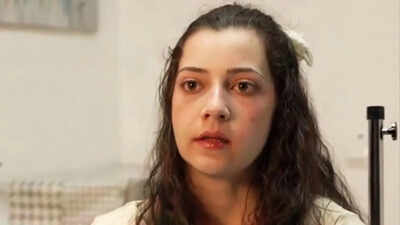
Several senior Catholic leaders in Spain have sharply criticised the euthanasia of 25-year-old Noelia Castillo, calling it a reflection of societal failure and raising concerns over the country’s right-to-die law.“We have all failed as a society,” Jose Mazuelos Perez, Bishop of the Canary Islands, was quoted as saying by EuroNews.
‘Culture of death’: Bishops question euthanasia law
Criticising Spain’s euthanasia law passed in 2021, Mazuelos Perez said it marked “another step towards a culture of death”. “There is a desire to require the doctor to end Noelia’s life, when a doctor’s mission is to cure and, if they cannot cure, to accompany and relieve,” he said.Raising similar concerns, Luis Argüello, president of the Spanish Bishops’ Conference, said: “A doctor cannot act as the executioner for a death sentence, however legal, empowering or compassionate it may appear.”In a joint statement, church leaders said the case reflected “an accumulation of personal suffering and institutional shortcomings”.
Long legal battle before euthanasia
Castillo died in Barcelona on Thursday after an 18-month legal battle to exercise her right to assisted dying.Her request, approved in 2024 by a Catalan medical and legal committee, was repeatedly challenged by her father, Geronimo Castillo, with support from advocacy group Abogados Cristianos.Courts, including Spain’s Constitutional Court and later the European Court of Human Rights, ultimately ruled in her favour, allowing the procedure to go ahead.
A life shaped by trauma and suffering
Castillo’s life had been marked by years of psychological and physical distress. She had been undergoing psychiatric treatment since her teens and was diagnosed with conditions including OCD and borderline personality disorder.She was sexually assaulted multiple times, including a gang rape by three men in 2022. The trauma led to repeated suicide attempts.In October that year, she jumped from a fifth-floor window, suffering a severe spinal injury that left her paralysed from the waist down and in constant pain.
“I want to go in peace”
In her final interviews with Spanish broadcaster Antena 3 and programme Y Ahora Sonsoles, Castillo spoke candidly about her decision.“I want to go now and stop suffering, period,” she said.“None of my family is in favour of euthanasia. But what about all the pain I’ve suffered during all these years?”Despite opposition from her father, she remained resolute in her choice.While her father fought to block the procedure, arguing her mental health affected her judgement, her mother expressed disagreement but chose to support her.“I do not agree, but I will always be by her side,” her mother said.The case has sparked a wider debate in Spain over euthanasia, mental health, and whether the system failed to adequately support a vulnerable individual.






 हिन्दी
  English