 Sipu Jha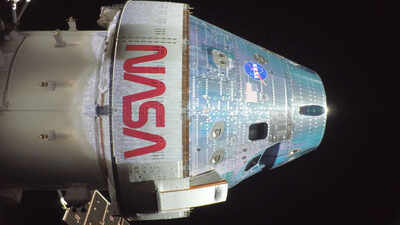
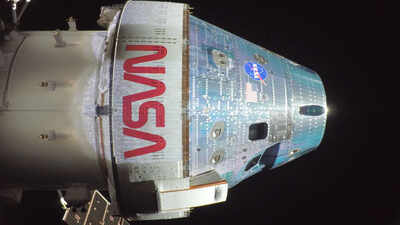
Nasa is being asked to do something that sounds deceptively simple and historically dangerous: achieve more with less. A proposed US budget for 2027 seeks to cut nearly a quarter of the agency’s funding, even as ambitions to return to the Moon, build a lunar base, and push deeper into space remain intact. The result is a paradox at the heart of modern space policy, one that pits exploration against science, ambition against austerity.
The big picture
The proposed budget would reduce Nasa’s overall funding by roughly 23–25%, bringing it down to about $18.8 billion. At the same time, the agency is being pushed to accelerate its flagship Artemis programme, which aims to return humans to the Moon and establish a sustained presence there.This is not just a budget story. It is a question of priorities: what kind of space agency should Nasa be in the 21st century?
Driving the news
The cuts are part of a broader push for fiscal restraint and efficiency across US government agencies. Nasa Administrator Jared Isaacman has publicly backed the proposal, arguing that the agency does not have a funding problem but an execution problem.The administration’s argument rests on the idea that Nasa already has significant resources available through prior appropriations and supplemental funding. The focus now, it says, should be on delivering results rather than increasing spending.In effect, this approach prioritises visible outcomes over institutional expansion, with an emphasis on accelerating key missions rather than maintaining a wide portfolio of programmes.
Where the cuts fall
The reductions are not evenly distributed. They are sharply concentrated in certain areas.Nasa’s science budget is set to take the biggest hit, with nearly half of its funding at risk. Space technology programmes also face deep cuts of close to one-third. In contrast, exploration programmes, particularly those tied to the Artemis mission, are largely protected and even prioritised.This creates an imbalance within the agency. While human spaceflight initiatives continue to move forward, many scientific missions, especially those in early stages or extended operations, could be cancelled or scaled back.
Why it matters
Nasa has always balanced two core functions: exploration and science. Exploration captures imagination and geopolitical prestige, while science builds knowledge and long-term capability.The proposed budget shifts that balance decisively toward exploration.The consequences are significant. Fewer science missions mean reduced data, slower progress in understanding planetary systems, and diminished leadership in global space research. Over time, this could erode one of Nasa’s most important strengths: its ability to combine discovery with ambition.In simple terms, Nasa may reach the Moon faster, but understand less about the universe when it gets there.
The Artemis gamble
At the centre of this strategy is the Artemis programme, which aims to return humans to the Moon and establish a long-term presence there.The administration believes that building a lunar base and conducting frequent missions will unlock new technological and scientific opportunities. It sees Artemis as the foundation for future exploration, including eventual missions to Mars.Supporters argue that concentrated investment in Artemis will deliver tangible results, such as sustained lunar operations and infrastructure. Critics, however, warn that this focus comes at the cost of a broader scientific agenda.
A quieter Nasa
Another notable shift lies in how the budget has been communicated. Unlike previous years, there have been no major public briefings or high-profile announcements from Nasa leadership.Instead, the messaging has been more restrained and internal, with an emphasis on maintaining focus on mission objectives rather than engaging in political debate.This reflects a subtle change in the agency’s posture, from a publicly communicative scientific institution to a more tightly managed, outcome-driven organisation.
The global context
Nasa remains the world’s largest space agency, with resources that still exceed those of its global counterparts. However, the competitive landscape is evolving rapidly.China is advancing its own lunar ambitions. Private companies are reshaping the economics of spaceflight. International collaborations are becoming more strategic and less symbolic.In this environment, decisions about funding allocation are not just domestic policy choices. They shape how the US positions itself in a new space race.
The bottom line
This is more than a budget cut. It is a strategic pivot. Nasa is being reshaped into an agency that prioritises visible milestones over incremental discovery, human exploration over robotic science, and efficiency over institutional breadth. Whether this makes Nasa more effective or more limited will depend on how successfully it can deliver on its ambitions without undermining its scientific foundation. For now, the agency is placing a calculated bet: that returning to the Moon will justify everything it has chosen to leave behind.






 हिन्दी
  English