 Sipu Jha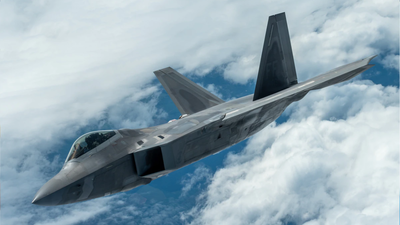
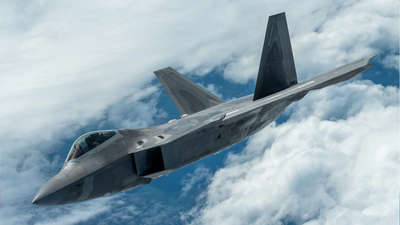
The F-22 Raptor remains one of the most advanced air superiority fighters in service, designed to dominate modern aerial combat through a combination of stealth, speed and integrated avionics. Developed for the US Air Force, the aircraft represents a significant leap in warfighting capability, enabling both air-to-air and air-to-ground missions.According to the US Air Force, the F-22 was built to project air dominance rapidly and at long ranges, particularly in contested environments where adversaries attempt to deny access. Its design integrates low-observable technology, advanced sensors and high-performance engines to ensure survivability and effectiveness in complex combat scenarios.Even decades after its induction in December 2005, the aircraft continues to set benchmarks in modern military aviation, with capabilities that remain difficult to match.
What makes the F-22 a fifth-generation fighter
The F-22 combines four key capabilities:
- Stealth
- Supercruise (sustained supersonic flight without afterburner)
- Advanced maneuverability
- Integrated avionics and sensor fusion
This combination allows the aircraft to detect, track and engage enemy targets before being detected itself — a key advantage in modern air combat.The US Air Force notes that this “first-kill opportunity” is central to the F-22’s operational role, particularly against advanced air and missile threats.
Stealth and survivability: ‘Invisible’ in combat
One of the defining features of the F-22 is its radar-evading capability. With an extremely low radar cross-section — often described as being comparable to the size of a marble — the aircraft is designed to avoid detection by enemy radar systems.Low-observable technologies reduce its visibility not only to radar but also to infrared and other tracking systems. This allows the F-22 to operate deep inside contested airspace while minimising the risk of engagement by surface-to-air missiles or enemy aircraft.
Speed and supercruise capability
Powered by two Pratt & Whitney F119 engines, the F-22 produces thrust unmatched by most contemporary fighters.A key advantage is supercruise — the ability to fly at speeds above Mach 1.5 without using fuel-intensive afterburners. This:
- Extends operational range
- Improves fuel efficiency
- Enhances mission flexibility
The aircraft can reach speeds in the Mach 2 class and operate at altitudes above 50,000 feet.
Maneuverability and combat performance
The F-22’s aerodynamic design, thrust vectoring and high thrust-to-weight ratio (greater than 1:1) enable exceptional agility.This allows it to:
- Execute tight turns at high speeds
- Climb rapidly, including near-vertical ascent
- Outmaneuver most known and projected fighter aircraft
Such maneuverability makes it difficult for adversaries to track or lock onto the aircraft during combat.Advanced avionics and sensor fusionA major strength of the F-22 lies in its integrated avionics and sensor suite.The aircraft can:
- Track multiple targets simultaneously
- Identify threats before being detected
- Share real-time data with other aircraft and ground systems
This networked capability enhances situational awareness and enables coordinated operations, improving overall combat effectiveness.
Weapons and combat roles
The F-22 is designed as a multi-role platform with both air-to-air and air-to-ground capabilities.Air-to-air configuration:
- Six AIM-120 AMRAAM missiles
- Two AIM-9 Sidewinder missiles
- One 20mm M61A2 cannon
Air-to-ground configuration:
- Two 1,000-pound GBU-32 JDAM bombs
- Two AIM-120 and two AIM-9 missiles
All primary weapons are carried internally, preserving the aircraft’s stealth profile.Design, development and inductionThe F-22 programme began in the 1980s under the Advanced Tactical Fighter initiative.
Key milestones:
- 1990: First flights of prototype aircraft (YF-22 and YF-23)
- 1991: YF-22 selected for development
- 1997: First engineering and manufacturing development flight
- 2001: Low-rate production approval
- 2005: Full-rate production and operational induction
Developed by Lockheed Martin and Boeing, the aircraft was briefly designated F/A-22 before being renamed F-22A in 2005.
Key specifications at a glance
- Role: Air dominance, multi-role fighter
- Crew: One
- Length: 62 ft (18.9 m)
- Wingspan: 44.5 ft (13.6 m)
- Max takeoff weight: 83,500 pounds
- Range: Over 1,850 miles (ferry range with external tanks)
- Ceiling: Above 50,000 ft
- Unit cost: Approximately $143 million
Why the F-22 still matters
Despite the emergence of newer platforms, the F-22 remains a critical component of US air power. Its ability to operate undetected, strike first and coordinate with other assets makes it central to modern air combat doctrine.As per US Air Force inputs, the aircraft’s combination of stealth, speed and integrated systems ensures it continues to play a key role in maintaining air superiority — particularly in high-threat environments.







 हिन्दी
  English