 Sipu Jha
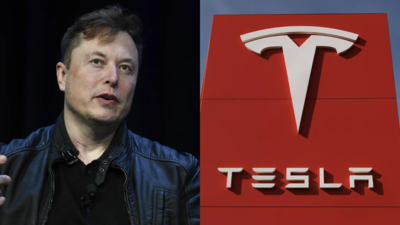
Ming-Chi Kuo, the popular Apple analyst has validated his earlier predictions. In a post shared on social media platform X (formerly known as Twitter) Kuo said that Tesla CEO Elon Musk pushed to build Tesla’s own semiconductor fabs marking a strategic shift towards full control of the company’s AI future. The comments made by Kuo follow Musk’s remarks at Tesla’s recent shareholder meeting, where Musk outlined the aggressive roadmap for Tesla’s next-generation AI chips. “@elonmusk remarks at the latest Tesla shareholder meeting validate my previous analysis and predictions regarding his semiconductor strategy,” wrote Kuo.
Elon Musk’s chip Timeline: AI5 to AI6 in under a year
At the shareholders meeting, Elon Musk said, ““I’m hopeful that we can within less than a year of AI5 starting production, we can actually transition in the same fab to AI6 and double all of the performance metrics.” In a post shared on X, Kuo said that this statement made by Musk confirms his earlier analysis that Tesla is escalating its chip development timeline. While many doubted Tesla could move from AI5 to AI6 in just a year, Musk’s confidence supports the notion that Tesla is building the infrastructure to do just that. “I previously projected that AI6 would enter mass production in 2027. Many questioned whether only a one-year gap between AI5 and AI6 was realistic, but Musk’s comments validate that timeline (setting aside whether the plan ultimately executes as stated),” wrote Kuo.
Why Tesla is moving away from TSMC
As per Kuo, Musk’s motivation to build Tesla’s own chip plants goes far beyond concerns about supply shortages. Kuo suggested three strategic drivers:
- Geopolitical risk: Musk has publicly voiced concerns about the concentration of advanced node capacity in Taiwan. Even by 2030, TSMC’s advanced-node and advanced-packaging capacity in the U.S. will remain limited—especially on the packaging side, likely no more than about 10% of its global capacity. I believe Musk realizes this as well, which is why he said, ‘And then you go to solve memory and packaging too.’
- R&D flexibility: It’s expected that Tesla has significant growth potential, but within TSMC today it is still a second-tier customer relative to the likes of Apple and Nvidia. That naturally means less priority on R&D support and production flexibility—one of the main reasons Tesla moved AI6 to Samsung. The ultimate remedy is to control its own chip production plant.
- Vertical integration: Musk’s new technologies and products are often at the cutting edge. The ability to customize key design and manufacturing segments to his specific needs—with chip production being a critical one—enables a highly integrated final product and maximizes the benefits of vertical integration.
Kuo referenced a past comment from TSMC CEO CC Wei, who told Musk: “If you’re willing to pay, there will be chips.” This, Kuo argued, shows that supply isn’t the issue—control is.
Tesla’s AI chip ambitions
The A15 chip of Elon Musk’s Tesla is said to be produced by both Samsung and TSMC. However, Musk has also hinted that the uture chips like AI6 and AI7 may be built in Tesla’s own fabs. He even teased AI8 as “out of this world,” suggesting a long-term roadmap of increasingly powerful processors.“Just finished a long AI5 design review with the Tesla California and Texas chip engineers. It’s going to be great,” Musk wrote. He then revealed the subsequent schedule: “And AI6 and AI7 will follow in fast succession. AI8 will be out of this world.”





 हिन्दी
  English