 Sipu Jha
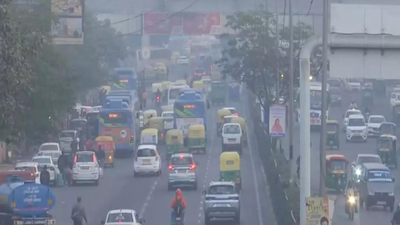
NEW DELHI: Delhi-NCR has recorded consistent improvement in air quality this year, with the region registering its lowest average AQI for January to November in eight years, excluding the COVID-19 lockdown year of 2020, according to official data.Figures show that Delhi’s average AQI for the January–November 2025 period stood at 187. This is an improvement over 201 in 2024, 190 in 2023, 199 in 2022, 197 in 2021, 203 in 2019, and 213 in 2018.
There has also been a sharp drop in the number of “Severe” air quality days. Only three days recorded a daily average AQI above 400 this year, compared with 11 such days in 2024, 12 in 2023, and 17 in 2021. Notably, 2025 has not recorded a single “Severe+” day (AQI above 450), unlike previous years.Pollution levels have eased across key indicators. Delhi’s average PM2.5 concentration was 85 µg/m³, the lowest since 2018 and similar to levels seen in 2020. For comparison, the PM2.5 average was 98 in 2024, 90 in 2023, 95 in 2021, and 103 in 2018.The PM10 average also declined, standing at 183 µg/m³ for the January–November period, down from 205 in 2024, 193 in 2023, and 228 in 2018.Officials said the Commission for Air Quality Management (CAQM) continues to work with authorities across Delhi-NCR to enforce pollution-control measures. They added that efforts will be strengthened further to maintain the progress made this year.On Saturday, CAQM issued revised guidelines for the Graded Response Action Plan (GRAP) for the NCR. Measures earlier listed under Stage IV for the ‘Severe’ category will now fall under Stage III. According to the commission, this shift means NCR State Governments and the GNCTD will decide whether public, municipal, and private offices should operate at 50 per cent capacity, with the rest working from home. The Central Government may also allow work from home for its employees.Meanwhile, on Friday, Aam Aadmi Party (AAP) Delhi State President Saurabh Bharadwaj alleged that Delhi’s pollution crisis has become a public health emergency due to manipulation of air quality data and failure to enforce graded restrictions. Saurabh Bharadwaj claimed the BJP-run Delhi Government fabricated AQI figures and allowed construction to continue despite GRAP-3 bans. He said pollution levels of 500–700 were recorded as 300–400 to avoid mandatory restrictions.






 हिन्दी
  English