 Sipu Jha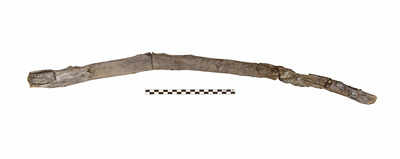
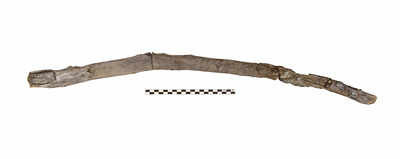
Archaeologists working in southern Greece have identified wooden tools that appear to be the oldest of their kind ever found. The objects were recovered at the Marathousa 1 site in the Megalopolis Basin and dated to around 430,000 years ago. The findings were published in Proceedings of the National Academy of Sciences. For decades, early technology has been judged almost entirely by stone. Wood rarely survives long enough to be seen. These pieces do. Found alongside animal remains and simple stone artefacts, they suggest that early humans were shaping and using organic materials in ways that are usually invisible to archaeology. The discovery does not rewrite everything. It adds weight, quietly, to ideas that have long been difficult to prove.
Greece yields 430,000-year-old wooden tools ever used by humans
According to the study “Evidence for the earliest hominin use of wooden handheld tools found at Marathousa 1 (Greece)”, Marathousa 1 sits near what was once a lake edge. The ground stayed wet for long periods, slowing decay. That matters more than it sounds. In most sites of this age, wood disappears completely. Here, fragments remained long enough to be studied. Excavations have already shown repeated human presence, with stone flakes, worked bone, and butchered elephant remains. The wooden pieces were found within this spread of activity, not set apart from it.
The wooden pieces show signs of careful handling
Two of the wooden finds show clear modification. One is an alder trunk, shaped along its length, with surface wear that suggests repeated use. Its size and form point towards digging or levering in soft ground. The second piece is far smaller, made from willow or poplar. It appears deliberately shaped, though its exact function is harder to pin down. Its scale alone stands out. Tools this small are rarely seen from such an early period.
Wood complicates the usual picture of early tools
Stone lasts. Wood does not. That imbalance has shaped how early human behaviour is described. The Marathousa finds hint at a broader toolkit than stone alone suggests. Different types of wood were selected, which implies some awareness of material properties. That choice does not need to be framed as advanced thinking. It looks practical. Local. Grounded in what was nearby.
Humans and carnivores shared the same space
A third wooden fragment showed deep markings that were not human-made. These were identified as claw marks from a large carnivore. Its presence alongside human-worked tools suggests overlap rather than separation. People and predators were moving through the same landscape, perhaps at different times, perhaps not. The evidence does not settle the question. It leaves it open.
The significance lies in what survives, not what is claimed
The tools do not point to sudden breakthroughs. They sit comfortably within a slow, uneven story of human adaptation. What matters is that they exist at all. Wooden tools were being made and used much earlier than the record usually allows us to see. Their survival here is unusual. Their use elsewhere was probably not. The ground at Marathousa held onto them. Long enough, it turns out, for a small adjustment to how early human life is understood.






 हिन्दी
  English