 Sipu Jha
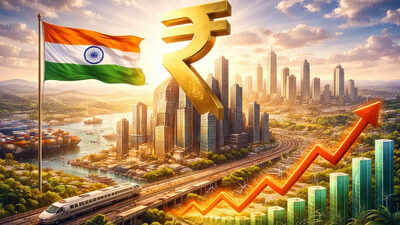
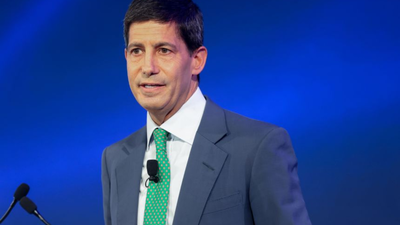
The message from the Economic Survey 2025-26, prepared by Chief Economic Adviser V Anantha Nageswaran is clear: The Indian economy is an oasis of macroeconomic stability in an otherwise turbulent world, and it will continue to grow well. The Economic Survey was tabled by Finance Minister Nirmala Sitharaman in Parliament on Thursday ahead of her Budget speech on Sunday.“We have done well; we are doing better, post-Covid. But the world is more unpredictable and dangerous. We have promises to keep and miles to go before we can sleep. We have to reimagine the way we are organised as a state and function. Businesses and households have to internalise their responsibilities. We have to be patient and embrace delayed gratification. We have to become strategically indispensable,” Chief Economic Adviser V Anantha Nageswaran said while addressing an Economic Survey press conference.
Drawing on Katha Upanishad: Yama’s message of delayed gratification
Interestingly, the Economic Survey draws on Yama’s message from Katha Upanishad to emphasize the importance point of delayed gratification.
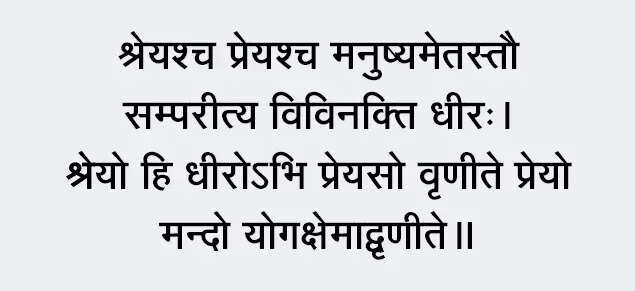
Yama’s message in the Katha Upanishad
As the Economic Survey notes: Yama’s message in the Katha Upanishad is timeless: every moment asks us to choose between Śreya, the enduring good, and Preya, the fleeting comfort. The mature mind chooses Śreya; the immature mind settles for Preya. In other words, the country stands to gain immensely when all of us embrace delayed gratification.The all important message is on building resilience patiently. “The global environment is being reshaped by geopolitical realignments that will influence investment, supply chains and growth prospects for years to come. Against today’s global churn, India must choose to build resilience, innovate relentlessly, and stay the course toward Viksit Bharat, rather than seek quick fixes to visible, short-term pressures,” the Economic Survey says.Also Read | Tariff war, AI bubble: Crisis worse than 2008 looming? Economic Survey explains what India should doA recurring but underappreciated constraint on India’s development trajectory is the difficulty of sustaining delayed gratification, the Economic Survey says.“Competing in the global big league, whether in manufacturing, logistics, institutions, or elite sports, requires incurring near-term costs for returns that are uncertain, delayed, and often invisible in the short term. Where delayed gratification weakens, systems begin to substitute shortcuts for capability, visibility for depth, and speed for learning,” it says.The Economic Survey clearly underscores the critical role that manufacturing and exports will continue to play in driving India’s growth, especially at a time when the global economy is increasingly fragmented and marked by heightened tensions. Looking ahead, Nageswaran said that if India succeeds in strengthening its manufacturing and export competitiveness and advances further on process-oriented reforms, including in land-related issues and subsidies, the Indian economy’s potential growth rate could move beyond 7% and rise to around 7.5 to 8% in the coming years.India has already entered into several free trade agreements, with the most recent one being with the European Union. That agreement will take time to be ratified and become operational, likely over the next year or so. The Economic Survey’s projection of around 7% growth in the medium term is not heavily dependent on resolving tariff-related issues with the United States, especially since the timelines for such a deal remain uncertain.Also Read | How rupee became a victim of geopolitics & a strategic power gap in 2025: Economic Survey explains The medium to long-term objective should be to bring down the combined fiscal deficit of the Centre and the states to around 6%. While the unconditional cash transfers being adopted by several states may serve a useful purpose in the short run, sustaining economic growth requires states to carefully rebalance their revenue expenditure. This is necessary to ensure that immediate income support does not come at the expense of investments that are essential for inclusive prosperity over the medium term, the Economic Survey warns.Prime Minister Narendra Modi has called the Economic Survey a guide to informed policymaking, and one that reinforces confidence in India’s economic future. Ahead of the Budget session PM Modi said that that the country is moving away from long-term pending problems towards long-term solutions, which create predictability and build global trust. He also said that the government will continue with next-generation reforms on the Reform Express.All eyes are now on FM Sitharaman’s Union Budget 2026 speech – will the document focus on long-term reforms, that help build resilience – on the fundamental of embracing delayed gratification?





 हिन्दी
  English