 Sipu Jha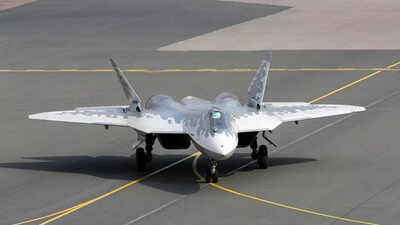
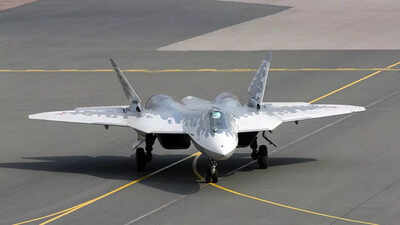
India and Russia are holding technical discussions to explore the possibility of jointly producing the fifth-generation Sukhoi Su-57 fighter jet in India, according to senior Russian aerospace officials. While there has been no official response from the Indian side, the comments signal Moscow’s renewed push to re-enter India’s fighter ecosystem at a time when New Delhi is weighing multiple paths for its future air combat fleet.The discussions, described by United Aircraft Corporation (UAC) CEO Vadim Badekha as being at an “advanced stage of technical consultations”, include the possibility of licensed production of the export variant Su-57E at facilities currently manufacturing the Su-30MKI, with extensive involvement of Indian industry and systems. The claim revives a long-dormant conversation around Indo-Russian fifth-generation cooperation, years after India exited the earlier FGFA programme.
“Today, we are in the advanced stage of technical negotiations on this contract. Such contracts, given our experience, determine the trajectory of our cooperation for several decades to come,” CEO of Russia’s United Aircraft Corporation (UAC) Vadim Badekha told Russian reporters on the sidelines of the Wings India air show at Begumpet airport in Hyderabad.
Russia has put on static display its latest regional transport aircraft – the Ilyushin Il-114-300 and the Sukhoi SJ-100.Badekha claimed that the parties are also discussing “the licensed production of the Su-57 fighters in India at the facilities currently used to produce the Su-30 aircraft, and the maximum use of Indian industry and Indian systems in this aircraft.”“Therefore, the contract requires extensive, in-depth study. It is currently in the advanced stage of technical consultations,” Badekha was quoted as saying by the state-run TASS news agency.Earlier, the CEO of the state-arms exporter Rosoboronexport, Alexander Mikheev, announced that the company was offering New Delhi the supply of the latest fifth-generation Su-57E fighter jets, as well as the organisation of their production in India and assistance in developing its own indigenous AMCA stealth fighter, the state-run RIA Novosti reported. Meanwhile, the private Interfax agency reported about the signing of an agreement between UAC and Hindustan Aeronautics Limited (HAL) for the production of Superjet-100 regional jets in India. “The document formalises the agreement that HAL will assist UAC in the Superjet type certification/validation process in India. HAL will also be granted a license to manufacture and sell the SJ-100, including components, parts, and spare parts necessary for the repair and maintenance of this aircraft,” Interfax reported.UAC, in turn, will assist HAL in organising and re-tooling its production facilities for SJ-100 production through consulting, design services, and specialist engagement. The roadmap, timeframe, project financial indicators, and detailed workforce allocation are expected to be reflected in the master agreement.In October, UAC and HAL signed a memorandum of understanding for the production of Superjets in India. UAC expects not only to localise the production of “components, units, and systems for our aircraft,” but also to supply them to Russia, according to Badekha.
What is the Su-57?
The Sukhoi Su-57 is Russia’s first operational fifth-generation combat aircraft, developed under the PAK FA programme to replace legacy MiG-29 and Su-27 variants. Designed as a multirole platform, it is intended to perform air-superiority, strike, suppression of enemy air defences and network-centric operations in contested environments.The aircraft made its maiden flight in January 2010, entered limited service with the Russian Aerospace Forces in 2020, and remains in low-rate serial production.
Design philosophy: Manoeuvrability over pure stealth
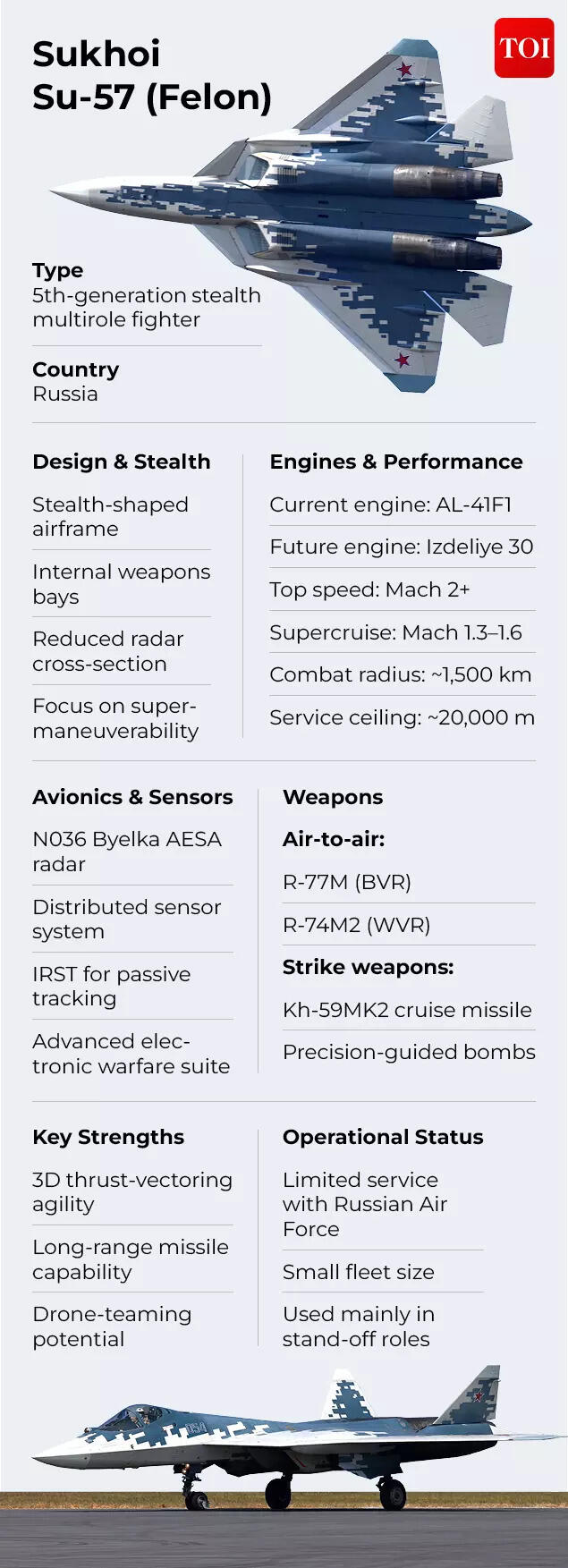
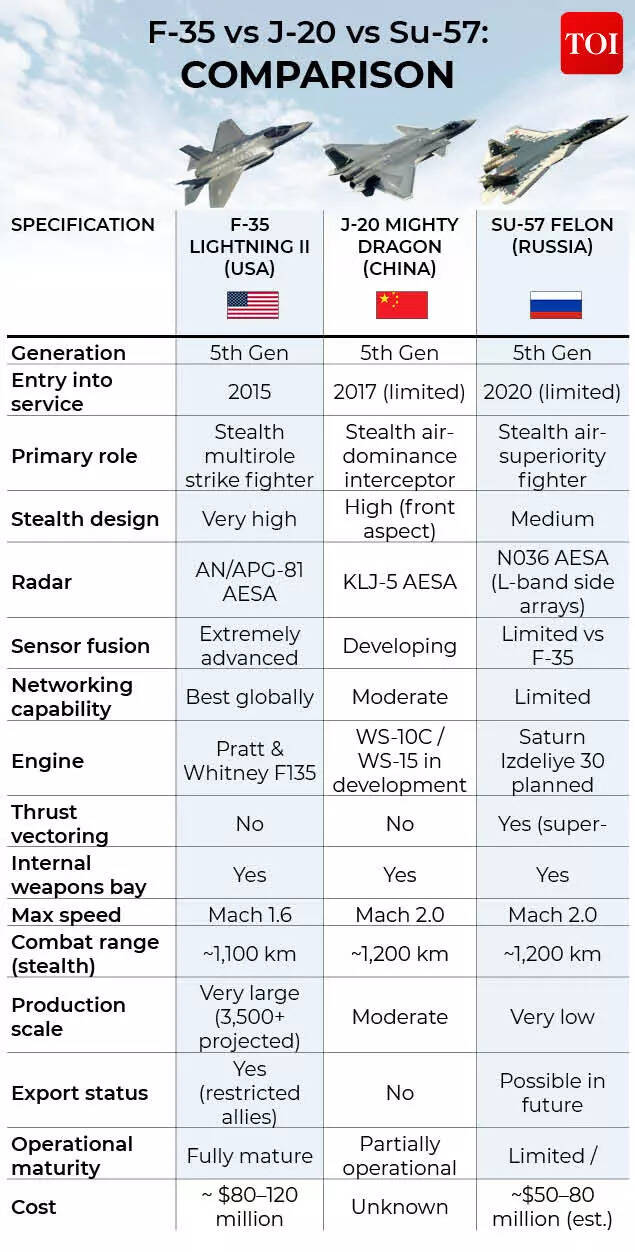
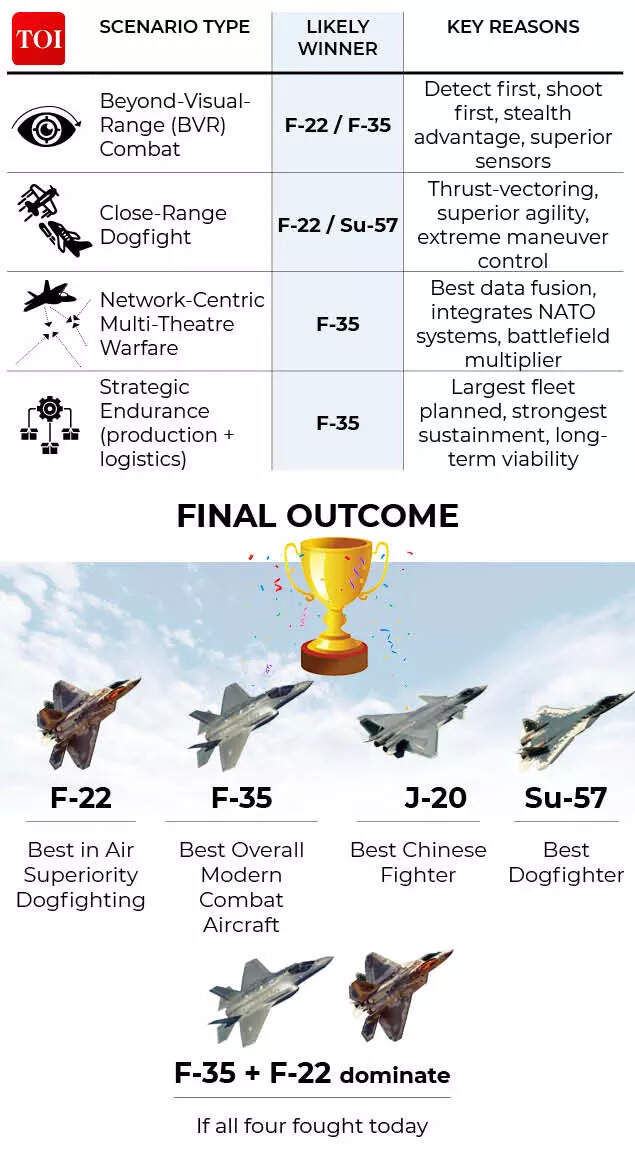
Unlike Western fifth-generation fighters such as the F-22 and F-35, the Su-57 prioritises extreme agility alongside reduced observability rather than pursuing minimum radar cross-section at all costs.The airframe features blended shaping, internal weapons bays and extensive use of composite materials to lower radar, infrared and visual signatures. However, its stealth effectiveness is widely assessed to be lower than that of US counterparts, particularly due to engine nozzle design, panel alignment and external sensor placement.Russia’s design trade-off leans heavily on super-manoeuvrability — enabled by 3D thrust-vectoring — under the assumption that future air combat may still involve close-range engagements and missile evasion rather than exclusively beyond-visual-range warfare.
Engines: The programme’s biggest question mark
Current production Su-57s are powered by the Saturn AL-41F1 engine, an interim solution derived from the Su-35’s powerplant. While capable, it does not fully meet fifth-generation benchmarks in terms of fuel efficiency, infrared signature reduction and sustained supercruise.The long-term solution is the new “Izdeliye 30” engine, which promises higher thrust, lower specific fuel consumption and improved stealth characteristics. Testing has been underway on flying laboratories, but the engine has yet to enter widespread operational service — a key factor that has shaped perceptions of the Su-57’s maturity.
For India, engine technology access and production rights would likely be one of the most sensitive aspects of any joint-production discussion.
Performance snapshot
On paper, the Su-57 offers impressive kinematic performance:
- Maximum speed exceeding
Mach 2 - Sustained supercruise in the Mach 1.3–1.6 range
- Combat radius of around 1,500 km
- Service ceiling close to 20,000 metres
Its thrust-vectoring nozzles give it exceptional post-stall manoeuvrability, an advantage in visual-range combat and missile defeat scenarios.
Sensors, avionics and networking
At the core of the Su-57’s sensor suite is the N036 “Byelka” AESA radar system, which uses multiple arrays distributed across the aircraft’s nose and leading edges. This configuration is designed to improve situational awareness and tracking coverage.The aircraft also carries an advanced infrared search and track (IRST) system, allowing passive detection of airborne targets without emitting radar signals — a valuable feature in contested electromagnetic environments.Russian officials emphasise sensor fusion, electronic warfare capabilities and the Su-57’s ability to operate as part of a networked force, including coordination with unmanned systems such as the S-70 Okhotnik heavy combat drone. In practice, the depth and reliability of this networking remain difficult to independently assess.
Weapons and mission flexibility
The Su-57 is designed to carry weapons internally for stealth missions, with the option of external hardpoints when low observability is less critical.Its air-to-air arsenal includes the R-77M beyond-visual-range missile and the R-74M2 for close combat, with future plans for very-long-range and hypersonic air-to-air weapons. For strike roles, it can employ Kh-59MK2 cruise missiles, guided bombs and anti-radiation munitions.This wide weapons envelope underlines Russia’s intent to position the Su-57 as both a fighter and a strike aircraft, rather than a platform optimised for a single mission set.
Combat use and operational experience
The Su-57 has reportedly been used during the Ukraine conflict, primarily in stand-off roles such as missile launches and sensor operations from within Russian-controlled airspace. There is no confirmed evidence of routine deep-penetration missions into heavily defended zones.
While Russian authorities state that operational use has validated the aircraft’s systems, the limited scale of deployment and absence of sustained high-risk missions continue to shape external assessments.
Strengths — and the limitations India will weigh
Key strengths
- Exceptional manoeuvrability and high-energy performance
- Long-range weapons capability
- Designed for manned-unmanned teaming
- Potentially lower acquisition and lifecycle costs compared to Western fifth-gen fighters
Key limitations
- Stealth effectiveness remains debated
- Engine development still evolving
- Small production run limits operational data
- Integration with non-Russian avionics and weapons could be complex
Why this matters for IndiaFor New Delhi, talks on joint production of the Su-57 go beyond the acquisition of a single platform and intersect with three critical concerns: the Indian Air Force’s shrinking fighter strength, the absence of an operational fifth-generation aircraft, and the long gestation period of the indigenous AMCA programme. As China expands its J-20 fleet, the Su-57 is being projected by Russia as a potential bridge capability that could narrow this gap sooner than AMCA. Equally important is Moscow’s pitch that the project would involve licensed production in India and deeper industrial participation, offering India a chance to absorb know-how in areas such as stealth design, advanced avionics and systems integration rather than relying solely on imports.At the same time, India’s earlier experience with the FGFA programme shapes a more cautious approach. Concerns over costs, work share, access to core technologies and the maturity of the aircraft have not fully faded, and any new arrangement would be scrutinised for tangible benefits to India’s aerospace ecosystem. Policymakers will also weigh whether a parallel Su-57 line strengthens the AMCA by accelerating learning curves, or risks diverting resources and attention from an indigenous solution. The decision, therefore, is as much about long-term self-reliance and strategic autonomy as it is about plugging an immediate capability gap.




 हिन्दी
  English