 Sipu Jha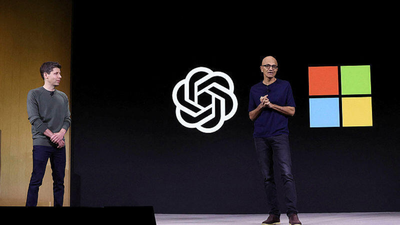
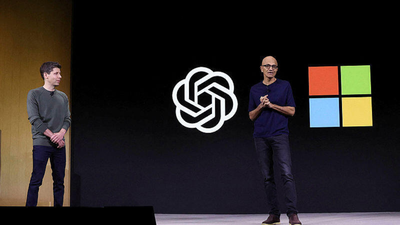
Microsoft lost $360 billion in market value on January 28. That’s the second-largest single-day wipeout in US stock market history. The only bigger crash? Nvidia’s DeepSeek meltdown last year, which also traced back to AI delusion.The culprit this time is Sam Altman and his money-incinerating machine called OpenAI. Microsoft’s stock plunged 10% after earnings exposed a reality investors can no longer ignore: the software giant has handcuffed itself to a partner that lost over $8 billion last year, burns $15 million daily on video generation alone, and has no credible path to profitability.
The most alarming number from Microsoft’s Q1 26’s earnings call? OpenAI now represents 45% of Microsoft’s $625 billion in future cloud contracts. Microsoft has effectively bet half its cloud business on a company whose CEO just declared “code red” because ChatGPT’s user growth has stalled and Google is eating its lunch.Wall Street finally asked the obvious question: what happens when the music stops?
The circular money machine that created a $750 billion illusion
OpenAI’s entire business model is financial theatre. The company operates on circular deals that create the appearance of growth while generating zero real economic value.Here’s how the con works: Microsoft has invested $13 billion in OpenAI since 2019. OpenAI promptly funnelled most of those billions right back to Microsoft as payment for Azure cloud computing. Both companies book revenue. Both companies tell investors they’re winning. Neither has created a sustainable business.The scheme extends across Silicon Valley. Nvidia announced plans to invest $100 billion in OpenAI. OpenAI will spend that money buying Nvidia’s GPUs. CoreWeave signed deals worth $22 billion to provide OpenAI with computing power, then received $350 million in OpenAI stock that could theoretically pay for those services. SoftBank led a $40 billion investment in OpenAI, then committed $100 billion to build data centres that OpenAI will rent.Oracle struck the most absurd deal: $300 billion to construct data centres for OpenAI, which OpenAI will then pay roughly $300 billion to use over several years. It’s the same money, moving in a circle. Oracle’s stock has since crashed 45% from its September peak, wiping out over $360 billion in value as investors realised they’d been sold a Ponzi scheme with better branding.The arrangement is famously called “circular financing.” Former asset manager George Noble called it what it is: “a cash incinerator.” These aren’t investments. They’re companies trading Monopoly money while pretending the game will never end.
Altman’s trillion-dollar fantasy is bankrupting Microsoft’s future
Sam Altman has committed OpenAI to spending $1.4 trillion on AI infrastructure by 2033. That number isn’t a typo. It’s more than the market value of Amazon. It’s twice the annual budget of the U.S. military. And it’s predicated on the fantasy that ChatGPT will somehow evolve into a world-changing technology that prints money faster than OpenAI can burn it.Microsoft is now trapped financing Altman’s delusion. The company’s capital expenditures exploded to $37.5 billion last quarter, up 66% year-over-year. That was $1 billion higher than analysts expected and $3 billion higher than the previous quarter. Microsoft is now spending money at a rate that would make a defence contractor blush.Two-thirds of that spending went to GPUs and short-lived AI infrastructure that depreciates faster than a new car. CFO Amy Hood tried to spin this as strategic allocation. The reality is uglier: Microsoft is sacrificing its profitable cloud business to prop up Sam Altman’s gambling habit.Azure cloud growth slumped to 39%, down from 40% the previous quarter and below Wall Street’s 39.4% forecast. Hood admitted Microsoft is deliberately throttling Azure capacity for paying customers so it can divert computing power to internal AI products like Copilot and GitHub Copilot.Let that sink in. Microsoft is turning away revenue from Fortune 500 companies who want to pay for cloud services so it can give free computing power to AI products that users largely ignore.Microsoft 365 Copilot has 15 million paid seats. That sounds impressive until you remember Microsoft has 450 million total M365 commercial seats. Adoption is barely 3%. UBS analysts publicly questioned whether Copilot is worth the investment, noting that “M365 revenue growth is not accelerating due to Copilot” and “many checks on Copilot don’t suggest a strong usage ramp.”Meanwhile, OpenAI’s competitive position is collapsing. Google’s Gemini models now match or exceed ChatGPT’s capabilities while running on more efficient infrastructure. ChatGPT’s user growth has flatlined in Europe. China’s DeepSeek built a competitive model for a fraction of the cost, proving the AI industry’s spending is grotesquely wasteful.Deutsche Bank analyst Jim Reid estimates OpenAI will lose $140 billion between 2024 and 2029. He wrote: “No start-up in history has operated with expected losses on anything approaching this scale. We are firmly in uncharted territory.”Financial expert Sebastian Mallaby predicts OpenAI could run out of money within 18 months. One venture capital investor told The Economist: “This is the WeWork story on steroids.”
Altman’s contract trapped Microsoft with no exit strategy
The worst part? Microsoft can’t escape without catastrophic damage.The company’s contract with OpenAI includes a clause that restricts Microsoft from developing its own AGI until 2030. That means if OpenAI collapses tomorrow, Microsoft has legally blocked itself from building a replacement for three and a half years. It’s the corporate equivalent of signing a prenup that requires you to stay single if your spouse leaves you.Those $625 billion in cloud commitments don’t vanish if OpenAI implodes. Microsoft would be stuck with massive data centres built for a customer that no longer exists, financed by debt that still needs repaying. Oracle is already experiencing this nightmare, having raised tens of billions in bonds to build infrastructure for OpenAI while watching its credit risk gauge hit levels not seen since 2009.Microsoft has also spent three years publicly positioning itself as the indispensable partner in OpenAI’s success. CEO Satya Nadella appears on stage with Sam Altman. Press releases trumpet their collaboration. The brand association is complete.Ditching OpenAI now would mean admitting to shareholders that Microsoft wasted $13 billion and countless strategic opportunities chasing a mirage. The reputational damage would be severe. The financial damage might be worse.Nadella himself has expressed skepticism about AGI, calling it “nonsensical benchmark hacking” on a podcast. Yet his company has structured its entire AI strategy around achieving exactly that. It’s a contradiction that investors can no longer ignore.Bank of America analysts noted that Microsoft’s dependence on OpenAI creates “concentration risk” at a time when the partner’s financial health is deteriorating. Barclays analysts said Microsoft has entered “a winners and losers phase” in AI, where the market will punish companies tied to failing business models.
The reckoning Wall Street finally delivered
January 28’s $360 billion crash wasn’t irrational panic. It was the market finally doing basic arithmetic.Investors looked at Microsoft spending $37.5 billion per quarter on AI infrastructure. They looked at OpenAI losing $12 billion per quarter with no revenue growth. They looked at circular financing deals that shuffle money without creating value. They looked at Azure growth slowing while capital expenditures explode.And they sold.Business professor Erik Gordon warned that when the AI bubble bursts, “the suffering will be more painful than the aftermath of the dot-com bubble.” He’s right. The dot-com bubble involved companies with maybe a few billion in market cap built on hype. Microsoft is a $3.2 trillion company that just lost 10% of its value in a single day because it tied itself to Sam Altman’s sinking ship.The contagion is already spreading. Software stocks crashed across the board January 28. ServiceNow fell 9.9%. Salesforce dropped 6.1%. Atlassian declined at least 6%. The market is repricing every company exposed to AI speculation.Microsoft spent decades building credibility as a stable, profitable enterprise that delivers consistent shareholder returns. Sam Altman has torched that reputation in less than three years with circular deals, imaginary revenue, and a $1.4 trillion spending plan that assumes AI will magically become profitable before reality intervenes.January 28 was Microsoft’s bill coming due. And Sam Altman is nowhere to be found to help pay it.







 हिन्दी
  English