 Sipu Jha
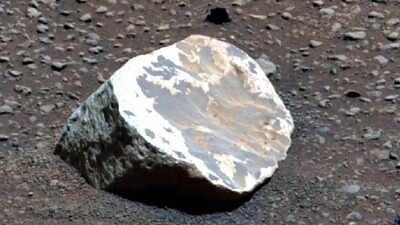
Bright white rocks. Scattered across the rusty red plains of Mars. NASA’s Perseverance rover spotted them in Jezero crater which the scientists have been staring at them ever since. At first glance, they might seem ordinary. But analysis tells a different story that these rocks aren’t just rocks. They’re kaolinite clays, aluminium-rich, and rare. On Earth, such clays form after millions of years of warm, wet rainfall. Rainfall that shapes landscapes. Finding them on Mars suggests the planet might once have had long periods of rain. Maybe millions of years.
NASA finds white kaolinite rocks on Mars, showing it once rained
The rocks were identified using Perseverance’s SuperCam and Mastcam Z instruments. Chemical analysis compared Martian clays with similar samples on Earth from California, South Africa, and other wet regions. Some scientists say the evidence is strong. But it’s still early. “It’s tricky,” Adrian Broz, a postdoctoral researcher at Purdue University, reportedly said. “Kaolinite requires long, sustained water exposure. That doesn’t happen easily.” Jezero crater once held a lake twice the size of Lake Tahoe. Rivers might have carried minerals across the region. Or perhaps asteroid impacts spread the white clays around. The exact origin remains uncertain.
Evidence of humid, wet periods on Mars
Professor Briony Horgan, planetary scientist at Purdue, points out that similar rocks are rare on Earth. They form slowly, under constant water exposure. On Mars, their presence hints at persistent wet conditions. Oases that might have lasted for millions of years. The clay fragments range from small pebbles to large boulders. Even tiny pieces carry chemical signatures of sustained rainfall. Experts say these challenges contradict older ideas of Mars as a frozen, mostly dry world.Perseverance’s instruments compared the Martian rocks with Earth analogues. SuperCam measures composition and mineralogy and provides high-resolution images. Rain seems the simplest explanation but it’s still a hypothesis.







 हिन्दी
  English