 Sipu Jha
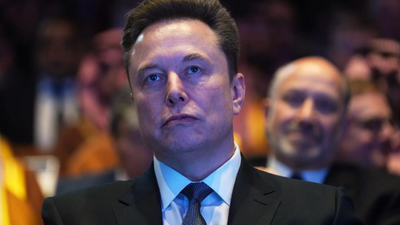
Elon Musk dropped four words that captured a seismic shift years in the making. “The balance of power is changing,” he wrote, sharing IMF data that placed India ahead of the United States in contributions to global economic growth for 2026. The numbers tell the story bluntly. India accounts for 17% of projected worldwide expansion. America sits at 9.9%. Only China ranks higher at 26.6%, meaning the two Asian economies now drive 43.6% of global GDP growth between them.
What’s behind Elon Musk ‘s timing
The Tesla chief’s comment wasn’t random. He’s been tracking India’s trajectory closely—meeting Prime Minister Narendra Modi twice in recent months, scouting factory locations, and watching his Shanghai playbook potentially repeat in a market of 1.4 billion people.But this goes beyond business calculus. Musk highlighted how India and China are emerging as driving forces of global economic growth at exactly the moment his own companies are navigating slowing sales in traditional Western markets. Tesla’s China momentum has cooled. Europe’s stuck in regulatory tangles. India’s 6.3% growth rate—revised upward by the IMF—offers an obvious target.The broader pattern is stark. Germany contributes just 0.9% to global growth in 2026. The eurozone collectively adds 2%. Advanced economies as a group are projected to expand 1.8% while emerging markets clock 4.2%. That gap compounds year after year.
Manufacturing, not just population
In India, infrastructure spending has jumped sharply in 2025. Manufacturing output accelerated even as global trade slowed. Consumer demand stayed resilient despite inflation hovering near target. The IMF specifically cited domestic strength rather than export dependency as the engine.Indonesia (3.8%), Turkey (2.2%), and Vietnam (1.6%) round out a top-10 list dominated by emerging Asia. Nigeria’s 1.5% share exceeds most European nations combined.Musk’s observation echoes what economists have tracked quietly for years: the pace of global growth is increasingly driven outside the West, even as Wall Street and Silicon Valley still set the technological pace. Whether that balance tips further depends on execution—India’s ability to sustain reforms, manage fiscal pressures, and convert high growth rates into durable industrial capacity.







 हिन्दी
  English