 Sipu Jha

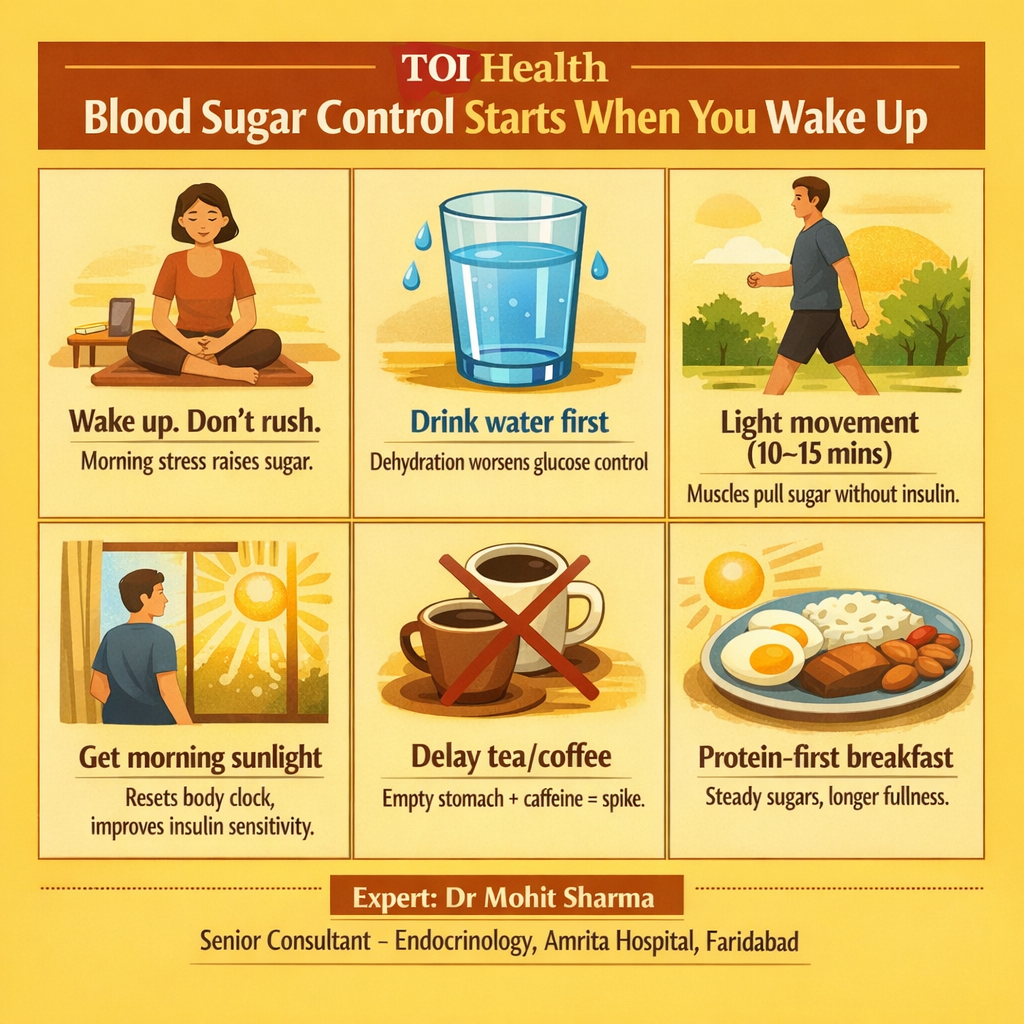
Eating food is not the only thing that can raise blood sugar levels. Chemicals, including cortisol, adrenaline, and glucagon, also have an effect. These levels naturally rise in the early morning hours. This procedure, which is often called the ‘dawn effect,’ could raise blood sugar levels before breakfast is eaten for the first time.We reached out to Dr Mohit Sharma, senior consultant, internal medicine and endocrinologist, Amrita Hospital, Faridabad, to know whether a simple, planned morning routine can help lower this surge and keep blood sugar levels stable on their own. “Patients who work hard to cut back on sugar, keep an eye on their carb intake, and choose meals that are ‘diabetic-friendly.’ However, their fasting blood glucose levels are still too high. The AM metabolic window is often missed,” he said.Dr Mohit Sharma, as an endocrinologist, shared a morning routine with our readers to keep blood sugar stable. He emphasised that what you do in the first 30 minutes after waking up may have a greater impact on blood sugar levels than what you eat for breakfast.
Step 1: Wake up, don’t rush
The worst thing you can do when you wake up is check your phone or worry too quickly. In the morning, cortisol levels are higher. Stress makes the situation worse by making the liver release more glucose into the blood. Give yourself five minutes of quiet. Sit up straight, breathe slowly, and let your nervous system settle down.
Step 2: Make drinking water a priority
Drink one to two cups of plain water soon after waking up. Moderate dehydration raises blood sugar levels and makes insulin resistance worse. Drinking water improves blood flow, helps the kidneys get rid of glucose, and gets muscles ready to use glucose more efficiently later in the morning.
Step 3: Do some light activity, not hard exercise
Do some light action for 10 to 15 minutes before breakfast. This could be walking, stretching, or mobility exercises. This is very important. Muscle contractions pull glucose out of the blood without needing insulin. Some people may experience the reverse impact from high-intensity workouts done on an empty stomach, as they might raise stress hormones and blood sugar levels.
Step 4: Get some sun.
Go outside or sit next to a window for 5 to 10 minutes. Morning light affects the circadian rhythm, which in turn affects how sensitive insulin is. People whose sleep-wake cycles are messed up often have higher fasting glucose levels and less control over their metabolism.
Step 5: Put off drinking caffeine
Drinking tea or coffee on an empty stomach may raise blood sugar levels in certain people because it causes the body to make cortisol and adrenaline. Instead of drinking coffee right after you wake up, have it during light exercise or at breakfast.
Step 6: A breakfast that is high in protein
After finishing this sequence, have a breakfast high in protein, including eggs, yogurt, paneer, almonds, or lentils, instead of starting with refined carbs. Protein controls the rise in blood sugar after meals and makes you feel full.“This plan for lowering blood sugar works in three ways: by lowering stress hormones, improving glucose absorption without insulin, and syncing the body’s circadian rhythm. It does not replace necessary medication; instead, for numerous individuals, it significantly improves fasting and postprandial glucose levels,” he added. Blood sugar control does not begin with food consumption. It starts when you wake up. Simple changes to your morning routine can support healthier blood sugar levels throughout the day.
Medical experts consulted This article includes expert inputs shared with TOI Health by: Dr. Mohit Sharma, Senior Consultant, Internal Medicine And Endocrinologist, Amrita Hospital, FaridabadInputs were used to explain simple morning to follow to keep blood sugar normal during morning hours.







 हिन्दी
  English