 Sipu Jha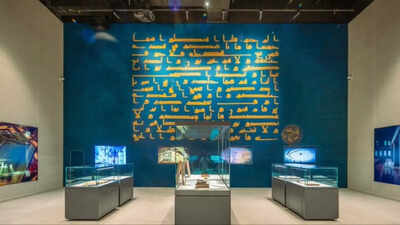
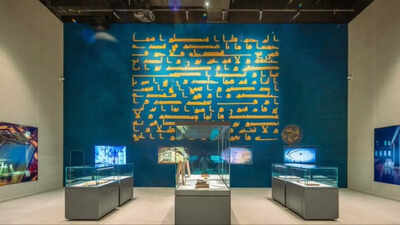
In a landmark cultural moment for Islamic arts and history, the Holy Quran Museum in Mecca’s Hira Cultural District has opened a special display featuring a folio from the legendary ‘Blue Quran’ (Al-Muṣḥaf al-Azraq), which is one of the rarest and most luxurious Quranic manuscripts ever created. The exhibit, announced by the Saudi Press Agency (SPA) and covered by leading international media, underscores the deep historical roots of Islamic calligraphy and manuscript art while elevating Saudi Arabia’s position as a guardian of global religious heritage.
What is the ‘Blue Quran’? A testament to early Islamic art
The Blue Quran is an extraordinary Quranic manuscript believed to date back to the 9th century, a period when early Islamic civilisation was solidifying its distinct artistic and cultural identity. What makes this manuscript so remarkable is its deep blue parchment written in pure gold ink using early Kufic script, a combination that reflects unparalleled craftsmanship and reverence for the sacred text.The specific folio now on display at the Makkah museum features verses from Surah Al-Baqarah (verses 37–42), offering visitors a rare glimpse into both the devotional dedication and aesthetic achievements of early Muslim scribes. While surviving pages of the Blue Quran are extremely rare, with fragments housed in a limited number of museums and private collections worldwide, the current exhibition allows local and international audiences to engage with this remarkable artifact in the city where Islam’s spiritual journey began.
The Holy Quran Museum in Mecca, Saudi Arabia: Bridging past and present
The Holy Quran Museum opened in Makkah’s Hira Cultural District in 2025 as the first institution of its kind in the holy city, close to Jabal al-Nour, where the Prophet Muhammad (peace be upon him) received the first revelation. Designed to be both a cultural landmark and an educational hub, the museum uses interactive exhibits and modern technologies to tell the story of the Quran’s preservation, transcription and artistic evolution over centuries.Visitors can explore rare manuscripts, historical copies of the Quran and displays that contextualize the sacred text’s journey since its revelation. The addition of the Blue Quran folio is part of the museum’s ongoing mission to deepen cultural awareness and illustrate the beauty of Quranic heritage for visitors from both within the Kingdom and abroad.
Cultural and scholarly significance of the Blue Quran
The Blue Quran holds exceptional significance in Islamic art history. Beyond its aesthetic opulence, its deep blue parchment and luxurious golden calligraphy reflect early Muslims’ profound reverence for the Quranic text and their commitment to preserving not just its content but its presentation as a work of sacred art.According to experts, such manuscripts help scholars trace the development of Arabic calligraphy and illumination techniques during the early Islamic period, showing how artistic traditions evolved alongside religious devotion. Globally, other rare Quranic manuscripts, including early Kufic codices and richly illuminated copies from North Africa, Persia and Central Asia are treasured in institutions like the Zayed National Museum (UAE), the Metropolitan Museum of Art (New York) and the National Library of Tunisia.
22/ The Blue Quran is one of the most famous and beautiful ancient Qurans in the world. The manuscript has been dated to between the late 9th – 10th century. It is believed that the Blue Quran was created for the Great Mosque of Qairawan in Tunisia.#Ramadan pic.twitter.com/H5ghNKZFkA— Bayt Al Fann (@BaytAlFann) March 23, 2023
By showcasing a fragment of the Blue Quran, the Makkah museum joins this distinguished circle of world institutions dedicated to preserving and sharing Islam’s manuscript heritage. The Blue Quran display aligns with a broader resurgence of interest in Quranic manuscripts at museums and cultural fairs across the region. For instance:The Holy Quran Museum in Makkah has hosted other rare displays, including centuries-old copies that illustrate the diversity of Islamic calligraphic traditions and Quranic preservation practices. Islamic art biennales and manuscript exhibitions, such as those in Jeddah and Riyadh, have featured historical Qur’ans and related artifacts, reflecting Saudi Arabia’s growing role as a centre for cultural scholarship and public engagement with Islamic arts.
I was able to squeeze in a quick visit to Tunisia, and one of my main goals was to see the famous and iconic ‘Blue Quran’.
Here is a brief video about it.
PS. Apologies for video quality and appearance, it was an unplanned and hectic trip. 😉 pic.twitter.com/oGB299Or0u— Dr. Yasir Qadhi (@YasirQadhi) April 30, 2025
These initiatives support a broader regional effort to celebrate and protect Islam’s rich manuscript heritage while opening it to researchers, students, and visitors from around the world.
Looking ahead: Sustaining Quranic heritage
The display of the Blue Quran in Makkah carries both cultural and spiritual resonance. The manuscript is not only a testament to artistic craftsmanship, it also symbolises the continuity of Quranic reverence from the earliest centuries of Islam to the present day. Visitors and scholars alike are given the opportunity to reflect on how the Quran has been engaged with by Muslims across eras, upholding not just its textual integrity but celebrating the beauty of its visual presentation.For many Muslims, encountering such a manuscript in the heart of the Islamic world enhances the connection between faith, history and artistic expression, deepening appreciation for Quranic heritage and its preservation as both a spiritual and cultural treasure. As the Holy Quran Museum continues to expand its exhibitions and educational programming, the inclusion of the rare Blue Quran folio marks a milestone in making Islamic manuscript history accessible and meaningful to diverse audiences.Future displays may include other rare folios, interactive explorations of manuscript production, and collaborations with global institutions to bring rotating treasures from international collections to Mecca, further enriching the narrative of Islamic art and religious history. By anchoring such initiatives in the Hira Cultural District, a place closely tied to the origins of the Quranic revelation, Saudi Arabia is creating a unique cultural space where visitors can explore not just artifacts, but the enduring story of the Quran’s preservation, interpretation and artistic legacy.The public display of the rare Blue Quran at the Holy Quran Museum in Mecca is a historic event that connects early Islamic artistry, scholarly heritage and contemporary cultural engagement. It provides an exceptional opportunity for Muslims and global audiences to witness a masterpiece of Islamic manuscript art and reinforces the Kingdom’s role in preserving the spiritual and artistic legacy of the Quran for future generations.





 हिन्दी
  English