 Sipu Jha
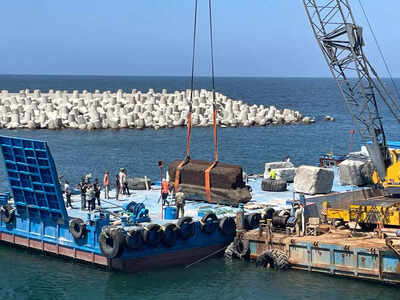
Off the coast of Alexandria, divers and cranes have returned to a site that has rested underwater for centuries. Large stone blocks linked to the ancient Lighthouse of Alexandria are being lifted from the seabed as part of a renewed archaeological effort. The structure, known as Pharos, once stood at the entrance to the city’s harbour and was counted among the Seven Wonders of the ancient world. Thirty years after underwater remains were first identified in 1995, researchers are now raising selected architectural pieces for detailed study. The work forms part of the PHAROS project, a French-led programme that aims to document, scan and digitally reconstruct the lighthouse using both recovered blocks and fragments mapped beneath the Mediterranean.
Egypt excavation recovers twenty-two lighthouse blocks lifted from the seabed
Dassault Systems Foundation, which has supported the technological aspects of the project, has lifted 22 of the largest surviving blocks. Some weigh between 70 and 80 tonnes. The pieces include monumental door lintels, jambs, a threshold and large base slabs. Among the finds is part of a previously unknown pylon featuring an Egyptian style doorway dating to the Hellenistic period. The scale of the stones gives a sense of the lighthouse’s original mass. Each block is being studied on land before further analysis.
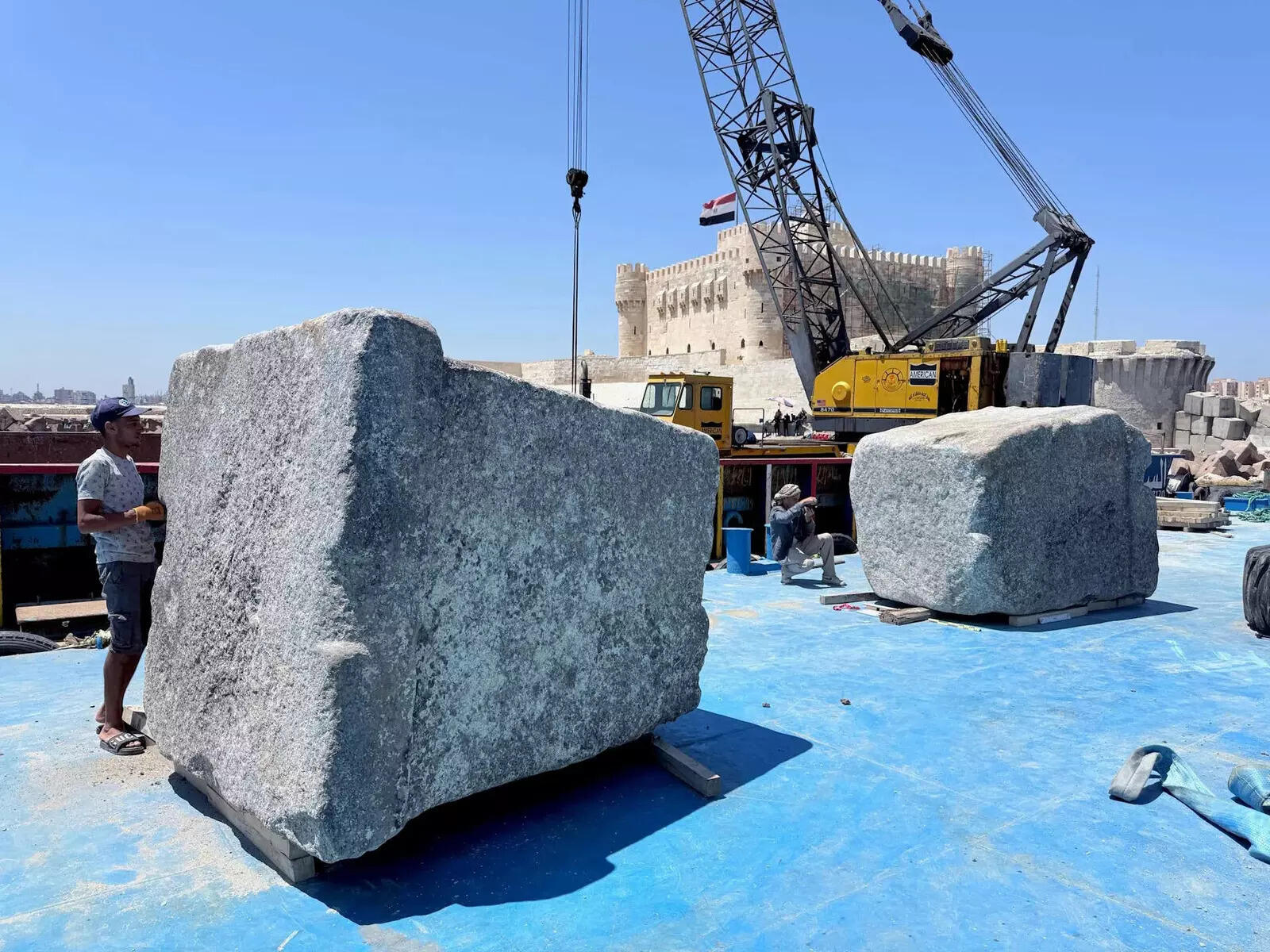
Egypt excavation recovers twenty-two lighthouse blocks lifted from the seabed (Photo credit: GEDEON Programmes / CEAlex)
Digital reconstruction aims to rebuild Pharos virtually
The recovered elements will be scanned and processed using photogrammetry. They will join more than 100 blocks already digitised underwater over the past decade. Engineers working with La Fondation Dassault Systèmes will analyse the data and attempt to reposition each piece in a virtual environment.The aim is to test different hypotheses about how the lighthouse was constructed and how it eventually collapsed. Using simulations, the team plans to create a digital twin of the structure. This model could allow viewers to explore a detailed reconstruction of Pharos without rebuilding it physically.
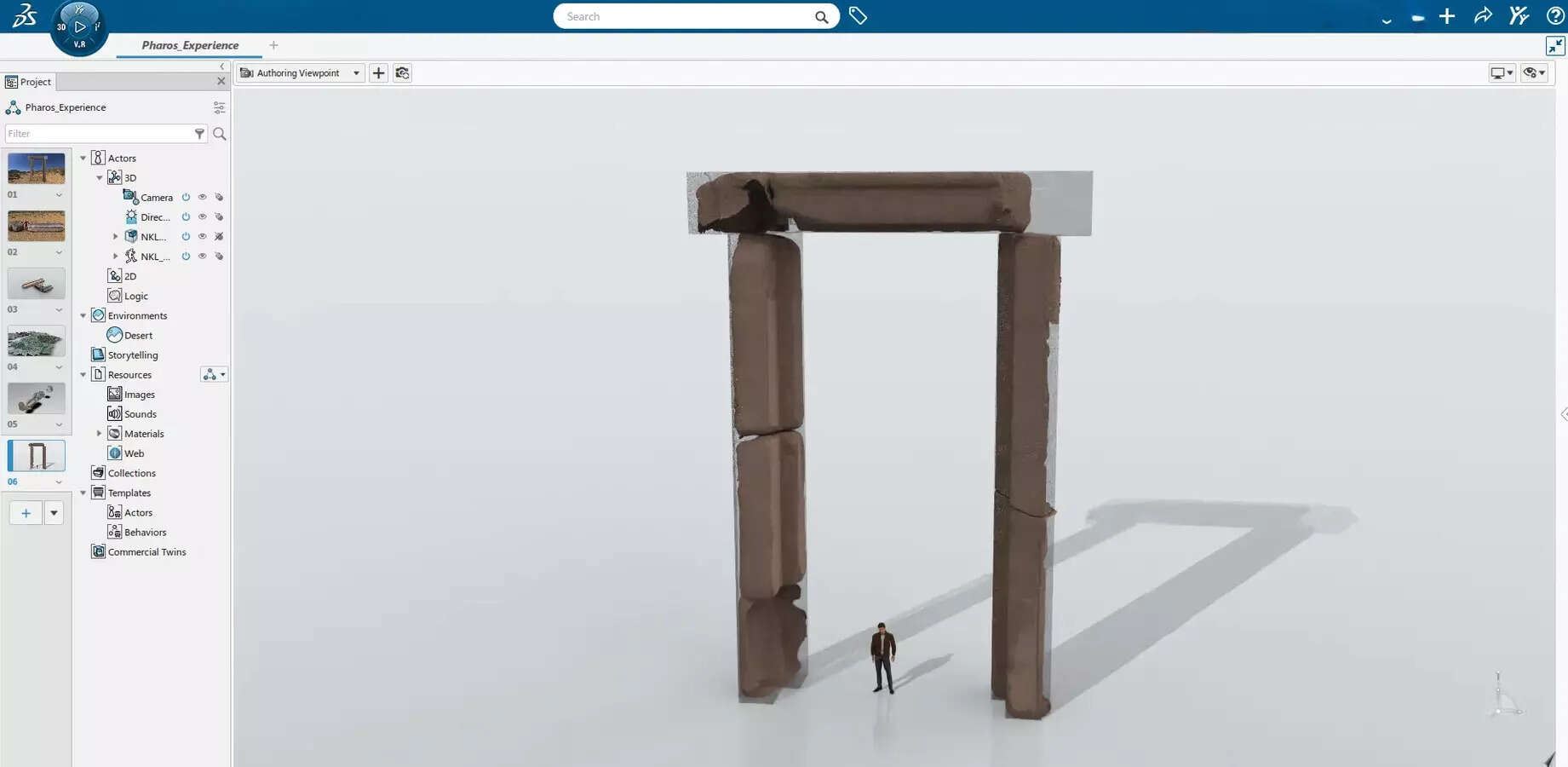
Digital reconstruction aims to rebuild Pharos virtually ( Photo credit: Isabelle Hairy – Centre d’Etudes Alexandrines)
French and Egyptian institutions lead excavation
The excavation is being conducted by the CNRS through its permanent unit in Egypt, under the authority of the Egyptian Ministry of Tourism and Antiquities. The project has received financial support from La Fondation Dassault Systèmes over the past three years.Researchers are also collecting ancient texts, coins and visual depictions of the lighthouse. These sources help fill gaps left by the fragmented remains. Much of the structure was dismantled after it stopped operating in 1303, with stones later reused in the construction of the Qaitbay Fortress in 1477.
Alexandria lighthouse shaped ancient maritime trade
Built in the early third century BCE under Ptolemy I, the lighthouse is believed to have stood about 100 metres tall. It guided ships along a difficult coastline and became a symbol of the city’s status in Mediterranean trade. No ancient lighthouse of similar scale survives today. The current work in Alexandria is less about spectacle and more about patient reconstruction. Piece by piece, the outline becomes clearer, though still incomplete.






 हिन्दी
  English