 Sipu Jha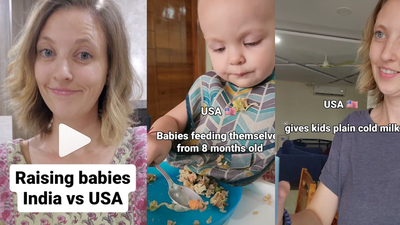
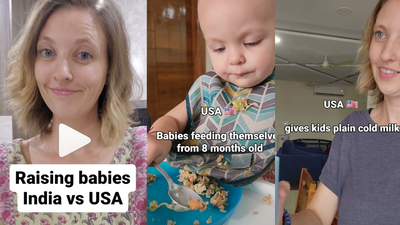
Kristen Fischer never expected India to stay with her long after she left. Nearly eight years ago, she first visited the country, and even after returning to the United States, she felt a constant pull toward it. Life moved forward, she got married and became a mother to two daughters, but her connection with India never faded. Eventually, she and her husband decided to pack their bags and move back, choosing to raise their family amid a culture that had begun to feel like home.Now living in India for several years, Fischer often shares humorous and relatable comparisons between parenting in India and the US on social media. In a recent viral Instagram reel, she highlights everyday differences, from sleep routines to feeding habits, showing how culture quietly shapes childhood. Rather than declaring one approach better, the video resonates because viewers instantly recognise these familiar parenting moments across both societies.
Where babies sleep says a lot about how societies think
One of the first contrasts shown is sleeping arrangements. In the US setting, a baby rests alone in a crib, reflecting a parenting approach that encourages independence from infancy. Structured sleep training and personal space are often seen as important milestones.The India comparison flips the image entirely. Here, babies sleep beside parents, often continuing well into childhood. Co-sleeping is less about dependency and more about emotional closeness, convenience and shared family life. Nights become communal rather than individual.The difference highlights two philosophies: independence taught early versus connection maintained closely.
Carrying a baby, two cultural styles
Another moment shows baby wearing. In the American version, the baby sits securely in a modern ergonomic carrier. In India, the same act appears through a traditional cloth sling tied across the shoulder, something generations of caregivers have used long before parenting products became an industry.Both methods serve the same purpose, keeping the child close, but reflect how tradition and technology shape parenting tools differently.
Feeding: Independence versus affection
Food becomes another telling contrast. The reel shows an American baby feeding themselves from a young age, embracing mess as part of learning autonomy. The Indian version portrays parents feeding children by hand well into early childhood, an act deeply tied to nurturing and emotional bonding.Neither approach appears exaggerated. Instead, they show how feeding carries emotional meaning beyond nutrition.
Bedtime follows the rhythm of society
Bedtime scenes offer one of the funniest yet most relatable comparisons. In the US, bedtime arrives early, around 7 pm, aligned with structured routines and work schedules. Lights go off, routines are predictable and evenings become adult time.In India, bedtime stretches later, around 11 pm, reflecting households where family conversations, dinners and daily life continue together into the night. Children grow up participating in shared family rhythms rather than separate schedules.
Tantrums handled differently, but with the same intention
When a child throws a tantrum, the reel contrasts discipline styles. The American parent asks the child to stop crying and go to a corner, representing structured behavioural correction. The Indian version responds with emotional distraction, even offering chocolate to calm the situation.The humour lands because viewers recognise both reactions instantly. Discipline, the reel suggests, mirrors cultural attitudes toward emotional expression.
Even milk tells a cultural story
Perhaps the most charming comparison comes through something as ordinary as milk. In the US scene, a child drinks plain cold milk, simple and functional. In India, milk transforms into comfort, served warm with sugar or chocolate powder, almost like a nightly ritual.It is a small detail, yet it captures the heart of the video. Parenting is shaped not only by rules but by sensory traditions, taste, warmth and memory.
Why the reel resonates far beyond humour
What makes the reel powerful is its balance. It does not mock or idealise either culture. Instead, it gently shows that parenting practices evolve from larger social systems, family structures and inherited habits. As more families live across cultures today, many parents recognise pieces of their own lives in both worlds. Independence and closeness, discipline and comfort, routine and flexibility all coexist in different forms. The reel ultimately reminds viewers that parenting is less about choosing the “right” way and more about understanding context. Whether a child sleeps in a crib or beside parents, drinks cold milk or warm chocolate milk, every culture is simply expressing care in the language it knows best. And beneath all the differences lies the same universal goal: raising children who feel safe, loved and at home in their world.







 हिन्दी
  English