 Sipu Jha
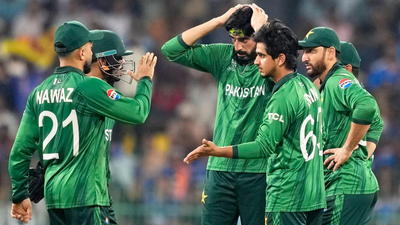
TimesofIndia.com in Colombo: A day after their humiliating 61-run loss against India, the Pakistan cricket team looked in good spirits ahead of their clash against Namibia at the Sinhalese Sports Club (SSC) Ground in Colombo.It was a light session for the men in green after having two intense sessions before the India game.
They began training with a light football session, and the laughter, giggles and relaxed body language stood in stark contrast. During their two net sessions ahead of the India game, there were hardly any jokes. Everything was intense.The presence of Pakistan Cricket Board (PCB) chairman Mohsin Naqvi, who is also the interior minister in the Shehbaz Sharif cabinet, appeared to add to the pressure on the Salman Ali Agha-led side.It is learnt that Mohsin Naqvi hosted the team for dinner on the match eve and breakfast on match day, but left the stadium after Pakistan lost their sixth wicket. A similar episode occurred during the Asia Cup, when the board president met the players a day before the match.Pakistan coach Mike Hesson defended Mohsin Naqvi’s frequent visits before matches against India. “The chairman is a big supporter of ours and he comes along all the time and before games. I don’t think it adds extra pressure. That’s part of his role. Our guys know we are representing Pakistan,” Hesson said after the match.
Does Mohsin Naqvi’s presence add extra pressure?
It certainly does. With fewer cameras around, the players looked far more at ease at the SSC, where they will face Namibia in a must-win game. A win will take Pakistan to the Super Eight, while a loss will send them home.
Lack of clarity
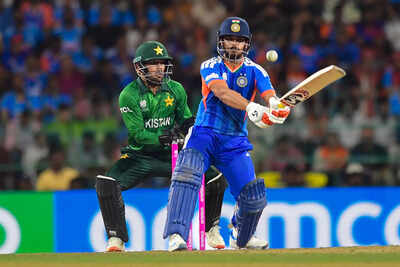
Pakistan’s struggles against India are often framed as a question of temperament or selection, but the deeper issue is a chronic lack of role clarity. No team has experimented more at T20 World Cups. Pakistan have used 29 players across the last four editions, the most among Full Members.Take the example of Babar Azam. Pakistan’s loss to India was shaped by poor bowling execution and a top-order collapse, and Babar was not directly responsible. But his presence at No. 4 highlights a recurring flaw in Pakistan’s thinking, assigning roles that do not suit a player’s skill set.
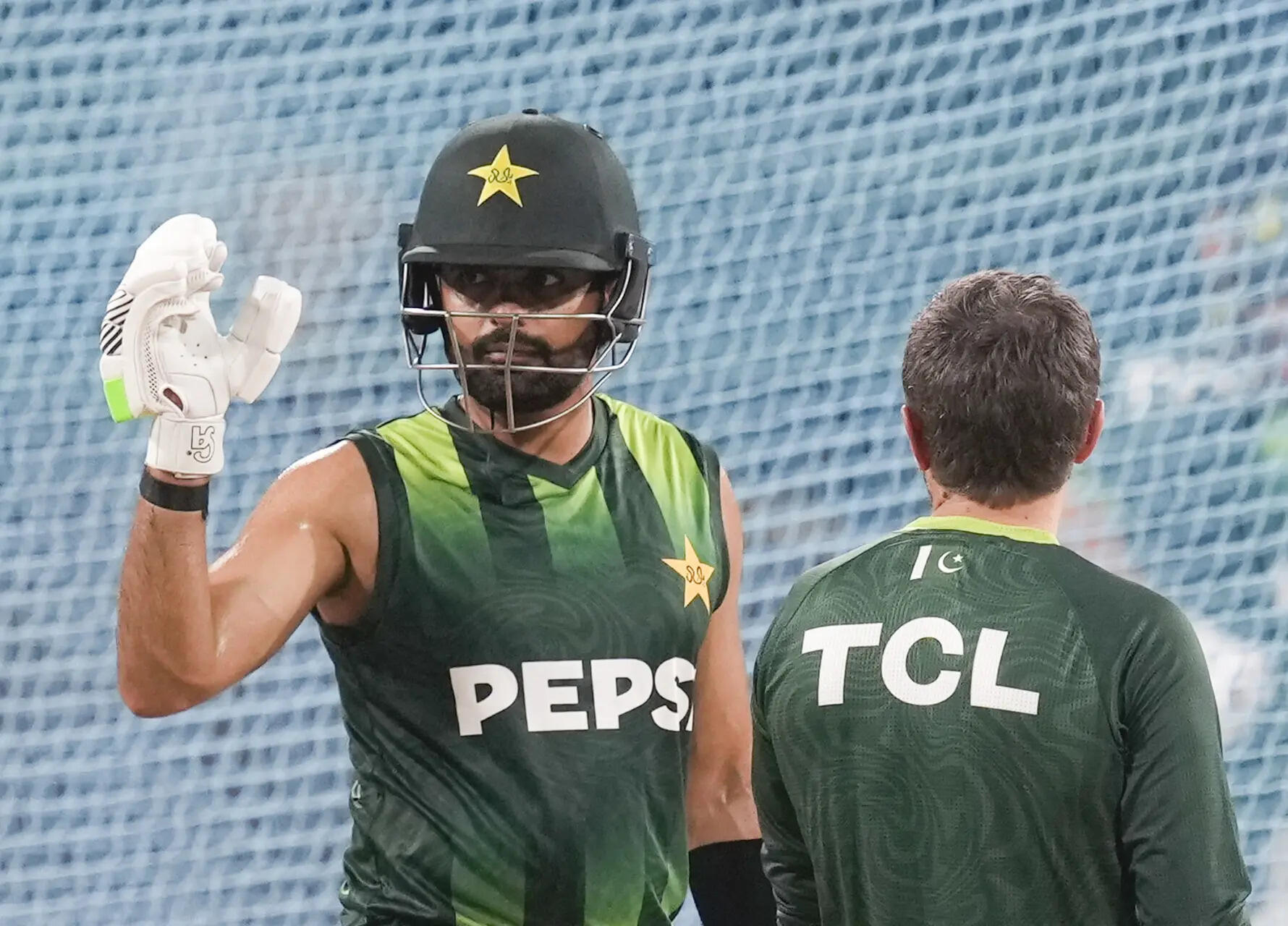
Pakistan’s Babar Azam (PTI Photo)
Even during his peak years in T20 cricket from 2018 to 2023, Babar’s limitations were evident: a modest strike rate and difficulty accelerating against spin. There is no cricketing logic to suggest that a batter who struggles to dominate the Powerplay as an opener will suddenly flourish in the middle overs. The limited evidence supporting that idea largely comes against weakened or lower-ranked opposition.The same confusion extends to the bowling unit. Pakistan have overloaded their XI with all-rounders, seemingly to cover every scenario, but without a clear plan for when or whether they will be needed.Against India, Pakistan fielded eight bowling options, yet only three—Shaheen Afridi, Abrar Ahmed and Usman Tariq—were selected primarily for their bowling. One bowled just two overs, while another was introduced only in the 11th over, indicating a strategy heavily reliant on part-timers.Faheem Ashraf’s role sums up the muddle. He has not bowled a single over in the tournament and has delivered only four overs across his last eight T20Is. Batting at No. 8 suggests Pakistan doesn’t trust his batting either, limiting it to a brief two to three-over window.If Salman Agha was always going to open the bowling, it raises a fundamental question. Why load the XI with three additional spin-bowling all-rounders? Especially when Indian batters have consistently dominated Pakistan’s spinners, regardless of conditions.By stacking the team with spin, Pakistan put all their eggs in one basket. When Shaheen had an off day, there was no Plan B. Pakistan ended up bowling 18 overs of spin, something no other team has ever done in a T20 World Cup, and no side has ever used six spinners in a match at this level.T20 cricket has moved on. What once looked innovative, packing the XI with seven or eight bowling options, now appears counterproductive. Overloading bowlers often creates insecurity among specialists, who feel they have just an over or two to justify their place.
Clues from the nets
Watching Pakistan at the nets is fun when they are not under pressure.Naseem Shah bowled a scorching yorker to Saim Ayub, which the opener managed to squeeze out. Naseem sledged him, saying, “Match mein bhi aisa khelta” (You should have played Bumrah’s yorker like this in the match as well). Saim smiled and nodded.Shadab Khan, who conceded 17 runs in the only over he bowled, bowled mostly to Saim and kept asking questions about his lengths.Saim’s opening partner Sahibzada Farhan instructed Naseem Shah and left-arm pacer Salman Mirza to bowl back of a length. Farhan looked at ease, pulling and hooking the bowlers in the nets.Then came the skipper, not Salman Ali Agha, but Babar Azam, the former two-time captain. Shadab Khan and Abrar Ahmed kept addressing Babar as “skipper”.Captain or not, Babar remains a leader in the dressing room. He kept sharing inputs with Abrar and others. However, he looked uncomfortable when it came to power-hitting and appeared unhappy with his shot selection. Coach Mike Hesson rushed towards him, shared a few words and tried to calm him down. After a decent power-hitting session, Babar left the nets visibly upset with himself.
Pressure on Babar and Shaheen
The pressure is mounting on senior pros Babar Azam and Shaheen Shah Afridi. Babar has not hit a six against a Full Member team in T20 World Cups since the 10-wicket win over India in Dubai in 2021.The 31-year-old endured a poor Big Bash League season, scoring just 202 runs in 11 innings at a strike rate of 103.06. When Babar was dropped from Pakistan’s T20I side, Mike Hesson said he needed to perform in the BBL, where his returns were underwhelming.
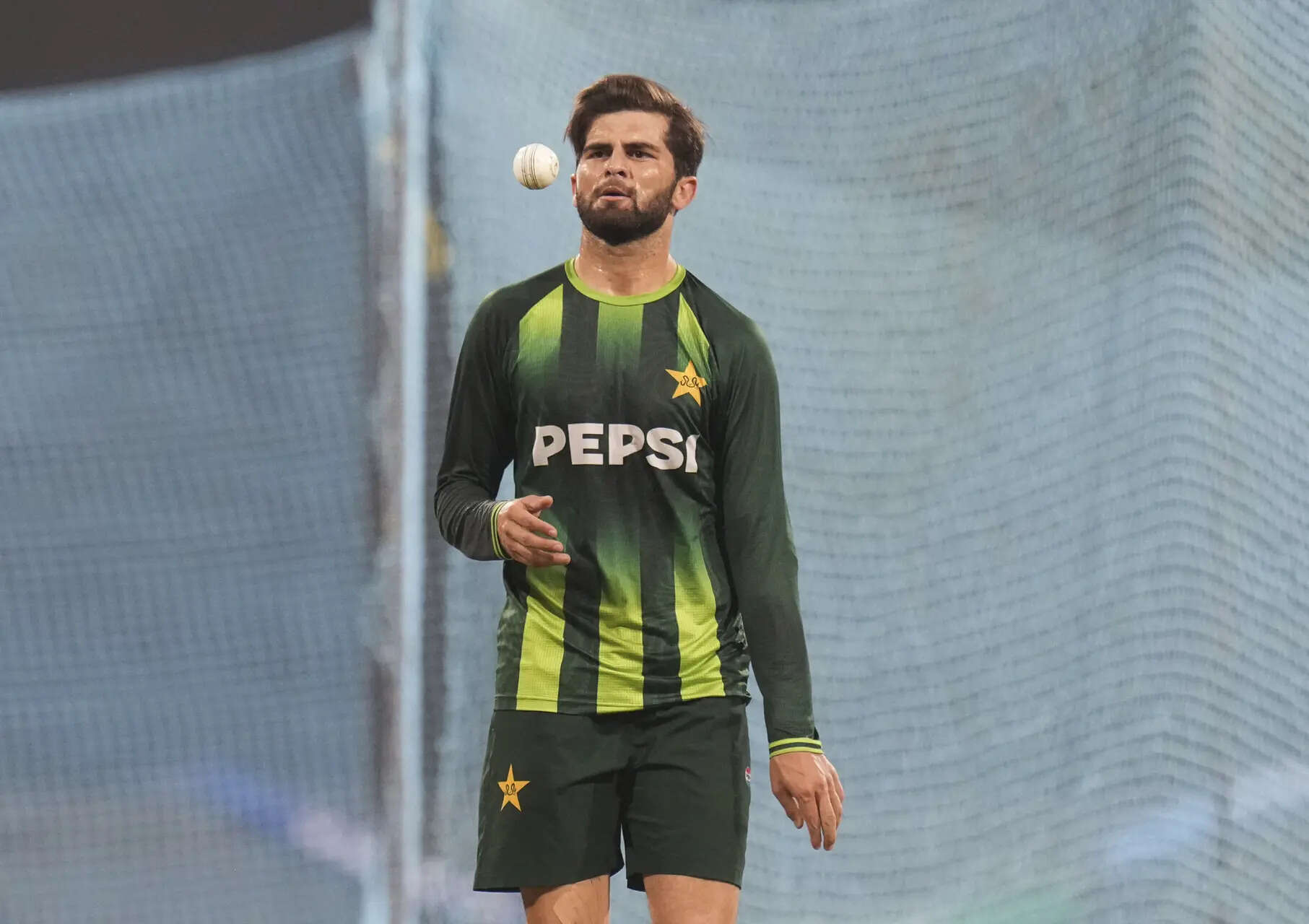
Pakistan’s Shaheen Afridi (PTI Photo/Arun Sharma)
Shaheen, too, is no longer the force he once was. The left-arm seamer is becoming predictable. At the nets, it appeared unlikely he would play Wednesday’s fixture. He barely bowled, despite encouragement from the coach. Instead, he batted and rolled his arm over with left-arm wrist spin to Fakhar Zaman, who may return to the side, with Babar moving back to the top. In that scenario, Sahibzada Farhan could make way.“One game doesn’t define their capability or calibre,” Usman Tariq said in the pre-match press conference.“There’s no doubt that Shaheen and Babar have won many matches for Pakistan. If something like this happens, they know how to recover because they are senior players,” he added.Until Pakistan stop confusing flexibility with indecision, India will continue to expose the cracks. Talent has never been the problem. Clarity has. And unless roles are clearly defined and trusted, Pakistan will keep arriving at World Cups with options on paper and uncertainty on the field.



 हिन्दी
  English