 Sipu Jha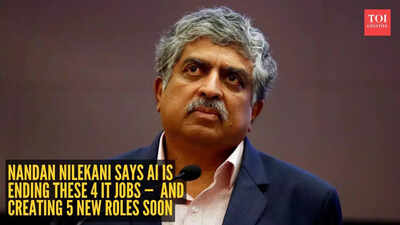
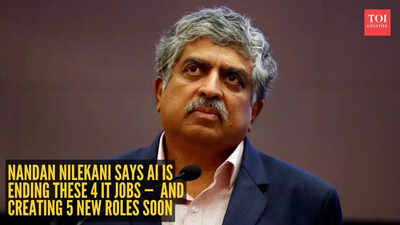
Imagine waking up one day to find that the heart of your job—say, meticulously writing lines of code—has shifted to something entirely new, like taming a smart AI agent to get the job done. That’s the world Nandan Nilekani, co-founder and chairman of Infosys, painted at the company’s Investor Day 2026. AI isn’t some shiny add-on for IT pros anymore; it’s sparking a deep, structural overhaul in what tech workers do daily. “Talent will have to deal with a world where writing code isn’t the goal – it’s making AI actually work,” Nilekani said plainly.This isn’t a superficial tweak, like slapping a new app on your phone. Nilekani called it a “root-and-branch” transformation, meaning companies must rethink everything: how customers interact with their services, internal workflows, and even team structures. Unlike past shifts to mobile or cloud tech, which you could layer on top, AI demands a full rewiring. Suddenly, pros need skills in AI engineering, orchestrating AI agents (think coordinating a team of digital helpers), and navigating “non-deterministic” systems—where the same input might spit out different results, unlike the predictable outputs of old-school software.
Jobs on the way out—and the ones rushing in
As AI automates the grunt work, some familiar IT roles are fading fast, Nilekani said. He further highlighted four IT jobs that could shrink significantly in the near future:1. Front-end web developers (AI tools now whip up slick interfaces in seconds).2. QA testers (automation catches bugs before humans even start).3. IT support specialists (chatbots and self-healing systems handle routine fixes).4. Traditional blockchain roles (broader AI platforms absorb their niche tasks).Don’t panic—these aren’t vanishing tomorrow. The work is just evolving as repetitive tasks get handed off to machines. He said that on the flip side, exciting new IT roles are exploding in demand, which include:1. AI engineers (building and fine-tuning the brains behind the tech).2. AI forensic analysts (debugging AI gone wrong, like digital detectives).3. Forward-deployed engineers (embedding AI directly into customer solutions).4. AI leads (strategists guiding AI adoption across teams).5. Data annotators (the unsung heroes labelling data to train smarter models).Nilekani put it bluntly, “Talent transformation is huge. It’s not that you won’t need people—it’s that they’ll shift from QA testing or basic development to these fresh roles like AI engineers, forward-deployed pros, leads, forensic analysts, and data experts.” The big test for companies? Reskilling their current teams to thrive in this new reality. People will still be essential, but they’ll tackle different challenges.
The legacy trap: Why old systems are the real battleground
Here’s where it gets tricky. Everyone raves about AI churning out fresh code for new projects—”greenfield” stuff, as Nilekani calls it. “Writing greenfield is not a big deal,” he noted. Tools like these make it a breeze to generate mountains of code quickly.But most companies sit on trillions in “brownfield” legacy systems—outdated beasts riddled with technical debt, data trapped in silos, and undocumented quirks that only a handful of ageing experts can fix. Modernising these? That’s the nightmare. It’s like renovating a creaky old house while people live in it, versus building a shiny new one from scratch.
Don’t let AI hype fool you—Discipline is key
Nilekani issued a reality check: Just because AI can generate content doesn’t mean it’s useful. “You can generate stuff, which means you can generate slop,” he warned. Without strict guidelines, quality checks, and demands for explainability (so you know why AI made a decision), you’ll drown in junk output that looks productive but delivers zero value.The tech itself is leaping ahead—models are getting sharper by the day—but deployment lags. Why? It’s tough. Success hinges on organisational shake-ups: revamping business processes, retraining teams, busting data silos, and fostering real change. Get this right, and AI unlocks massive gains. Botch it, and it’s just expensive noise.







 हिन्दी
  English