 Sipu Jha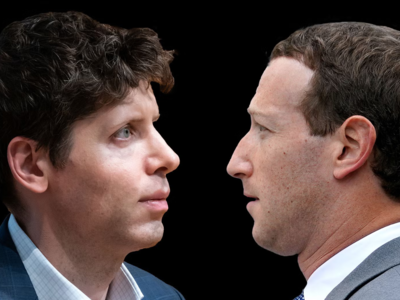
Just days after Sam Altman announced that OpenAI had hired OpenClaw’s solo creator Peter Steinberger, the co-founder of a rival AI agent company has stepped in with a pointed clarification. Yichao ‘Peak’ Ji, co-founder and Chief Scientist at Manus—which Meta acquired for over $2 billion earlier this year—says his company’s new personal agent mode has no connection to OpenClaw whatsoever.The timing matters. Manus launched its personal agent mode on Telegram shortly after OpenAI’s acquisition of OpenClaw made headlines, and the internet quickly started drawing comparisons between the two. That’s what prompted Ji to post. “Manus personal agent mode is not based on OpenClaw. It is still built entirely on Manus’s in-house architecture,” he wrote in a lengthy post on X. He still gave OpenClaw its due—crediting it not for any technical overlap, but for helping the industry think through the trust and safety questions that come with handing tasks over to an autonomous agent.
Ji says OpenClaw shaped industry thinking on where agents should draw the line
According to Ji, OpenClaw’s real contribution was philosophical. It helped define what he calls the “safety boundary” between users and agents—how much autonomy is too much, and when should an agent hand control back.That was a question Manus was already wrestling with a year ago before its own launch. Its answer was four design choices baked into the product from day one: a cloud sandbox isolating each task in its own virtual machine, a task replay mode, an interruptible action chain, and a GUI takeover option that returns control to the user on demand. Ji says these have since become standard features across the agent industry.
Manus is now moving away from those guardrails toward faster, simpler access
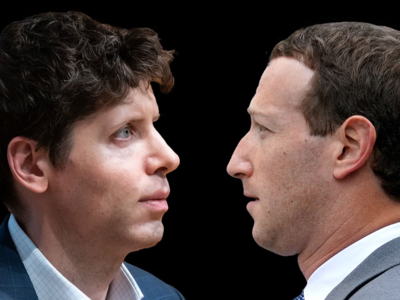
With that trust now largely established, Ji says Manus is shifting gears. The new agent mode is built around accessibility—natural language replacing menus, smarter scheduling to run tasks in parallel, and a context-management system that keeps things coherent across sessions.The clarification lands against an already charged backdrop. OpenClaw went from buzzy open-source project to OpenAI acquisition in weeks, with both Meta and OpenAI reportedly making billion-dollar offers for Steinberger. Meta lost that race despite Zuckerberg personally spending a week testing OpenClaw and sending Steinberger detailed notes. With Manus already in Meta’s portfolio, Ji appears keen to make one thing clear: whatever OpenAI just bought, it isn’t what Manus is built on.
Here is Manus co-founder Yichao ‘Peak’ Ji’s post in full:
“Well, I think I need to clarify this: Manus personal agent mode is not based on OpenClaw. It is still built entirely on Manus’s in-house architecture.That said, I still believe it’s necessary to pay respect to the OpenClaw project, because it further experimented with and helped shape the ‘safety boundary’ between users and agents.Exactly one year ago today, we were doing the final polishing before Manus’s release. The problem that troubled us the most at the time was actually: How do you make users trust an agent? This isn’t about the source code — it’s about the uncertainty that comes with limitless possibility.Back then, non-technical users, and really the entire world, had no concrete experience with AI agents. User education therefore fell onto a small startup.To address this, we designed four things: Cloud Sandbox: A fully isolated virtual machine is launched for each task so it cannot affect the user’s own computer. Task Replay: You can replay tasks shared by others in read-only mode to safely explore what an agent is. Interruptible Action Chain: You can inspect the agent’s step-by-step actions and interrupt or correct them on the fly. GUI Takeover: Whenever login or human intervention is required, the agent requests the user to take control of the browser, mouse, and keyboard.These safety measures accompanied Manus through its first year. They allowed millions of users to experience a general agent for the first time, and eventually became standard features across agent products.Times have changed. As agents complete tasks more reliably, run faster, models grow smarter, and users become more familiar with them, we believe it’s time to move from ‘building trust’ toward ‘lowering the barrier’.We are now doing this by: Reusing Manus’s mature virtualization layer so users can use it without configuration. Introducing a new context-management system so users won’t need to switch sessions in messengers. Using intelligent subagent scheduling to parallelize tasks while balancing speed and quality. Replacing more slash commands and menus with natural language.This strongly aligns with our long-standing mission: To extend human reach. To put the full power of AI to work by unlocking the code, not just for engineers but for everyone.”







 हिन्दी
  English