 Sipu Jha
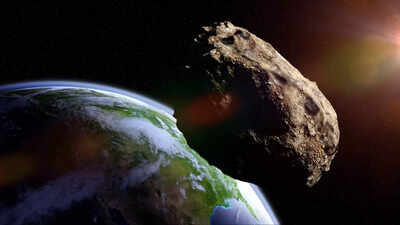
In a stark and widely reported warning, NASA’s planetary defence chief has revealed that Earth currently has no reliable way to stop thousands of “city-killing” asteroids that could one day strike our planet, raising emergency concerns in the scientific community and beyond. These insights come from remarks made by Dr Kelly Fast, NASA’s acting Planetary Defence Officer, at the American Association for the Advancement of Science (AAAS) conference in Phoenix, Arizona, where she highlighted significant gaps in global preparedness against near-Earth objects (NEOs).Fast explained that scientists have identified about 25,000 asteroids large enough (roughly 140 m or larger) to cause regional devastation if they hit Earth but shockingly, only about 40% of them have been catalogued by current detection systems. That leaves around 15,000 city killers untracked, quietly orbiting near Earth with the potential to impact without warning. “What keeps me up at night is the asteroids we don’t know about,” Fast said, underscoring that while tiny meteoroids are harmless and the largest “planet killers” are already monitored, these mid-size rocks are the blind spot in planetary defence.
Why mid-size asteroids are the big concern
NASA defines “city-killer asteroids” as objects roughly 140 m (460 ft) or larger, too small to be easily seen with traditional visible-light telescopes yet large enough to flatten entire metropolitan areas and trigger fires, infrastructure collapse and widespread casualties if they struck. These are distinct from:
- Tiny meteoroids, which burn up in the atmosphere daily,
- Planet killers, massive bodies already largely catalogued and monitored.
The challenge is physical and technical: many of these asteroids are dark and slow-reflecting, blending into the background sky and some follow Earth-like orbits that make them especially difficult to spot until they’re very close. Even with the best ground observatories, detection remains incomplete.
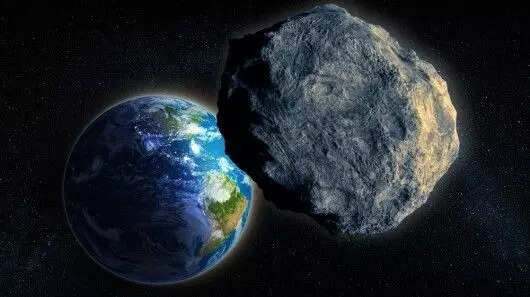
NASA Admits: We’re Defenceless Against 15,000 ‘City-Killer’ Asteroids
The danger is not just theoretical. History shows that relatively small asteroids can produce big effects. The 1908 Tunguska event flattened roughly 2,000 km² of Siberian forest when an object perhaps under 100 m exploded above Earth. A similar impact over a modern city would result in catastrophic regional effects.
No ready defence yet to stop these asteroids from striking Earth
NASA and international partners have made progress in asteroid defence technologies but current systems are not yet at a level where Earth is protected against a sudden incoming city-killer rock. The most famous test so far was NASA’s DART mission in 2022, which successfully nudged a small asteroid’s trajectory by crashing a spacecraft into its moonlet. While this demonstrated that deflection is possible in principle, experts caution that this method requires years of advance notice and the right target conditions, conditions we might not have for many untracked asteroids.NASA officials admit that no dedicated deflection spacecraft is on standby today, and global planetary defense systems lack the funding and infrastructure for immediate reaction missions if a dangerous asteroid were discovered with short lead time. This shortfall creates a vulnerable gap between detection and response capability.
NASA’s plans for better detection of asteroids
There are positive developments on the horizon. NASA is preparing to launch the Near-Earth Object Surveyor (NEO Surveyor), an infrared space telescope designed specifically to detect dark, previously unseen asteroids by spotting their heat signatures. If successful, this mission could drastically improve identification of city-killer asteroids and bring the detection rate for such objects closer to the goal of 90 per cent catalogued within a decade.Expanded ground-based surveys, such as those conducted by the Vera C Rubin Observatory and collaborative international networks like the International Asteroid Warning Network (IAWN) are also expected to enhance early warning capabilities, which are critical for any future deflection plans.
What this means for humanity
The blunt truth unveiled by NASA’s warning is that Earth remains vulnerable to mid-size asteroids that we have yet to detect. While the probability of any single asteroid striking Earth in the near future is still low, compared to common natural disasters, the cumulative risk of unseen objects adds up, underscoring a clear need for sustained investment in planetary defence, international cooperation and early detection technologies.
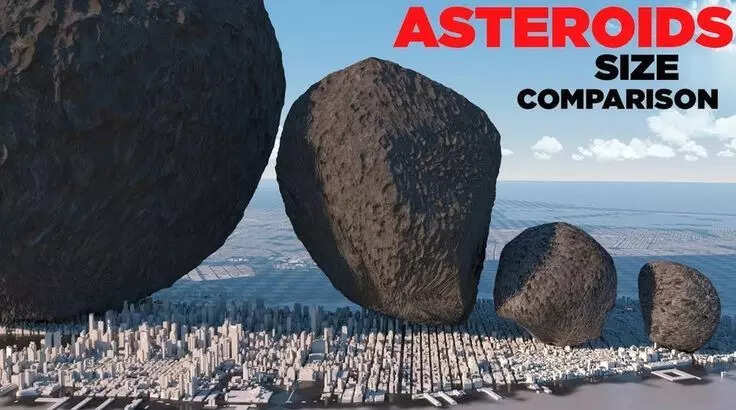
Are We Ready? NASA Reveals Earth Has No Defence Against Thousands of ‘City-Killer’ Asteroids
Astronomers emphasise that increasing detection and cataloguing efforts is the first and most effective step. With more comprehensive tracking, scientists can measure trajectories sooner and, with enough lead time, potentially mount deflection missions that could steer dangerous objects away from Earth.NASA scientists warn Earth is vulnerable to thousands of “city-killer” asteroids that could devastate metropolitan regions, yet remain untracked. About 15,000 of the estimated 25,000 asteroids greater than 140 m are still undetected, making them hard to spot early. Current technologies can’t yet deflect a sudden incoming threat, especially without years of advance notice. Upcoming missions like NEO Surveyor and global collaborations promise better detection and preparedness over the next decade.This latest warning shows that while we have made important strides in planetary defense, Earth’s safety from celestial hazards still depends on science, technology and international effort and in many ways, on the asteroids that we are not even aware of yet.







 हिन्दी
  English