 Sipu Jha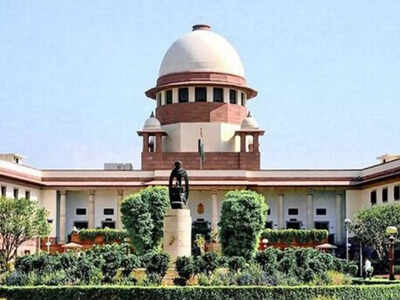
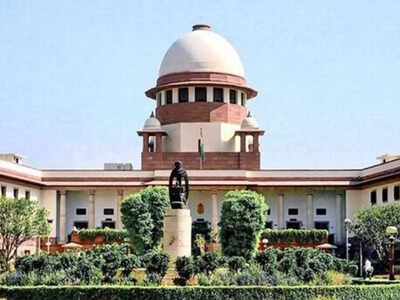
NEW DELHI: The Supreme Court of India on Thursday has fixed the schedule for the final hearing in a batch of petitions challenging the constitutionality of the Citizenship (Amendment) Act, 2019 (CAA), for the week commencing May 5, 2026.The petitioners challenging the CAA Act will be heard on May 5 and for half a day on May 6. The respondent Union government, supporting the legislation, will present its arguments during the remaining half of May 6 and continue on May 7.The pleas challenge the law on the ground that it applies to individuals from six specified religious minorities – Hindu, Sikh, Buddhist, Jain, Parsi and Christian, while excluding other allegedly persecuted minorities such as the Rohingyas in Bangladesh and Ahmadiyyas in Pakistan.The Bench also indicated that separate hearings concerning issues specific to Assam and Tripura will be taken up immediately after the conclusion of arguments in the main batch of cases. The overall hearing is expected to conclude by May 12.“We have granted liberty to place on record any material and other documents on the Written Submissions, if any, within four weeks. However, there shall be no (new) Writ Petition on the written submissions already placed on record,” the Court said.The Citizenship (Amendment) Act, 2019, seeks to fast-track Indian citizenship for members of the six specified minority communities from Afghanistan, Bangladesh and Pakistan who entered India on or before December 31, 2014, citing religious persecution in those countries.The Act was; notified on December 12, 2019, and came into force on January 10, 2020.The Supreme Court, in its March 19, 2024, order, declined an immediate stay on the CAA Rules. Petitioners argued for an immediate freeze, fearing that if citizenship were granted during the litigation, the process would be “irreversible.” Conversely, the Solicitor General requested a four-week window to file a formal response.During the proceedings, the Court took note of the petitioners’ concerns but set a strict timeline for written submissions, limiting both petitioners and the Union to five-page summaries to expedite the hearing.






 हिन्दी
  English